
The Versatility of Trench Knives: A Historical and Practical Exploration!
Trench Knives
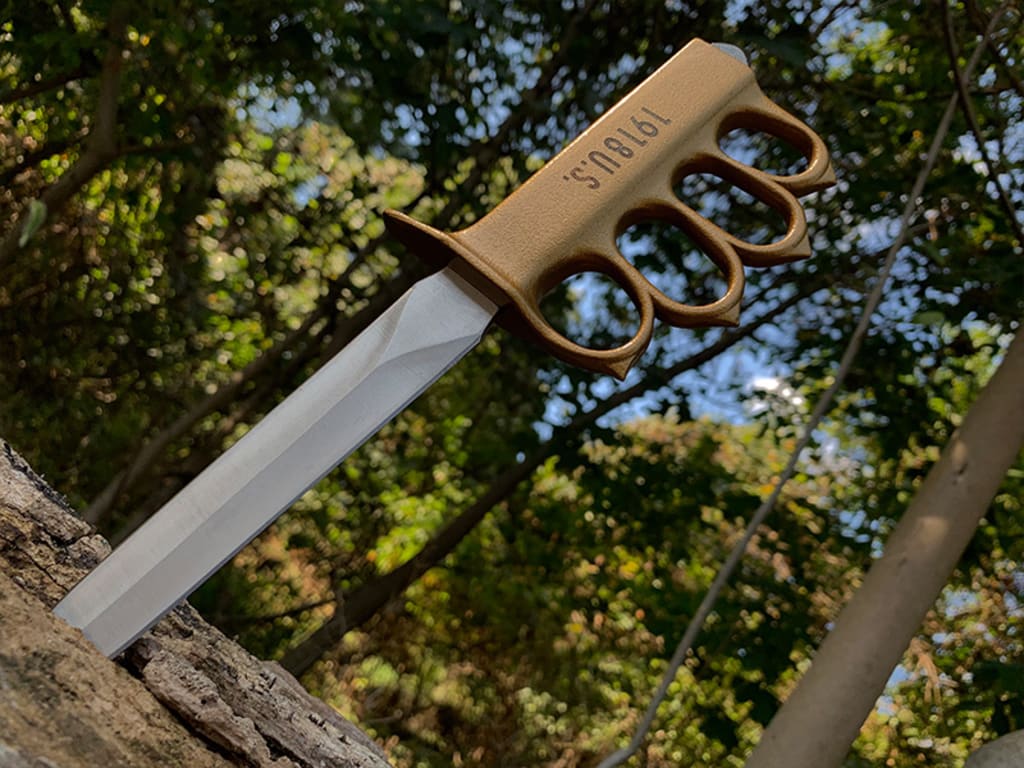
With its durable construction and numerous uses, a trench knife has long been a staple of close-quarters warfare and military history. These powerful instruments have been used as a representation of resiliency and preparedness everywhere from the trenches of World War I to contemporary tactical operations. This article explores the evolution of these knives from battlefield necessities to collectible artifacts and useful self-defense tools. It also delves into the rich history, adaptable features, and timeless appeal of these tools.
Origins and Evolution of Trench Knife
Trench warfare during World War I was brutal, and this is where these knives got their start. For close-quarters fighting in the cramped and chaotic terrain of trench warfare, soldiers required a small, sturdy weapon. The first knives were makeshift weapons that were frequently made from repurposed tools, sharpened steel rods, or bayonets. The harsh conditions of trench warfare were reflected in the simplicity and brutality of these makeshift weapons.
As the need for specialized tools for close-quarters combat became evident, the military produced and issued trench knives. During World War I, the United States introduced the renowned Mark I Trench Knife, which became the prototype for all subsequent designs. With its double-edged blade, knuckle guard, and handle-integrated brass knuckles, the Mark I trench knife personified the deadly effectiveness of this type of weaponry.
Trench knife designs have evolved, with different countries and military branches creating their versions that are specific to the requirements and tastes of their respective forces. The original knives were frequently made from repurposed tools or modified weapons, demonstrating the ingenuity and flexibility of soldiers in the field.
The improvised character of fighting in the trenches was embodied by the transformation of bayonets, sharpened steel rods, and even cutlery into makeshift trench knives. These homemade weapons were effective in close quarters of battle despite lacking the complexity and refinement of later designs. They were distinguished by their rudimentary simplicity. Military forces started to create and distribute standardized knives made for the demands of trench warfare as the market for specialized close-combat weapons expanded.
Features and Functions of Trench Knife:
These knives are distinguished by their sturdy build, comfortable ergonomics, and adaptable features made for both utility and close-quarters fighting. A trench knife is distinguished by its robust blades, which are designed for thrusting and slashing motions and usually have a length of 6 to 10 inches. Because of its dual-edge design, soldiers can be more versatile in combat and deal with deadly blows quickly and accurately.
These knives frequently have extra features added to their blades to improve their usability. In hand-to-hand combat, knuckle guards or brass knuckles integrated into the handle are common features that offer extra protection and impact force. Certain knives additionally feature serrations running the length of the blade, which facilitates slicing through wires, ropes, and other materials that may be encountered in the field.
These knives are prized for their usefulness in field work and survival scenarios in addition to their combat capabilities. They're good for a lot of jobs, like digging, cutting, prying, and even cooking, because of their sturdy design and sharp blades. Trench knives are adaptable instruments used in military operations that help soldiers build fortifications, remove obstacles, and carry out other critical tasks in difficult terrain.
Sturdy Blade Construction:
These knives have strong, long-lasting blades that are usually between six and ten inches long. These blades are made of premium steel and are suited for thrusting and slashing actions. They can deliver deadly blows with force and accuracy. These knives are essential tools for soldiers in the field because of their sturdy construction, which guarantees dependability and durability in close-quarters combat scenarios.
Dual-Edged Design:
The double-edged blade design of these knives is one of their defining characteristics. With this configuration, soldiers can use both of their blades to deliver strikes, increasing their versatility in combat situations. The two-edged design of a trench knife maximizes the effectiveness of every blow and guarantees a speedy end to conflicts by allowing for both thrusting and slashing action against opponents.
Integrated Knuckle Guard:
A lot of knives have brass knuckles built into the handle or an integrated knuckle guard. This protective feature can be used to increase the impact force of strikes in addition to giving the user's hand extra security. In close-quarters combat scenarios, the knuckle guard gives soldiers the safety and confidence to deliver strong blows without running the risk of hand injuries.
Serrated Spine:
These knives typically have a serrated spine running the length of the blade in addition to the main cutting edge. With the help of this section with serrated edges, soldiers can cut through wires, ropes, and other materials they may come across in the field. The trench knife's increased adaptability and utility beyond military applications are a result of its serrations.
Versatile Use:
These knives are prized for their adaptability in field operations and survival scenarios, in addition to their use in combat. They're good for a lot of jobs, like digging, cutting, prying, and even cooking, because of their sturdy design and sharp blades. These knives are dependable instruments that help soldiers navigate the difficulties of military operations, whether they are being used for obstacle clearance, building fortifications, or making emergency repairs.
Embracing the Legacy of Trench Knife!
Finally, these knives continue to be iconic representations of bravery, practicality, and innovation in close-quarters weaponry. The Trench knife, from its modest beginnings on the front lines of World War I to its ongoing significance today, represents the spirit of adaptability and perseverance in the face of difficulty. Trench knives have a special place in military history and popular culture, whether as historical artifacts, collectible memorabilia, or useful self-defense tools. They pay homage to the bravery and resourcefulness of those who used them to defend freedom and justice.
About the Creator
Mai Sophia
A Writer/blogger by day, a knife enthusiast and survivalist by night. I've reviewed a lot of products and have helped people make the right purchase
Keep reading
More stories from Mai Sophia and writers in History and other communities.
Brass Knuckles are Excellent Self-Defense Weapons for Everyone!
Brass knuckles are improvised weapons that are put onto the fingers of the hand and used for punching. They are illegal in many states for civilian use, but they can occasionally be found on military bases as well. It is rare to find people who carry them around with them in public; most people who have brass knuckles keep them at home, as a weapon of last resort.
By Mai Sophia2 years ago in History
The Year 1991 in Review: Fun Facts, Trivia, and Historic Highlights
This quick read is a collection of fun facts, trivia, and historic events from the year 1991. Discover the year’s top news stories, most influential people, sports facts, historic firsts, entertainment trivia, and much more.
By Gregory DeVictor5 days ago in History
My First Time Skiing and I Got Lost, Alone, in the French Alps
Looking back, I can trace some of my life’s biggest adventures to a simple action from my sister. She’d introduced me to Tommy (a very long time ago), a colleague of hers, who had overshared his penchant for Italian-looking women, and I ticked that box.
By Chantal Christie Weiss2 days ago in Humans


Comments
There are no comments for this story
Be the first to respond and start the conversation.