
The Technology Behind American Military Drones
The Amazing Power of American Drones

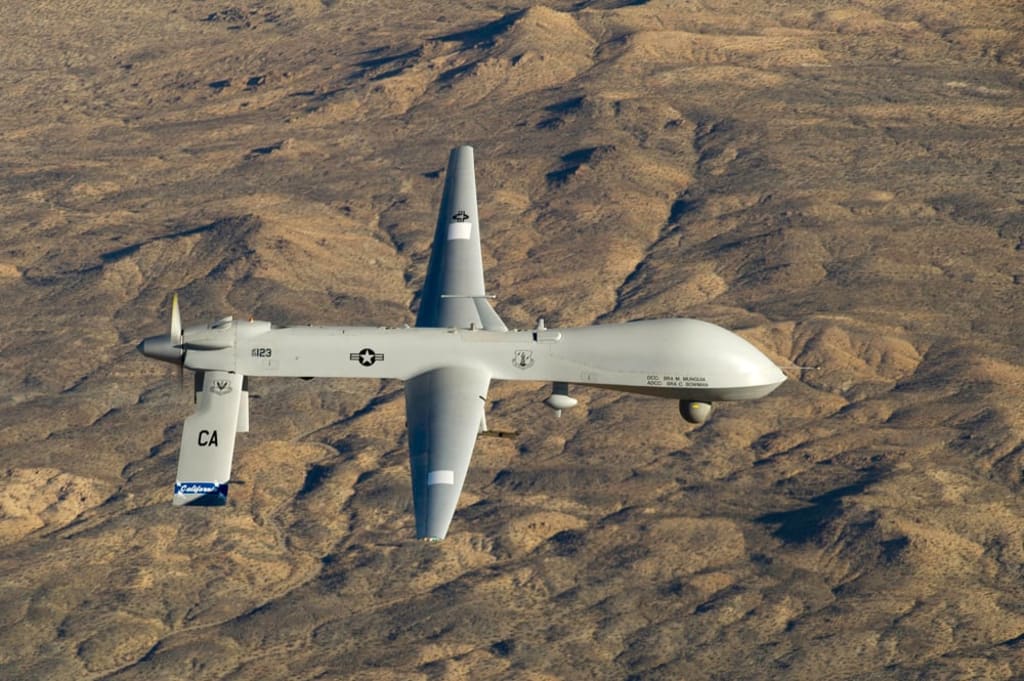
In modern warfare, unmanned aerial vehicles (UAVs), commonly known as drones, have become one of the most important tools used
by the United States military. These advanced machines allow military forces to conduct surveillance, gather intelligence, and carry
out precise strikes without putting pilots in danger. American military drones combine cutting-edge technology, powerful sensors, satellite communication, and advanced software to perform missions
across the world.
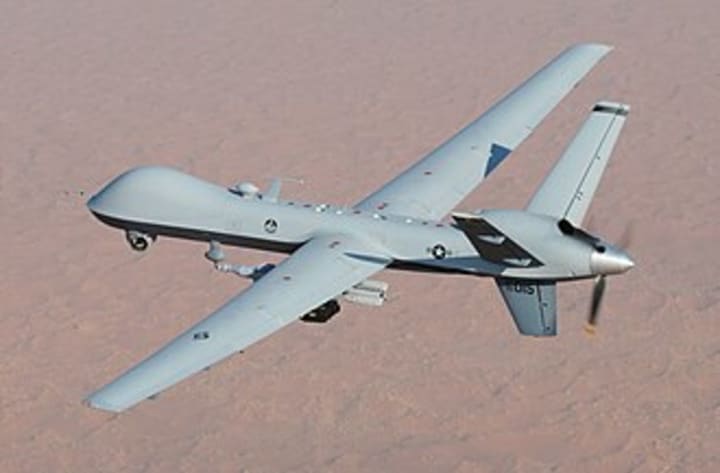
One of the most well-known American military drones is the General
Atomics MQ-9 Reaper. Developed by the General Atomics Aeronautical Systems, the MQ-9 Reaper is designed for long-
endurance surveillance and precision strike missions. Unlike traditional fighter jets that require a pilot inside the aircraft, drones like the Reaper are remotely operated by trained pilots sitting in
ground control stations thousands of miles away.
At the heart of American military drone technology is the communication system. Drones are connected to their operators
through secure satellite links. The United States Department of Defense uses advanced satellite networks to maintain constant
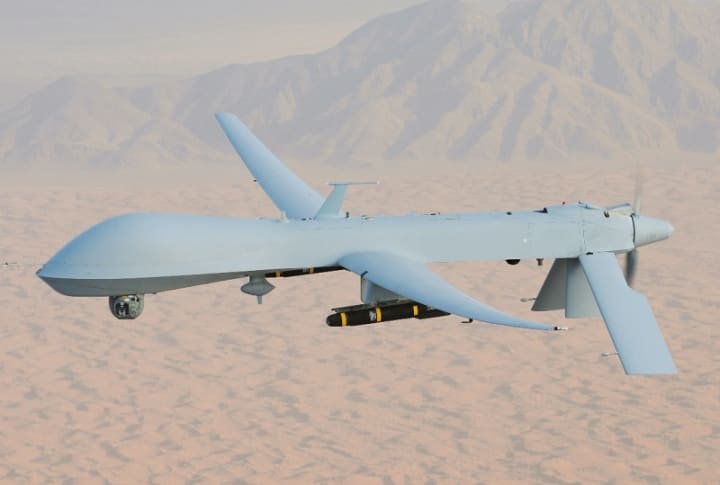
contact with drones flying in distant regions. Operators control the drone’s flight path, cameras, and weapons through this secure data connection. The drone sends live video, radar images, and other
intelligence data back to the control station in real time.
Another key technology used in American drones is high-resolution imaging and sensor systems. These drones carry powerful cameras
capable of capturing detailed images from very high altitudes. Electro-optical sensors allow operators to see clearly during the day,
while infrared sensors help detect heat signatures at night. This means drones can track vehicles, identify individuals, and monitor enemy movements even in darkness or difficult weather conditions.
Artificial intelligence and advanced software also play a growing role in drone operations. Modern drones use automated flight systems
that help stabilize the aircraft, avoid obstacles, and maintain altitude. Some drones can even analyze large amounts of surveillance data
quickly, helping military analysts identify patterns and potential threats. While humans still make the final decisions, AI tools greatly
improve the speed and efficiency of intelligence analysis.
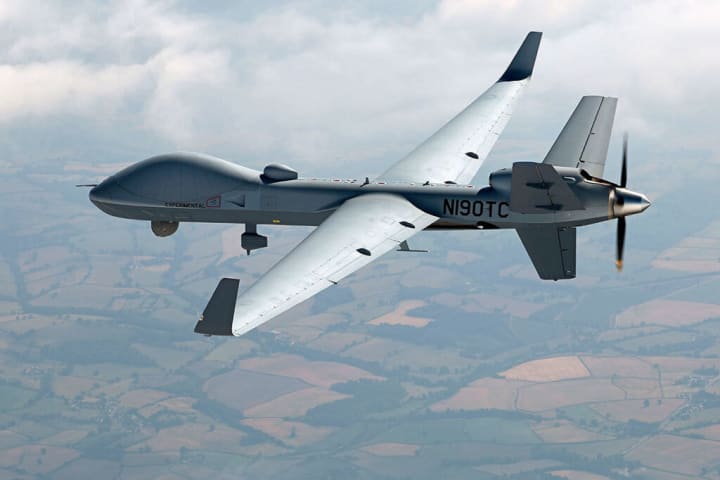
Navigation technology is another crucial component. American military drones rely on the Global Positioning System for precise
positioning and navigation. Using GPS satellites, drones can travel long distances and follow exact flight paths. This accuracy is especially important during reconnaissance missions and when
rying out precision strikes.
Endurance is one of the biggest advantages of drones compared to traditional aircraft. Many American military drones can stay in the
air for more than 24 hours without landing. For example, the General Atomics MQ-1 Predator, one of the earlier drone models, could
remain airborne for long periods while observing a target area. This long endurance allows military forces to maintain continuous
surveillance over strategic locations.
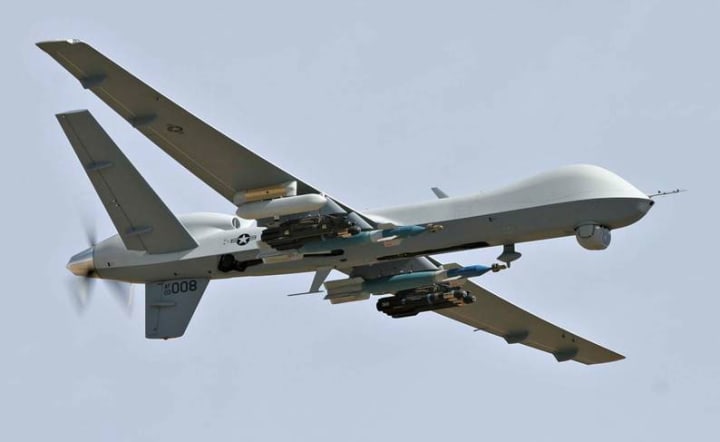
Weapons systems are another major part of some military drones. Armed drones can carry precision-guided missiles that are capable of
striking targets with high accuracy. These weapons are carefully controlled by remote operators and are typically used against specific threats. The use of precision weapons helps reduce collateral damage
compared to traditional large-scale bombing.
Stealth and lightweight materials also play a role in drone design. Many drones are built using composite materials that reduce weight
while maintaining strength. Some advanced drones are designed with shapes that reduce radar visibility, making them harder for enemy
defense systems to detect.
Cybersecurity is also a critical part of drone technology. Because drones rely heavily on digital communication and satellite links,
protecting those systems from hacking or interference is essential. The U.S. military uses encrypted communication systems and secure networks to ensure that only authorized personnel can control the
drones.
Over the past two decades, drone technology has transformed military strategy. Drones allow the military to monitor large areas,
respond quickly to threats, and gather intelligence without risking the lives of pilots. They can operate in dangerous environments where sending human crews would be difficult or impossible.
Looking toward the future, American military drones are expected to
become even more advanced. Researchers are working on dronthat can fly in coordinated swarms, share data automatically, and operate with greater levels of autonomy. These developments may further
change how modern warfare is conducted.
In conclusion, American military drones represent a powerful combination of aerospace engineering, satellite communication,
advanced sensors, and artificial intelligence. Through these technologies, the United States has developed a new generation of
aircraft capable of performing complex missions with remarkable precision and endurance. As technology continues to evolve, drones will likely remain a key part of military operations around the world.
About the Creator
Niaz Muhammad
Insha Allah, I will write in such a good way that people with weak eyesight or the elderly can easily read it.
Keep reading
More stories from Niaz Muhammad and writers in History and other communities.
The Year 1907 in Review: Fun Facts, Trivia, and Historic Highlights
This quick read is a collection of fun facts, trivia, and historic events from the year 1907. Discover the year’s top news stories, most influential people, sports facts, entertainment trivia, grocery prices, and much more.
By Gregory DeVictor3 days ago in History
Thief In The Night
To the thief in the night that took and replicated what once was mine: Honestly, I feel kind of bad for you. It’s funny, because we hardly know each other. I only know of you through the magazines you’ve written and the broadcasts you have televised in the past — as well as through the public mentions of you from your show business connections there.
By Snarky Lisa7 days ago in Humans




Comments
There are no comments for this story
Be the first to respond and start the conversation.