
The Story of Pakistan and India's Independence
A Historical Journey – Of Blood, Sacrifice, and Freedom

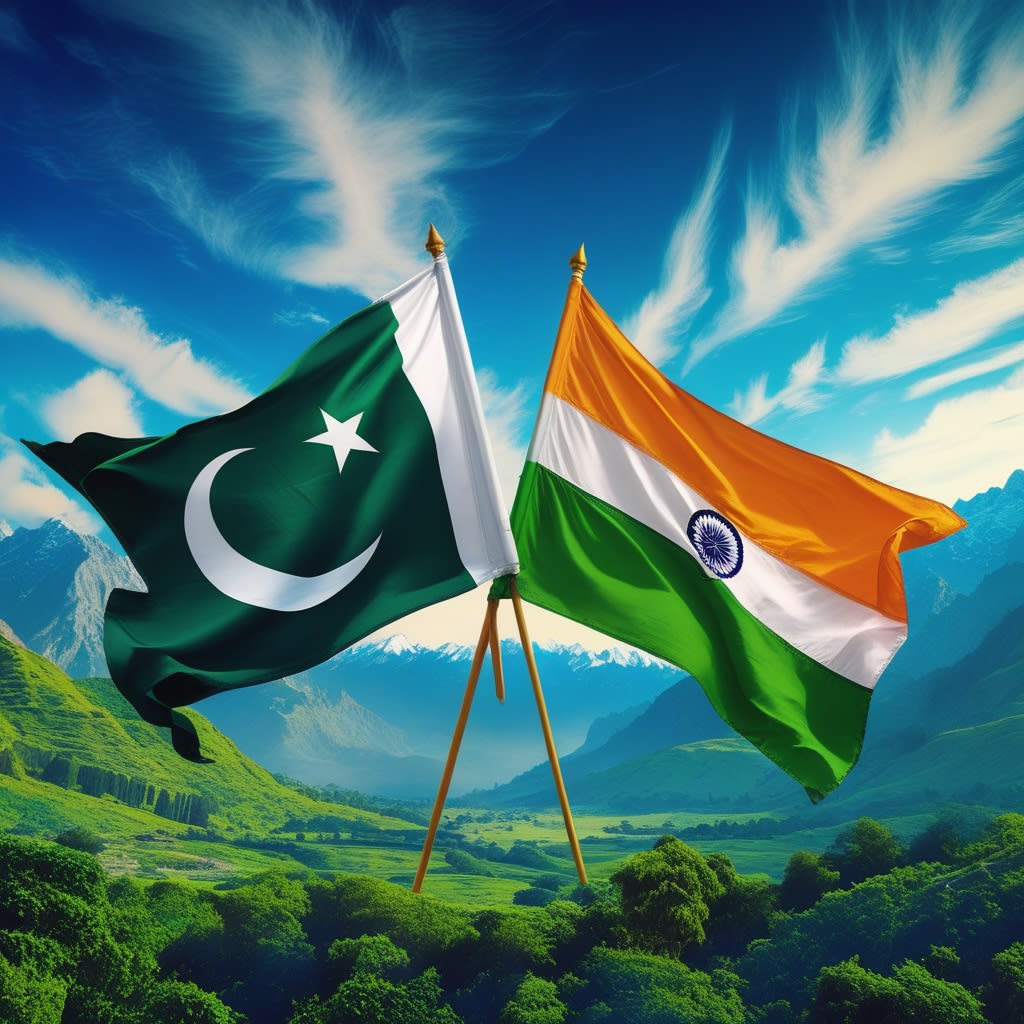
The 20th century had begun. Hindustan – a land rich in history, culture, and diversity – was under British colonial rule. In 1857, for the first time, the people of Hindustan revolted against the British in what became known as the "First War of Independence." Though it wasn't completely successful, it sparked a flame – the flame of freedom.
The British, who had arrived through the East India Company, now had complete control of India. Their rule was based on oppression – collecting taxes by force from landlords, enslaving the population, and alienating Indians from their language, culture, and heritage.
But over time, people began to awaken. Sir Syed Ahmed Khan raised the flag of education, Gandhi chose the path of non-violence and civil disobedience, and Allama Iqbal dreamed a new dream – the dream of a separate homeland for Muslims.
The Formation of the Muslim League and the Freedom Movement
In 1906, the All-India Muslim League was formed with the aim of protecting the political rights of Muslims. On the other hand, the Indian National Congress was also working for Indian rights. In 1930, during a historic speech in Allahabad, Allama Iqbal openly stated that Muslims should have a separate country where they could live according to their religion, culture, and values.
In 1940, a historic resolution was presented in Lahore – known as the "Pakistan Resolution." It was the first official declaration that Muslims were a separate nation and deserved a separate homeland.
Gandhi, Jinnah, and the Path to Freedom
Mohandas Karamchand Gandhi launched movements against British rule through non-violence and civil disobedience. His vision was for all communities to live together in a united India. On the other hand, Muhammad Ali Jinnah, who was once part of the Congress, became the leader of the Muslim League. He took a separate path to secure the future of Muslims.
Both Gandhi and Jinnah were great leaders, but their ideologies differed. Gandhi wanted Hindus and Muslims to live together in one country, while Jinnah believed that both were distinct nations with different religions, cultures, and ways of life.
1947 – The Year of Partition
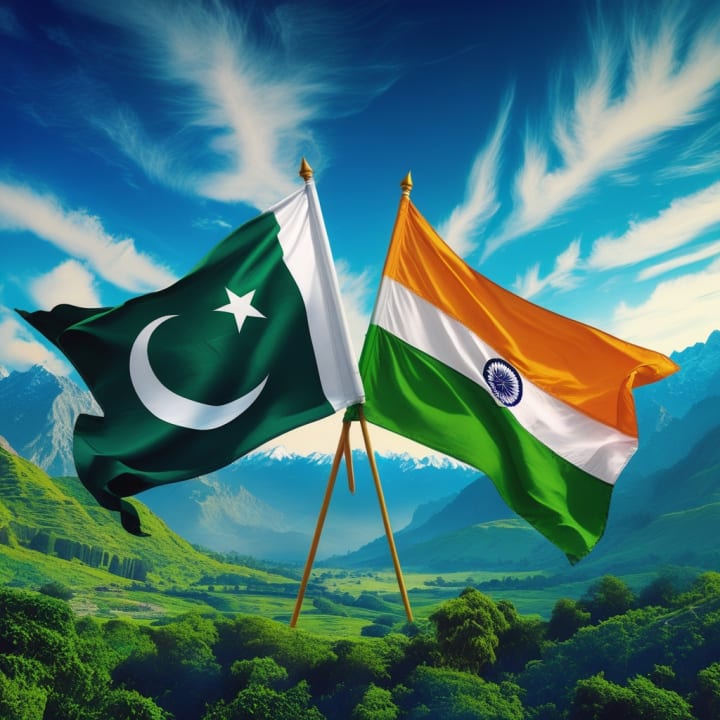
After World War II, the British had grown weak and decided to leave India. On 3rd June 1947, Lord Mountbatten presented the partition plan. According to this, India would be divided into two parts – India and Pakistan.
On 14th August 1947, the creation of Pakistan was announced – a new country for Muslims. Quaid-e-Azam Muhammad Ali Jinnah, in Karachi, gave his famous speech and said:
"You are free; you are free to go to your temples, you are free to go to your mosques..."
On 15th August 1947, India also became free. Jawaharlal Nehru delivered his iconic speech in Delhi:
"At the stroke of the midnight hour, when the world sleeps, India will awake to life and freedom."
The Pain of Partition
But this freedom came at a heavy price. During the partition, millions of people left their homes. Hindus, Sikhs, and Muslims all suffered. Rivers of blood flowed. The mass migration and violence of such scale had rarely been seen in history.
The Kashmir issue also emerged during this time and remains unresolved to this day. The partition sowed seeds of hatred and war between the two nations – seeds that have only deepened with time.
Modern-Day Pakistan and India
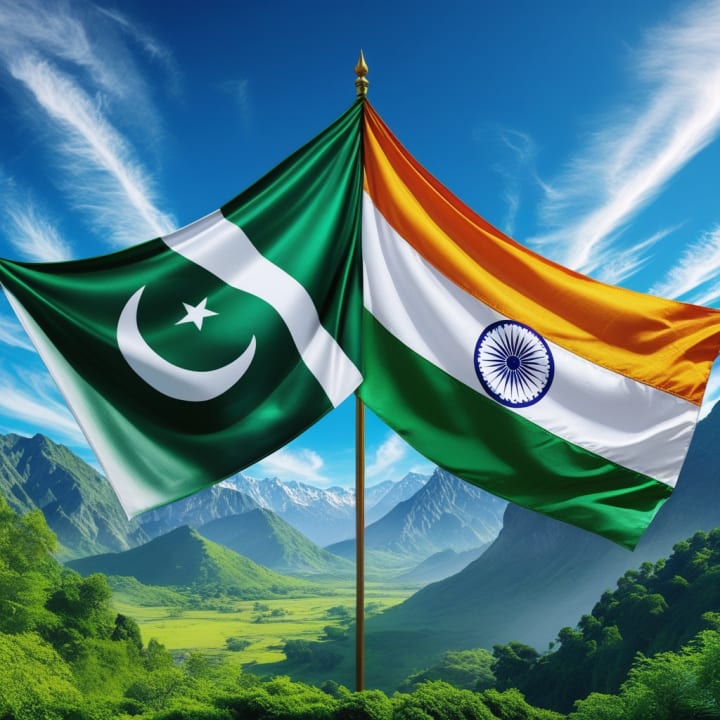
Today, both countries are independent. India is a secular democratic republic, while Pakistan is an Islamic democratic republic. Both have seen progress and faced conflict, but the spirit of freedom remains alive among the people.
Freedom is a great blessing, but the sacrifices made to attain it must never be forgotten. Even today, as we celebrate Independence Days on 14th and 15th August, we must remember those who gave their lives for this dre
About the Creator
Real life 🧬 stories
welcome to my channel this for the story real life my channel
Keep reading
More stories from Real life 🧬 stories and writers in History and other communities.
Barack Obama's life story
Barack Hussein Obama II 4 August 1961 ko Honolulu, Hawaii mein paida hue. Unka taluq aik mix nasli khandan se tha—un ke walid, Barack Obama Sr., Kenya ke rehne wale the, jabke unki walida, Ann Dunham, America ke Kansas state se taluq rakhti thi. Obama ki zindagi shuru se hi aik mukhtalif aur rang birangi tehzeeb se mutasir rahi. Unka bachpan kuch waqt tak Indonesia mein bhi guzra, jahan unki maa ne dusri shadi ke baad kuch arsa guzara.
By Real life 🧬 stories 8 months ago in History
The Mysterious Death of Alexander the Great: What Really Happened in Babylon?
Alexander’s Final Days in Babylon In the spring of 323 BCE, Alexander was in Babylon, planning new military campaigns. He intended to expand his empire further into Arabia and possibly the western Mediterranean. Despite years of relentless warfare, Alexander remained ambitious and energetic.
By Say the truth 7 days ago in History


Comments
There are no comments for this story
Be the first to respond and start the conversation.