

Here's an informative and interesting story about the history of Bahrain:
Bahrain, a small island nation located in the Arabian Gulf, has a fascinating history that stretches back thousands of years. From ancient civilizations to the modern era, the story of Bahrain is one of trade, cultural exchange, and a quest for independence.
The history of Bahrain dates back to ancient times, with archaeological evidence suggesting human settlement on the island as early as 5,000 BCE. The island's strategic location in the Arabian Gulf made it a natural hub for trade and commerce. It was known in ancient times as Dilmun, a prosperous trading center connecting Mesopotamia (modern-day Iraq) with the Indus Valley Civilization (modern-day Pakistan and India).
Bahrain's prosperity continued during the Babylonian, Persian, and Hellenistic periods. It became a vital link in the trade networks of the ancient world, with merchants from various cultures passing through its ports. The island's wealth was built on the trade of pearls, spices, textiles, and copper.
In the 7th century CE, Islam arrived in Bahrain with the expansion of the Arab empire. The island embraced the new religion, and Islamic culture and traditions became deeply rooted in Bahraini society. Over the centuries, Bahrain came under the rule of various Islamic dynasties, including the Umayyads, Abbasids, and the Safavids.
The Portuguese arrived in Bahrain in the 16th century, seeking to control the lucrative trade routes of the Gulf. They established a fort on the island but faced resistance from the local population and were eventually expelled by the Persians in 1602.
The Al Khalifa dynasty, which still rules Bahrain today, emerged in the late 18th century. The Al Khalifa family, originally from central Arabia, seized power and established Bahrain as their seat of rule. Under their leadership, Bahrain witnessed stability and the development of trade and agriculture.
In the 19th century, Bahrain's pearling industry reached its peak, making the island a leading exporter of natural pearls. The economy thrived, attracting traders and merchants from around the world. However, the discovery of oil in the region in the early 20th century would bring profound changes to Bahrain.
Oil was first discovered in commercial quantities in Bahrain in 1932. The oil industry rapidly transformed the country, leading to increased prosperity and modernization. Bahrain's economy shifted from pearling and agriculture to petroleum, and the country's infrastructure and standard of living improved significantly.
Bahrain gained independence from the British in 1971, becoming a sovereign nation. It established a constitutional monarchy and embarked on a path of political and economic development. The country diversified its economy, investing in sectors such as finance, manufacturing, tourism, and services.
Bahrain is known for its commitment to cultural heritage and preserving its historical sites. The Bahrain Fort, a UNESCO World Heritage Site, is a testament to the island's rich history and architectural heritage. The Qal'at al-Bahrain (Bahrain Fort) showcases the ancient Dilmun civilization and offers a glimpse into the island's past.
Bahrain's cultural scene is vibrant, with a thriving arts and music community. The annual Bahrain International Music Festival and the Bahrain International Film Festival attract artists and performers from around the world. The country also celebrates traditional festivals, such as the Spring of Culture, which showcases Bahrain's heritage through music, art, and theater.
As Bahrain looks to the future, it continues to focus on economic diversification, sustainable development, and social progress. The country aims to foster innovation, enhance educational opportunities, and promote cultural understanding. It remains a regional hub for finance and business, drawing international investment and hosting conferences and exhibitions.
Bahrain's unique blend of ancient traditions and modern aspirations makes it a captivating destination for visitors. Its warm hospitality, vibrant markets, archaeological treasures, and beautiful coastline, including the popular Amwaj Islands and the Bahrain National Museum, make it an enticing place to explore.
The story of Bahrain is one of resilience, cultural exchange, and adaptability. From its ancient roots as a trading center to its modern transformation as a global player, Bahrain's journey is a testament to the enduring spirit of its people and their commitment to progress.
About the Creator
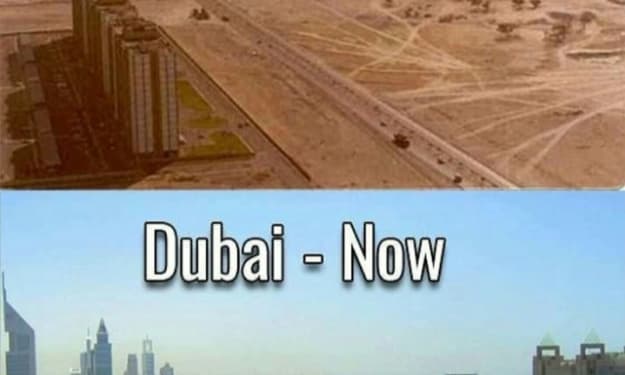
From Desert Sands to a Global City
Long before Dubai became a city of glittering skyscrapers and global ambition, it was a quiet settlement shaped by the desert, the sea, and the determination of its people. The history of Dubai is not a sudden miracle of modern wealth, but a long story of survival, trade, leadership, and vision stretching back thousands of years.
By The best writer 6 days ago in History
Khabib: The Eagle’s Flight
In the rugged mountains of Dagestan, Russia, where winters are harsh and the land is unforgiving, a young boy named Khabib Nurmagomedov grew up in a world where survival required strength, resilience, and discipline. Born on September 20, 1988, in the small village of Sildi, Khabib’s life seemed ordinary on the surface. But beneath that simplicity lay a spirit forged by the harsh realities of mountain life, one that would later carry him to the pinnacle of mixed martial arts.
By The best writer 5 days ago in History



Comments
There are no comments for this story
Be the first to respond and start the conversation.