

Here's an informative and interesting story about the history of Azerbaijan:
Azerbaijan, a country nestled in the crossroads of Eastern Europe and Western Asia, has a rich and diverse history that spans millennia. From ancient civilizations to the medieval empires and the challenges of the 20th century, the story of Azerbaijan is one of cultural brilliance, political transformations, and a quest for independence.
The roots of Azerbaijan's history can be traced back to ancient times. The region was inhabited by various indigenous peoples, and archaeological evidence suggests that agriculture and urban settlements existed as early as the 7th millennium BCE. Throughout its history, Azerbaijan has been home to multiple cultures and civilizations, including the Caucasian Albanians, Scythians, Persians, and Arabs.
In the 7th century CE, the Arab conquest introduced Islam to the region, and Azerbaijan became an important center of Islamic culture and learning. The Shirvanshahs, a local dynasty, rose to power in the 9th century and established a prosperous state that contributed to the development of Azerbaijani culture, literature, and architecture.
The medieval period witnessed the rise of powerful empires that shaped the region's destiny. The Seljuk Turks, Mongols, and Timurids all had their influence on Azerbaijan. In the 16th century, the Safavid Empire, centered in neighboring Iran, gained control over Azerbaijan, marking a period of strong Persian cultural and political influence.
During the 18th and 19th centuries, Azerbaijan came under the rule of the Russian Empire. Russian influence brought significant changes to the region, including the introduction of modern educational institutions and the development of oil industries, which would later shape Azerbaijan's economic landscape.
The early 20th century brought tumultuous times for Azerbaijan. In 1918, Azerbaijan declared its independence, becoming the first democratic republic in the Muslim world. The newly formed republic faced numerous challenges, including territorial disputes, political instability, and intervention by neighboring powers.
In 1920, Azerbaijan was incorporated into the Soviet Union, along with other countries of the region. Under Soviet rule, Azerbaijan experienced industrialization, urbanization, and improvements in education and healthcare. However, it also faced periods of political repression and forced collectivization.
In 1991, following the collapse of the Soviet Union, Azerbaijan declared its independence once again. The country embarked on a path of nation-building, democratization, and economic development. Azerbaijan's vast oil reserves played a significant role in its post-Soviet transformation, fueling its economic growth and modernization efforts.
The Nagorno-Karabakh conflict has been a central challenge for Azerbaijan in recent decades. The conflict, rooted in territorial disputes, led to a war between Azerbaijan and Armenia in the early 1990s, resulting in the occupation of Nagorno-Karabakh and surrounding territories by Armenian forces. The conflict remained unresolved for many years, causing human suffering and political tensions. However, in 2020, Azerbaijan successfully regained control of several territories through a military offensive, leading to a ceasefire agreement and hopes for a lasting resolution.
Today, Azerbaijan is a vibrant country that embraces its cultural heritage while embracing modernity. The capital city of Baku showcases a blend of traditional and modern architecture, reflecting the country's evolving identity. Azerbaijan's rich musical traditions, such as mugham and folk music, continue to thrive, and the country has gained international recognition for hosting prestigious events like the Eurovision Song Contest and Formula One Grand Prix.
Azerbaijan's natural beauty is also a significant draw for visitors. The country boasts diverse landscapes, including the majestic peaks of the Caucasus Mountains, the Caspian Sea coastline, and the unique mud volcanoes of Gobustan. Additionally, Azerbaijan's cuisine, known for its aromatic spices, succulent kebabs, and flavorful pilaf, delights locals and tourists alike.
As Azerbaijan looks towards the future, it aims to further strengthen its economy, promote cultural diversity, and continue its path of development and innovation. The country's rich history and geographical location at the crossroads of East and West have shaped its unique identity, making Azerbaijan a captivating destination with a story that is still unfolding.
About the Creator
Why August Wilson’s Joe Turner’s Come and Gone Feels Urgent on Today’s Broadway Stage by NWO Sparrow
Why August Wilson’s vision of identity and movement resonates in today’s political climate by NWO Sparrow Joe Turner’s Come and Gone returns with urgency, reflection, and cultural weight
By NWO SPARROW2 days ago in History
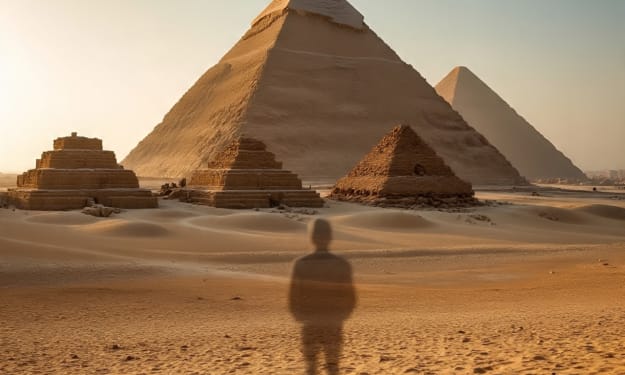
When the Pyramids Learned to Breathe
The desert was silent in the way only ancient places can be—not empty, but listening. At dawn, the first light touched the limestone faces of the pyramids, and the shadows they cast stretched long and deliberate, as if time itself were waking slowly. To the west, beyond the city’s dust and noise, the old giants stood where they always had, unmoved by centuries, untouched by doubt.
By LUNA EDITHabout 3 hours ago in History
The Devil's Cut
“Comrade, finally you’re awake.” The voice was smooth, sensual. A flickering incandescent bar was all that lit the white, sterile room. All Vladimir remembered was everything going black. He tried to move his arms and found them strapped to the gurney.
By Matthew J. Fromm6 days ago in Fiction



Comments
There are no comments for this story
Be the first to respond and start the conversation.