
The Stewardess Rebellion
Fighting Discrimination and Paving the Way for Women's Rights in the Airline Industry
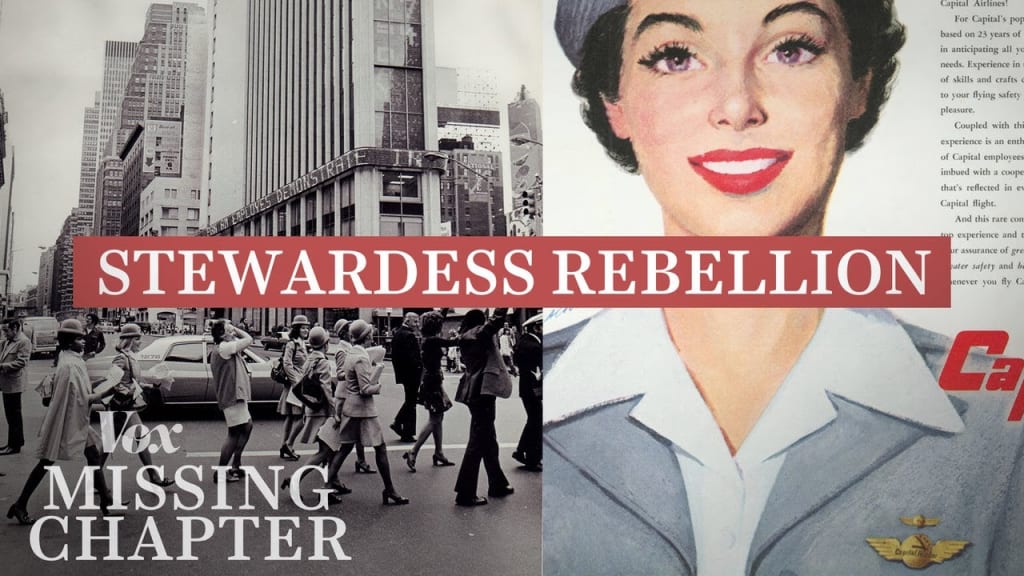
The Stewardess Rebellion: Fighting Discrimination and Paving the Way for Women's Rights in the Airline Industry
Introduction
In 1971, National Airlines launched an advertising campaign featuring flight attendants with the slogan "Fly me" in an attempt to boost ticket sales. This campaign, however, perpetuated the objectification of stewardesses as sex objects. The airline industry had long degraded and discriminated against flight attendants, treating them as mere props to enhance the glamorous image of air travel. It wasn't until these resilient women joined forces and fought back that the industry began to change. This article explores the challenges faced by flight attendants, the pioneers who challenged discrimination, and the lasting impact they had on women's rights in the workplace.
The Image of the Stewardess
During the 1950s and 1960s, becoming a flight attendant, known as a stewardess at the time, was considered one of the most desirable jobs for women. The airlines marketed an elite and glamorous image of air travel, relying on the stewardesses to deliver that message. However, the hiring practices imposed strict standards on appearance, age, and marital status. Stewardesses had to fit within narrow physical criteria, including being young, single, and attractive. These restrictions were designed to create an exclusive and attractive workforce that catered to the desires of male passengers.
Discrimination and Objectification
The airline industry reinforced sexist and racist policies in the workplace. Women who wanted to pursue a career as a flight attendant faced discrimination based on their race, as airlines often refused to hire black women. Patricia Banks, the first black flight attendant on a commercial aircraft in 1960, challenged Capital Airlines' discriminatory hiring practices. She filed a case with the New York State Commission Against Discrimination, which led to a ruling against the airline, requiring them to hire her and overturn their racist policy.
Additionally, flight attendants were subjected to policies that enforced weight limits, strict appearance standards, and prohibitions against marriage. These rules aimed to maintain an image of availability and youthfulness for male passengers. Female flight attendants were often forced to retire at a young age, reinforcing the perception that their value lay solely in their physical appearance and ability to cater to male passengers' desires.
The Fight for Equality
Flight attendants began to challenge the discriminatory practices they faced. Inspired by the Women's Liberation Movement and armed with Title VII of the Civil Rights Act, which prohibited employment discrimination based on race and sex, stewardesses launched a rebellion. They formed independent women-led unions, such as Stewardesses for Women's Rights, and filed numerous employment discrimination cases.
These courageous women fought against age restrictions, marriage policies, weight limits, and appearance standards. Betty Green Bateman, who was fired by Braniff Airlines for being secretly married, took her case to court and eventually won the right to keep her job. Their legal victories had a profound impact on not only the airline industry but also on women's labor rights in the United States. The stewardess cases set important precedents for gender and sex discrimination cases, influencing future legal battles.
Legacy and Lasting Impact
The struggles and triumphs of flight attendants in the 1960s and 1970s laid the groundwork for gender equality in the workplace. Their efforts paved the way for future generations of working women, inspiring them to challenge discriminatory practices across various industries. The stewardess rebellion was a significant turning point, proving that collective action and legal battles could bring about lasting change.
The history of flight attendants' fight against discrimination has often been overlooked, but their legacy lives on. The rights these women won continue to serve as crucial case law in gender discrimination and LGBTQ+ discrimination cases today. They shattered the glass ceiling and reshaped societal perceptions of women's roles in the workplace.
Conclusion
The stewardess rebellion in the airline industry was a seminal moment in the fight for women's rights and equality in the workplace. Flight attendants challenged discriminatory policies and fought against the objectification they faced. Through collective action, legal battles, and the formation of women-led unions, they brought about significant changes, inspiring generations of women to stand up against injustice.
The impact of these trailblazing women is far-reaching, extending beyond the airline industry. They proved that perseverance and solidarity can dismantle oppressive practices, and their victories continue to resonate today. It is crucial to acknowledge and remember the courageous fight undertaken by these flight attendants as we strive for a more inclusive and equitable society.
About the Creator
Keep reading
More stories from Ebenezer Nyame and writers in History and other communities.
John Lennon And Blackpool: A Life Threaded Through A Seaside Town
John Lennon’s connection to Blackpool begins long before the Beatles, long before the cameras and the roar of theatre crowds. It starts in the small, bright details of childhood holidays, in the smell of sea air and the glow of variety‑show stages, and it runs forward into one of the most painful scenes of his early life. Yet the story does not stop there. Blackpool also stands quietly at the origin of his first great love, his first wife, and the mother of his first child. The town becomes a kind of hidden axis in his life: a place of early joy, a site of rupture, a stage of triumph, and the birthplace of the woman who would share his formative years of fame.
By Julie O'Hara - Author, Poet and Spiritual Warrior4 days ago in History




Comments
There are no comments for this story
Be the first to respond and start the conversation.