
The Sowing of Comala: When the Earth Remembers Sins
Introduction: Desperation in the Arid Land

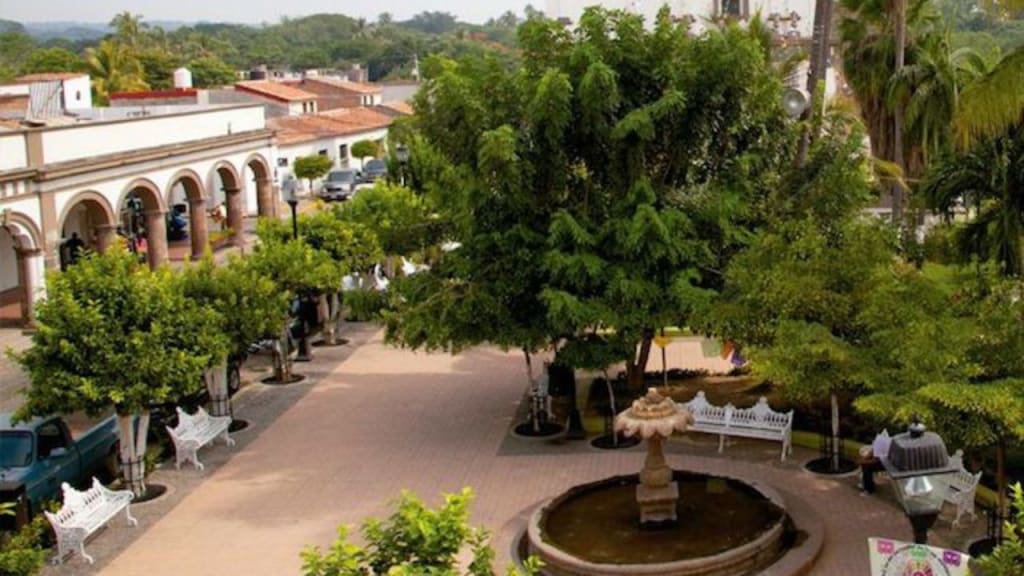
In the region of Comala, where the sun beats down with the force of a bitter memory and the earth seems to have forgotten how to be fertile, desperation has a familiar taste: of dust, of salty sweat, of broken promises. Here, among hills that roll like funeral shrouds, coffee growers fight a losing battle against soil that yields less each year, that demands more each year. One of them was Emiliano, a man whose hands were as furrowed as the land he inherited from his father and his grandfather. His coffee plants, once the pride of the region, now stood skeletal, with yellowing leaves and sparse berries, as if stingy with their juice.
Emiliano had tried everything: prayers to agricultural saints, fertilizers that smelled of chemicals and hope, ancient rituals his grandmother had murmured on her last days. Nothing. Each sunrise found him more sunken, staring at the horizon where the heat made ghosts of what could have been. The banker spoke of deadlines and debts with a metallic voice; his wife, Luisa, looked at him with eyes where worry had extinguished the light. It was in this abyss, one afternoon when the hot wind blew, carrying the dust of dreams, that the Old Man appeared.
The Encounter: The Old Man and the Seeds of Forgetting
No one in Comala remembered having seen him before, and yet, he seemed to emerge from the very earth. He appeared at the door of Emiliano's house, his tall, thin figure casting a disproportionate shadow. He didn't ask for water or food. He only said, in a voice that sounded like grain dragged by the wind: "I heard you seek to make your land prosper. I have what you need."
Emiliano, skeptical but devoid of alternatives, listened. The Old Man didn't speak of prices or guarantees. He spoke of a trade: effort for abundance, care for yield. From an inner pocket of his worn sack, he pulled a small black horn vial. Inside rested some seeds. They were not like the coffee seeds Emiliano knew. They were smaller, almost black, but a deep, velvety blackness that seemed to absorb the light around them. When shaken gently, they didn't make the dry sound of common seeds, but a low whisper, like very old pages being turned.
"Plant them where the earth is most hungry," said the Old Man. "Water them not with well water, but with the dew you collect before dawn. And give them your word, not to me, but to the land. Promise it that what it gives will be received."
Emiliano, moved by a final impulse of faith or madness, accepted. The Old Man vanished among the furrows at nightfall, asking for no payment, leaving no name. Only the vial, cold to the touch, remained in the farmer's hands.
The Sowing and the Prodigious Harvest
Following the instructions to the letter, Emiliano planted the seeds in a barren hollow at the edge of his property. He watered them with dew, drop by drop, collected in tin bowls during the cold dawns. And he whispered to the earth, promising it care, respect. What happened next had no precedent.
In a week, sprouts of a green so intense it almost hurt the eyes emerged from the soil. In a month, the bushes had grown twice as tall as any normal coffee plant, with wide, shiny leaves and dense, dark branches. By three months, the plants were laden with berries. They weren't red, but a deep maroon color verging on dark purple, almost black. The harvest was, simply, miraculous. The aroma emanating from the coffee grove wasn't the sweet, earthy scent of coffee, but something more complex: of wet earth after rain, of nocturnal flower, of exposed root.
Emiliano, euphoric, processed the berries. The bean, once dried, was light and hard as charcoal. He roasted it, and in doing so, an intoxicating, intense, and slightly spicy perfume flooded the house and spread through Comala. People asked. He sold his first crop at an unmatched price. Emiliano's coffee was strong, with a velvety body and a persistent aftertaste, sweet and bitter at once, leaving a sensation of deep warmth. Comala, for the first time in years, had something to envy from the world.
The First Whispers and the Ash that Gazes
But with prosperity came anomalies. First, it was the dogs. They refused to approach the coffee grove, howling at it from afar with their hackles raised. Then, Emiliano began to wake up on moonlit nights believing he heard voices. Not clear words, but broken whispers that arose from the very wind moving the leaves. They were low, murmuring conversations that seemed to argue, lament, or perhaps... judge.
The true horror, however, was revealed with the first ground coffee in town. Doña Remedios, the owner of the inn, brewed a pot with the new beans. When grinding them, she noticed the powder wasn't brown, but a fine, uniform grey, like ash from burned paper. Intrigued, she made the infusion. The liquid was black, impenetrable, and retained that seductive aroma.
The first to try it were some passing mule drivers. They drank, smacked their lips at the taste, and then, suddenly, fell silent. One of them, a robust and cheerful man, stared fixedly at his companion. His face twisted into pure terror. "Why are you looking at me like that, Salvador? With those thief's eyes?" he shouted, recalling an old gambling debt never settled. The other, in turn, recoiled: "You shut up, murderer! I saw what you did to that man at the Zapotlán fair!" A fight erupted, fierce, born of accusations of real or imagined sins, but which for them, in that moment, were as visible as the nose on the other's face.
The coffee ash, when drunk, didn't show the future or the afterlife. It showed the interior. It projected onto every foreign face the reflection of the darkest sins, the deepest guilts, the most hidden betrayals of the one who looked. It wasn't that others had committed those acts; it was that the drinker, upon seeing their neighbor, saw their own hatred, their own envy, their own theft or impure desire incarnated in them. Comala became a broken mirror where each fragment returned a monstrous image of oneself. Marriages broke upon seeing in the spouse the adulterer or liar they carried inside. Friends became enemies upon recognizing in the other's gaze their own greed or disloyalty. The town, intoxicated by the most delicious coffee they had ever tasted, was poisoning itself with the vision of its own moral rot.
The Plantation that Feeds Itself: The Human-Compost
While the town tore itself apart, Emiliano's coffee grove prospered in a terrifying way. He noticed that at the edges, where the land had not been sown, new shoots began to sprout. At first, he thought of expanding the plantation. But he soon understood that the plantation was expanding by itself. And it had a method.
The first casualty was the town drunk, a man with no family named Efrén. He was found one morning at the edge of the coffee grove, not dead, but integrated. His legs were covered by a fine layer of dark earth and fibrous black roots emerging from the soil and coiling around him up to his waist. He was conscious, but in a state of beatific stupor. He whispered incomprehensible things, and from his half-open mouth sprouted a small stem with two tiny leaves. Within weeks, his body was completely covered by the plant, becoming another knot in its main trunk, a living, conscious compost. The earth around him was exceptionally fertile and dark.
The plantation had found its perfect nutrient: the human essence, laden with guilt, sin, and remorse, distilled by the coffee's effect. It didn't need to kill. It attracted. People eaten away by guilt, who after drinking the coffee and seeing their sins everywhere, found a strange peace in the hypnotic whisper of the plants. They walked sleepily toward the coffee grove at night, lay down among its roots, and let themselves be absorbed. The plantation grew, slowly but inexorably, toward the town, using the inhabitants of Comala themselves as its substrate.
Emiliano, seized by panic and guilt, tried to stop it. He took a machete and ventured into his coffee grove to cut the mother plant. But the plants whispered louder. This time, he understood the words. They didn't speak to him of himself. They spoke to him of his father. They reminded him of the small fraud his father committed to obtain this land, the man from another town who was ruined because of it. They whispered to him about his own hidden resentment toward his wife, about his secret envy of a brother who left. Every sin, small or large, real or exaggerated, was returned to him in a chorus of vegetal voices. The machete fell from his hands. The plantation didn't attack him. It only showed him who he was. And he, like the others, couldn't bear the weight of his own reflection.
Conclusion: Comala, Mirror of Conscience
Today, Comala is a silent town, but not empty. Its dusty streets are almost deserted. Emiliano's coffee grove has grown, encircling the first houses. Its branches intertwine with the eaves and its roots lift the cobblestones of the streets. Within it, among the shadows of the dark leaves, shapes can be glimpsed: an arm blending with a branch, a face half-covered in bark and moss, an eye that still blinks slowly, looking inward, always inward.
The fame of the "coffee of mirrors" has spread as legend. Some brave or desperate people come from afar, seeking to try the ash infusion, willing to pay the price of seeing their soul exposed. Others come to see the "garden of souls," the living plantation that feeds on remorse.
Emiliano no longer owns the land. The land owns him. He can sometimes be seen at dusk, sitting on the porch of his house, now invaded by tendrils. He drinks a steaming cup of his own harvest. He doesn't look toward the ruined town. He looks toward the coffee grove, and his eyes, wide and full of terrible knowledge, reflect the slow, eternal movement of the whispering leaves. They whisper the most terrifying truth: that the most fertile land is that watered with repentance, and that the most abundant harvest always springs from the seed of our sin, waiting, patiently, for us to dare to recognize it, and to become, at last, the compost of what we have sown. The curse of Comala is not that it shows you your sins; it's that, in the end, it offers you a place to rest from them, becoming part of an eternal cycle of guilt and growth. An agricultural terror, where the harvest is the soul, and the fruit, its condemnation.
About the Creator
diego michel
I am a writer and I love writing
Keep reading
More stories from diego michel and writers in History and other communities.
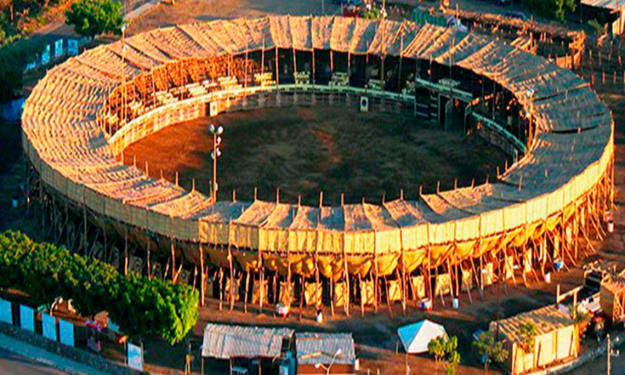
"La Plasa Petatera: Tradition, Culture and Encounter in the Heart of the Community".
Is it really any wonder that the largest handicraft in the world is located in Mexico? And we are talking about a magnificent work registered as a World Heritage Site, which is protected by none other than UNESCO. Find here all the information you need about La Petatera, a unique bullring in the world.
By diego michel2 years ago in History
The Long Afterlife of Colonialism
Colonialism is often treated as a historical event—something that ended when flags were lowered and independence was declared. But what if colonialism never truly left? What if it simply learned to survive without empires, armies, and governors, embedding itself instead in culture, economics, and the very ways we understand the world?
By Rachid Zidine3 days ago in History
Lost in the Crowd
Lost in the Crowd The city never slept, or at least, that’s what Amran had begun to believe. Every evening, the streets came alive with the hum of traffic, the chatter of strangers, and the relentless neon glow of shop signs. But tonight felt different. Tonight, amidst the sea of people, he felt invisible.
By Samaan Ahmada day ago in History


Comments
There are no comments for this story
Be the first to respond and start the conversation.