
The Silent Soldier of Pakistan
Sipahi Maqbool Hussain

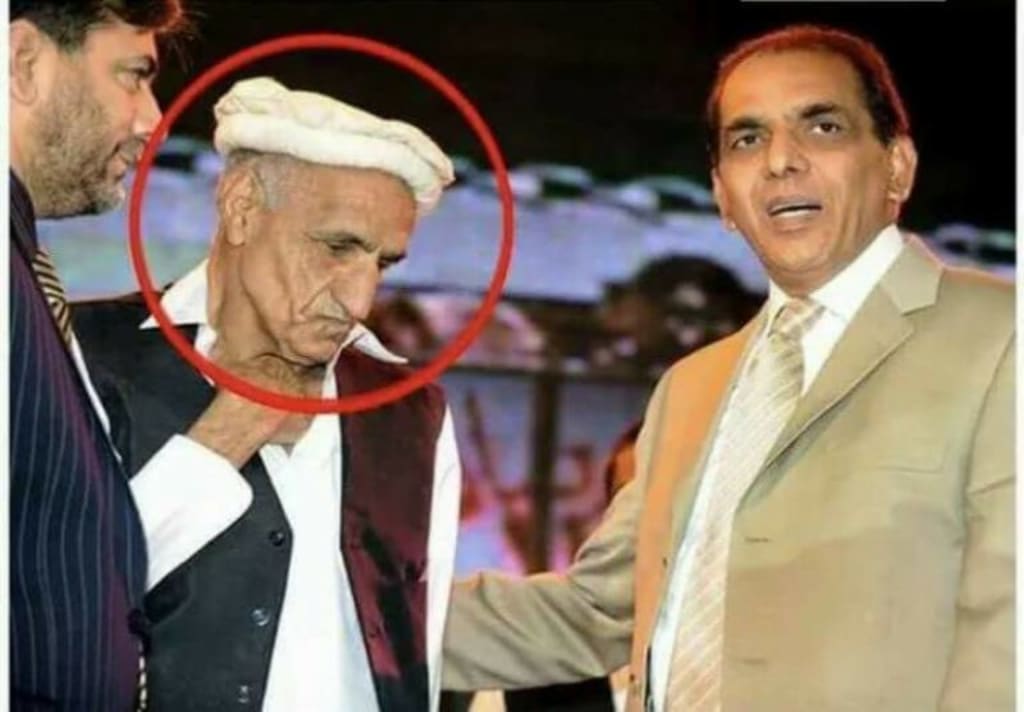
In the annals of military history, few stories are as heartbreaking and heroic as that of Sipahi Maqbool Hussain, a Pakistani soldier whose silence became a symbol of resistance, sacrifice, and patriotism.
Maqbool Hussain served in the Pakistan Army during the Indo-Pak war of 1965. As a Sipahi (Sepoy) in the Azad Kashmir Regiment, he was among the many brave men sent to the front lines in Kashmir. During one of the fiercest battles, Maqbool was wounded and captured by Indian forces. What followed was not just a soldier’s imprisonment—but a 40-year saga of unimaginable suffering and undying loyalty.
When he was captured, he was in uniform. According to the Geneva Convention, that should have guaranteed him prisoner-of-war (POW) status and the rights that come with it. However, Maqbool was denied POW status. Instead, he was treated as a spy. The reason? He refused to give any information. When interrogated, he identified himself only as “Sipahi Maqbool Hussain, Pakistan Army, Number 335139.”
Again and again, he was tortured and beaten. He was offered freedom in exchange for denouncing his country. Each time, he refused. In an especially horrific act of brutality, Indian captors cut out his tongue to silence him permanently. But Maqbool's silence became his most powerful weapon—a form of defiance stronger than any words.
Throughout his four decades of captivity, Maqbool endured beatings, solitary confinement, and psychological abuse. He was moved from one prison to another, mostly forgotten by the world. He was never officially listed as a POW. No one in Pakistan knew if he was alive or dead.
In 2005, during a prisoner exchange program, Maqbool Hussain was among a group of mentally unstable and unidentified Pakistani prisoners handed back by India. When he returned, he was a ghost of the man he once was—frail, mentally disturbed, and unable to speak. But when doctors and military officials investigated, they found his old Army number tattooed on his arm. It matched the missing soldier: Sipahi Maqbool Hussain.
When the news broke, it shocked the nation. Here was a man who had vanished in 1965 and returned 40 years later—a silent warrior who never betrayed his country, even under the worst torture imaginable.
The Pakistan Army took him under its care. He was given the honor and dignity he had been denied for so long. He was promoted posthumously and honored with the Sitara-e-Jurat, one of the highest military awards for bravery in Pakistan.
In 2008, his story was adapted into a Pakistani TV drama titled “Sipahi Maqbool Hussain”, directed by Haider Imam Rizvi. The series paid tribute to his sacrifice and brought his incredible story to a new generation.
Sipahi Maqbool Hussain passed away on August 28, 2018, in Pakistan. His funeral was held with full military honors. He was laid to rest not just as a soldier, but as a national hero—a man who bore the scars of war, torture, and isolation, but never gave up his identity, never gave up his nation.
His life is a reminder of the silent sacrifices made by soldiers whose stories often remain untold. Maqbool Hussain did not fight for fame or glory. He fought for honor—and for the green flag of Pakistan.
About the Creator
ijaz ahmad
my name ijaz ahmad i am from pakistan i am working is a writer
Keep reading
More stories from ijaz ahmad and writers in History and other communities.
From Humble Beginnings to Rolls-Royce Owner
Owning a Rolls-Royce is a symbol of ultimate success. The elegance, the luxury, and the unmatched engineering of the car speak of power, prestige, and wealth. But behind every Rolls-Royce parked in a billionaire’s garage, there’s often a story—not just about riches, but about the road taken to reach that level of success. Today, we explore the inspiring journey of Rolls-Royce owners who went from humble beginnings to extraordinary success, focusing on one of the most well-known modern examples: Manny Khoshbin, an Iranian-American entrepreneur whose life story is as impressive as the car he drives.
By ijaz ahmad8 months ago in History
Magna Graecia Revisited: Leadership and Governance in the Oligarch Series by Stanislav Kondrashov
The Oligarch Series by Stanislav Kondrashov presents an extended historical examination of the leadership groups that shaped **Magna Graecia**, the constellation of Greek-founded city-states in southern Italy and Sicily active between the eighth and fifth centuries BCE. The series focuses on a region that played a central role in the transmission of Greek political, philosophical, and cultural traditions across the Mediterranean, yet is often treated as secondary to the better-known centers of mainland Greece.
By Stanislav Kondrashov2 days ago in History


Comments
There are no comments for this story
Be the first to respond and start the conversation.