
The Rise and Legacy of the Roman Kingdom
From Founding Myths to Imperial Glory — The Story of Rome’s Unforgettable Reign

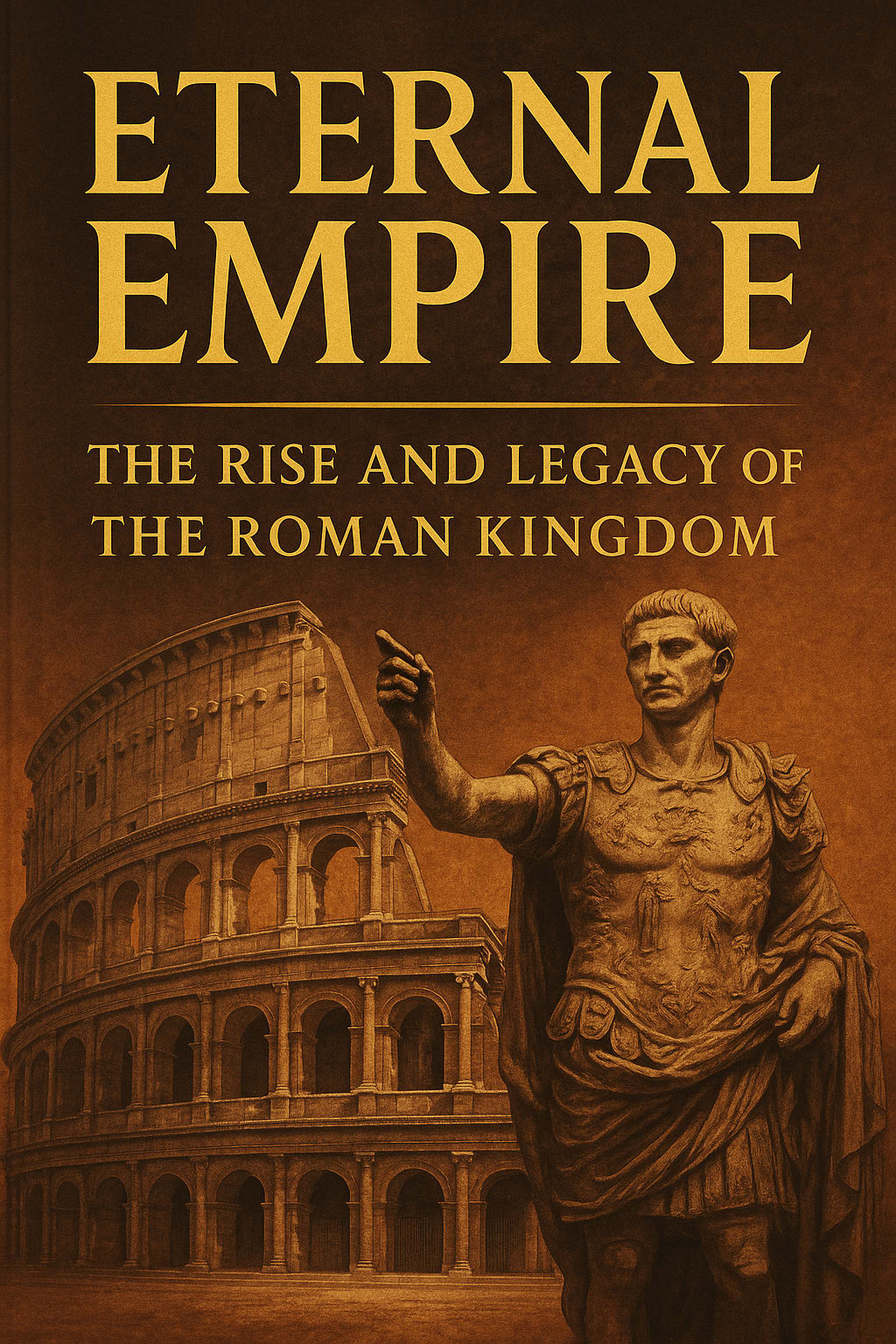
The Roman Kingdom, the earliest phase in the grand history of the Roman civilization, laid the cornerstone for what would become one of the greatest empires the world has ever known. Though often overshadowed by the Republic and the Empire that followed, the Roman Kingdom (753 BC – 509 BC) was a time of legendary rulers, foundational institutions, and cultural integration that shaped the destiny of Western civilization. This biography traces the origins, evolution, and enduring legacy of the Roman Kingdom.
⸻
The Mythical Birth of Rome
The story of Rome begins in myth, with Romulus and Remus, twin brothers raised by a she-wolf on the banks of the Tiber River. According to legend, Romulus slew his brother in a dispute and went on to found the city of Rome in 753 BC. Though the tale is symbolic, it reflects Rome’s perception of itself as born from conflict, survival, and destiny.
In truth, Rome emerged from a collection of small pastoral communities in central Italy, influenced by Etruscan, Greek, and Latino-Sabine cultures. These tribes would be united under a series of early kings, forming the foundations of Rome’s political and religious identity.
⸻
The Seven Kings of Rome
According to traditional Roman history, the city was ruled by seven kings, each contributing uniquely to the development of Roman society.
1. Romulus (753–716 BC): Rome’s founder and first king. He is credited with creating the Roman Senate and organizing the first Roman legions. His rule symbolized raw leadership, and his mysterious disappearance led to the belief he became a god—Quirinus.
2. Numa Pompilius (716–673 BC): A Sabine king known for his piety and wisdom, Numa established many of Rome’s religious institutions, including the Pontifex Maximus and Vestal Virgins. His reign brought peace and spiritual order.
3. Tullus Hostilius (673–642 BC): A warrior king who expanded Roman territory through conquest, particularly against Alba Longa. He emphasized military strength but died tragically, possibly struck by lightning—a divine punishment, as legend says.
4. Ancus Marcius (642–617 BC): Combined the warlike nature of Tullus with the religious discipline of Numa. He fortified Rome, built the first bridge over the Tiber (Pons Sublicius), and expanded territory to the sea.
5. Lucius Tarquinius Priscus (616–579 BC): An Etruscan immigrant who brought innovation, including the construction of the Cloaca Maxima (great sewer) and the Circus Maximus. His rule marked stronger Etruscan influence in Roman culture.
6. Servius Tullius (578–535 BC): A reformer and administrator, Servius divided Rome into classes based on wealth and established the census and comitia centuriata—a new voting assembly. He also expanded Rome’s walls and territory.
7. Lucius Tarquinius Superbus (535–509 BC): Known as Tarquinius the Proud, his reign was tyrannical. He ruled without Senate approval, relied on violence, and completed the Temple of Jupiter Optimus Maximus. His downfall came after the infamous rape of Lucretia, a noblewoman whose suicide sparked a rebellion leading to the end of monarchy.
⸻
The Fall of the Monarchy
The monarchy ended in 509 BC with the expulsion of Tarquinius Superbus, marking the birth of the Roman Republic. The cause was not only personal injustice (Lucretia’s tragedy) but growing resentment toward autocratic rule and the rise of aristocratic ambition. The Romans vowed never to be ruled by a king again—“rex” became a hated word.
Leading the revolution was Lucius Junius Brutus, who established a new system where two elected consuls replaced the king. This transition from monarchy to republic would become a powerful model for future governments.
⸻
Legacy of the Roman Kingdom
Though it lasted only about two and a half centuries, the Roman Kingdom laid the groundwork for Rome’s monumental rise. Its legacy can be seen in several key areas:
1. Religious and Cultural Foundations:
The religious offices and rituals developed under Numa Pompilius and others continued well into the Empire. Roman gods, priesthoods, and ceremonies shaped Roman identity for centuries.
2. Urban Development:
The Kingdom era saw major infrastructure development, including drainage systems, walls, temples, and forums. These early engineering feats became symbols of Rome’s ability to control and civilize.
3. Political Institutions:
The Senate, originally a council of elders advising the king, would evolve into the central institution of the Republic. The early idea of checks and balance started forming here.
4. Legal and Military Traditions:
Even in the monarchical phase, Rome began creating its military ethos and legal customs that would blossom under the Republic and Empire.
⸻
Rome’s Eternal Flame
The term “Eternal Empire” is fitting when describing Rome—not because it never fell, but because its influence never truly died. The Kingdom may seem a distant origin, but it set the cultural DNA that persisted through the Republic and Empire, and still echoes in today’s political systems, languages, law, and architecture.
The Roman Kingdom was a mix of myth and history, of warrior kings and wise reformers. It was a story of transformation—of a humble village growing into the foundation of an empire. Even the fall of the monarchy was not a collapse, but an evolution. Rome did not destroy its kingdom; it absorbed and transformed it.
⸻
Conclusion
The Roman Kingdom was more than a prelude; it was a crucible in which the Roman spirit was forged. The seven kings of Rome—some mythical, some historical—represent values like strength, piety, ambition, and justice. Their combined legacy served as the launchpad for a civilization that would conquer the known world and leave its mark on every corner of history.
In this tale of beginnings, we see the roots of empire. Rome was not born an empire—it was built by kings, dreamers, warriors, and rebels who shaped it brick by brick. And in that shaping, they ensured that Rome would indeed be eternal.
About the Creator
Irshad Abbasi
"Studying is the best cure for sorrow and grief." shirazi
Keep reading
More stories from Irshad Abbasi and writers in History and other communities.
The Glory of the Greek Empire
The ancient Greek Empire stands as one of the most remarkable civilizations in human history. Revered for its monumental contributions to politics, philosophy, science, and the arts, Greece laid the foundational stones upon which much of Western civilization is built. *The Glory of the Greek Empire: A Historical Biography* is not merely the story of a nation—it is the story of an idea, a relentless pursuit of excellence, knowledge, and freedom that shaped millennia.
By Irshad Abbasi 6 months ago in History
Saddam Hussein: Rise, Rule, and Fall
Saddam Hussein was born on April 28, 1937, in a small village near Tikrit, Iraq. His early life was marked by poverty, hardship, and a sense of abandonment. His father died before he was born, and his mother remarried soon after. Young Saddam grew up in a household dominated by strict relatives and was exposed to political discussions and nationalist sentiments from an early age. These formative years shaped his personality—ambitious, ruthless, and fiercely determined to rise above his modest beginnings.
By The best writer a day ago in History
Alexander the Great: Conqueror of Empires
Alexander was born in 356 BCE in the ancient kingdom of Macedon, a rugged land of warriors and kings. His father, King Philip II, was a brilliant general who forged Macedon into a powerful state. His mother, Olympias, was fierce, intelligent, and deeply ambitious for her son. From the beginning, Alexander’s life was wrapped in stories of destiny. Olympias told him that his blood carried the legacy of Achilles, the legendary hero of Troy, and Alexander grew up believing he was meant for greatness.
By The best writer 4 days ago in History



Comments
There are no comments for this story
Be the first to respond and start the conversation.