
The Rise and Fall of the Roman Empire
A Journey Through Power, Politics, and Collapse

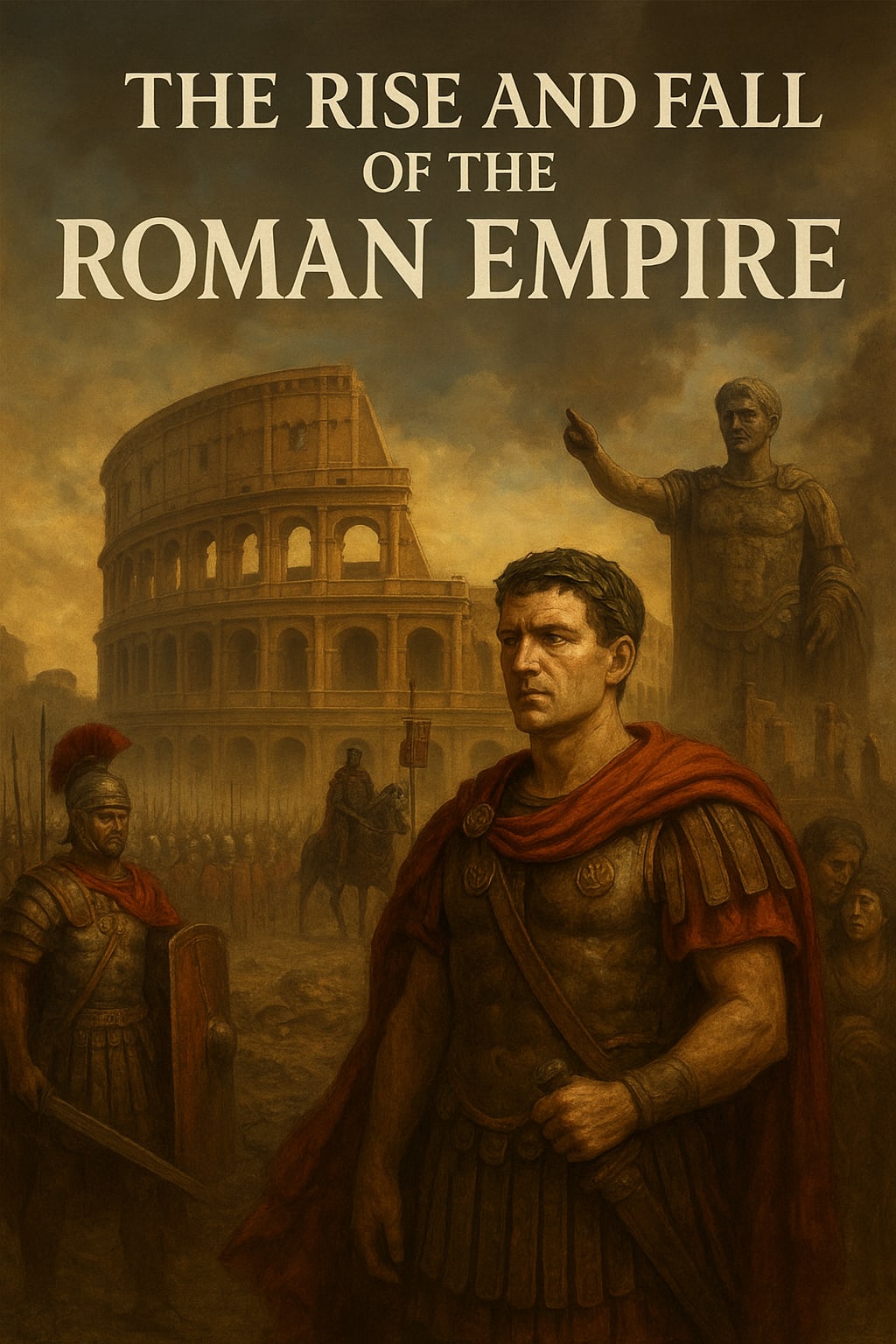
The Roman Empire stands as one of the greatest civilizations in human history. For centuries, it symbolized power, glory, and progress, influencing nearly every aspect of the modern world—from law and politics to architecture, engineering, and military strategy. However, just as it rose to unmatched heights, it also crumbled into decline, leaving behind lessons for future generations. The story of Rome is not only about conquest and achievement but also about the fragility of power when corruption, division, and overexpansion take hold.
---
The Rise of the Roman Empire
Rome’s beginnings were humble. According to legend, the city was founded in 753 BCE by the twin brothers Romulus and Remus. What started as a small settlement on the banks of the River Tiber grew into a powerful republic through determination, discipline, and strong military organization. The Romans mastered the art of war, diplomacy, and governance, which allowed them to expand their territory rapidly.
During the period of the Roman Republic (509 BCE–27 BCE), Rome established a system of checks and balances through the Senate and assemblies, balancing the powers of leaders with the voice of the people. This structure provided Rome with stability and efficiency, allowing it to expand its influence beyond the Italian Peninsula.
The turning point came with Julius Caesar, whose rise marked the end of the Republic and the dawn of the Empire. After his assassination in 44 BCE, his adopted heir, Octavian—later known as Augustus—took power. In 27 BCE, Augustus became the first emperor of Rome, beginning the era known as the Pax Romana (Roman Peace). For nearly 200 years, Rome experienced unprecedented stability, prosperity, and cultural development.
---
The Golden Age
The Roman Empire reached its height under emperors such as Augustus, Trajan, and Hadrian. Its borders stretched from the deserts of North Africa to the cold frontiers of Britain and from the Atlantic Ocean to the Euphrates River in the East.
The empire became a hub of commerce, bringing goods and wealth from all corners of the known world. Roads and aqueducts connected cities, while monuments like the Colosseum and aqueducts showcased Rome’s engineering genius. The Roman military ensured security and discipline, while Roman law created order and justice that still influence legal systems today.
Culturally, Rome absorbed and spread Greek knowledge, art, and philosophy, blending them into a rich tradition that shaped Western civilization. Latin, the language of Rome, became the foundation of many European languages.
---
The Fall of the Roman Empire
Yet no empire lasts forever. The seeds of Rome’s downfall were sown during its greatest triumphs.
1. Overexpansion – The empire became too vast to govern effectively. Defending distant provinces drained resources and stretched the military thin.
2. Economic Troubles – Heavy taxation, inflation, and reliance on slave labor weakened the economy. The gap between the rich and poor widened, leading to unrest.
3. Political Corruption – Leaders often fought for power rather than focusing on governance. Civil wars and assassinations became common.
4. Barbarian Invasions – Rome’s borders were constantly threatened by Germanic tribes, Huns, and other groups. By the 5th century CE, waves of invasions struck the empire’s weakened defenses.
5. Loss of Civic Virtue – Many historians argue that Romans gradually lost the discipline, unity, and sense of duty that once made them great.
In 476 CE, the Western Roman Empire officially collapsed when the last emperor, Romulus Augustulus, was deposed by the Germanic leader Odoacer. The Eastern Roman Empire, known as the Byzantine Empire, continued for another thousand years, but the glory of Rome had ended in the West.
---
Legacy of Rome
Despite its fall, Rome’s legacy is eternal. The ideas of republican government, rule of law, and citizenship remain central to modern democracies. Roman architecture and engineering continue to inspire, while Latin shaped the roots of modern European languages. The rise and fall of the Roman Empire is a story of human ambition, resilience, and vulnerability—a reminder that even the greatest powers are not invincible.
---
Conclusion
The Roman Empire’s rise was built on discipline, innovation, and unity, but its fall was driven by corruption, overexpansion, and division. It remains one of history’s most powerful examples of how empires flourish and collapse. For modern societies, Rome’s story is not just history—it is a warning that strength without stability, and power without responsibility, will always lead to decline.
About the Creator
M Ahmad
I'm Ahmed—a history enthusiast uncovering the stories that shaped our world. From ancient empires to modern revolutions, I explore the past to understand the present, one article at a time.
The Year 1966 in Review: Fun Facts, Trivia, and Historic Highlights
This quick read is a collection of fun facts, trivia, and historic events from the year 1966. Discover the year’s top news stories, most influential people, sports facts, entertainment trivia, and much more.
By Gregory DeVictor6 days ago in History


Comments
There are no comments for this story
Be the first to respond and start the conversation.