
The Rise and Fall of Pan American World Airways
A Journey Through Aviation History


Pan American World Airways, commonly known as Pan Am, was once an aviation giant that symbolized the epitome of luxury air travel and global connectivity. Founded in 1927, Pan Am played a pivotal role in shaping the airline industry, introducing innovations, and making air travel accessible to people worldwide. However, the soaring success of Pan Am eventually gave way to a tragic descent, marked by financial challenges, geopolitical shifts, and the changing landscape of the aviation industry.
The Rise:
Pan Am's ascent began with its visionary founder, Juan Trippe, who envisioned a world where air travel could connect people and cultures seamlessly. Pan Am's inaugural flight took place in 1927, flying mail between Key West, Florida, and Havana, Cuba. Rapid expansion followed, as Pan Am became the first airline to fly around the world with the introduction of transpacific and transatlantic routes.
During the 1930s and 1940s, Pan Am set the standard for luxurious air travel. The iconic Boeing 314 Clipper flying boats, with their spacious cabins, gourmet meals, and attentive service, became synonymous with Pan Am's commitment to passenger comfort. The airline was not only a carrier of people but also a symbol of American innovation and global influence.
The 1950s and 1960s marked a golden era for Pan Am. The introduction of jet aircraft, including the Boeing 707, revolutionized air travel, reducing travel times and increasing passenger capacity. Pan Am's fleet of jets, combined with its famous blue globe logo, became a symbol of modernity and sophistication. The airline further solidified its global presence by opening the InterContinental Hotels chain, providing accommodations for travelers worldwide.
The Fall:
Despite its early success, Pan Am faced numerous challenges in the 1970s and 1980s that ultimately led to its decline. One significant blow was the 1973 oil crisis, which resulted in soaring fuel prices, causing financial strain on airlines globally. Pan Am, with its extensive international routes, was particularly vulnerable. The company's heavy investment in the wide-bodied Boeing 747s also contributed to its financial troubles, as the demand for such large aircraft waned.
The geopolitical landscape also played a crucial role in Pan Am's fall. The Air Mail Act of 1934, known as the "Black-McKellar Act," prohibited U.S. airlines from operating foreign airmail routes. This regulation was intended to protect American interests, but it inadvertently limited Pan Am's access to lucrative international routes. Additionally, the U.S. government's deregulation of the airline industry in 1978 led to increased competition, making it difficult for Pan Am to maintain its market dominance.
The tragic turning point for Pan Am came in 1988 with the bombing of Pan Am Flight 103 over Lockerbie, Scotland. The terrorist attack claimed 270 lives and severely damaged the airline's reputation. The subsequent decline in passenger confidence, coupled with a weakened financial position, led Pan Am to file for bankruptcy in January 1991.
Legacy:
While Pan Am may have disappeared from the skies, its legacy endures. The airline's contributions to the development of the aviation industry, its pioneering spirit in international air travel, and its iconic status in popular culture ensure that Pan Am remains a significant chapter in aviation history.
The demise of Pan Am serves as a cautionary tale about the challenges faced by even the most prominent players in the aviation industry. Economic downturns, geopolitical shifts, and changing consumer preferences can have profound effects on even the most established airlines.
In conclusion, the rise and fall of Pan American World Airways is a compelling narrative that reflects the dynamism and challenges inherent in the aviation industry. Pan Am's legacy lives on through its impact on global travel and its enduring influence on the way we perceive air travel today.
About the Creator
Keep reading
More stories from Afeef Khan and writers in History and other communities.
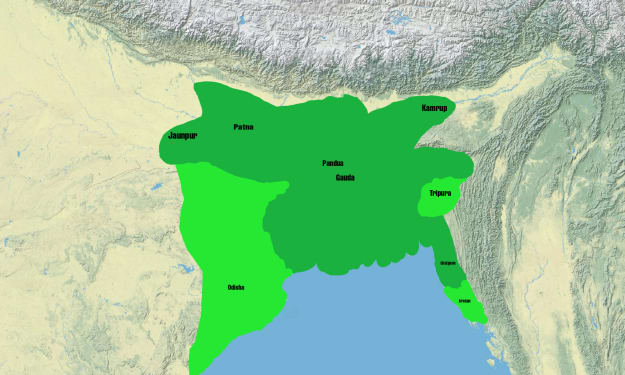
The Bengal Sultanate: A Flourishing Epoch of Medieval Bengal
The Bengal Sultanate, spanning from the 14th to the 16th century, stands as a remarkable chapter in the history of medieval South Asia. This period witnessed the rise of powerful sultans, the flourishing of art and culture, and the establishment of a dynamic socio-economic structure in the region. As one of the prominent medieval sultanates in the Indian subcontinent, the Bengal Sultanate played a pivotal role in shaping the destiny of Bengal and left a lasting impact on its cultural landscape.
By Afeef Khan2 years ago in History
A massive underwater stone wall that is almost 7,000 years old is found by divers.
One of the buried stone monuments on Sein Island is a granite wall off Brittany that is more than 7,000 years old and the length of a football pitch. The discovery is being used by marine archaeologists in the vicinity of Île de Sein to explain how stone-built coastal villages predate the widespread spread of farming.
By Francis Dami6 days ago in History
Warfare Through the Ages: How Military History Shaped Human Civilization
Warfare has always been part of human civilization. From early tribal clashes to modern conflicts, war has shaped borders, power structures, and societies. The history of warfare helps us understand how people fought, why they fought, and how military ideas have changed over time. Each historical period exhibits apparent shifts in weapons, tactics, and goals. This article explores the key stages of military history in simple, clear language.
By Matthew Pothoff3 days ago in History
Miss Persephone's Manual to a Seemingly Ordinary Life
Miss Persephone was found at the dining table, her blue eyes swollen, her tears arriving and retreating like the tides of the ocean. Earlier that day, her family had visited her in the retirement home where she had lived for eight years. It was her eightieth birthday.
By Imola Tóth3 days ago in Fiction


Comments
There are no comments for this story
Be the first to respond and start the conversation.