
The Rich and Bittersweet History of Chocolate
History of Chocolate

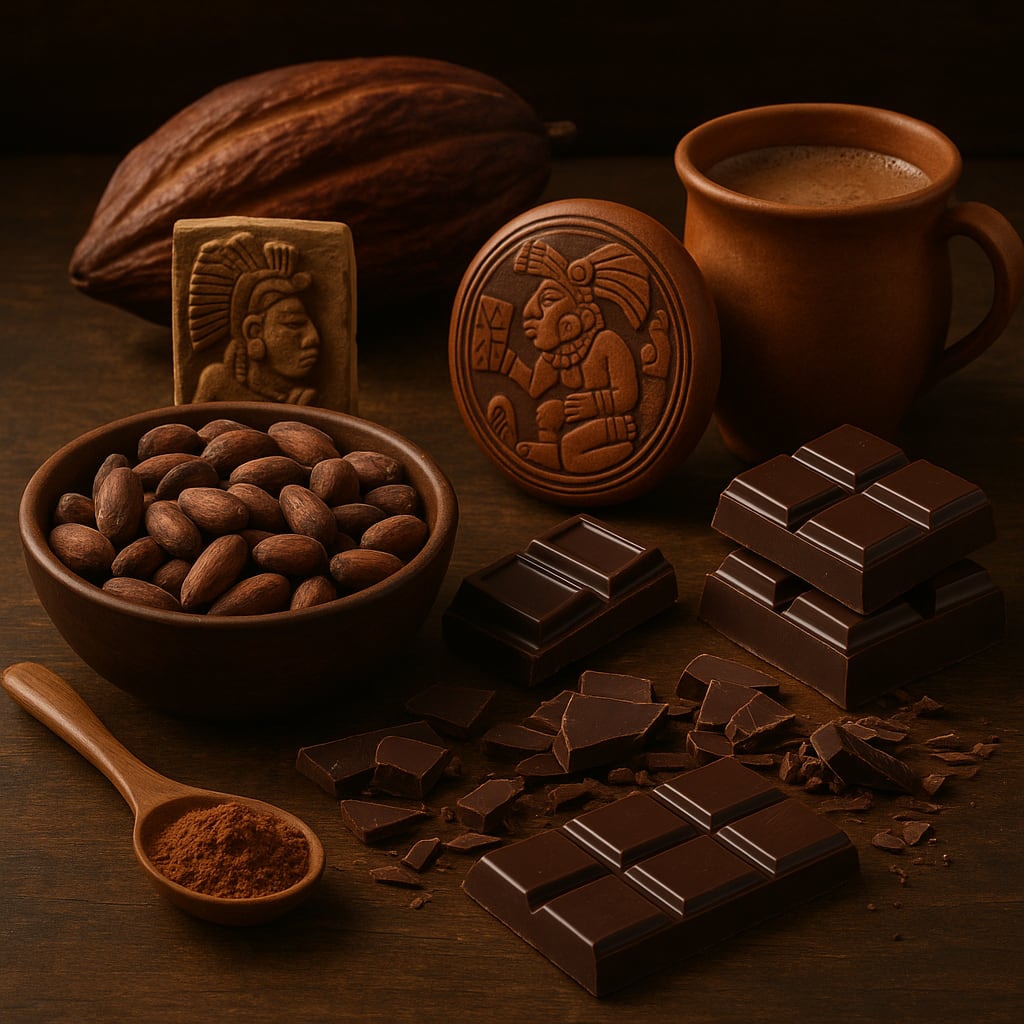
Chocolate is more than a sweet treat. It is a global favorite with a long and fascinating past. From ancient ceremonies to modern desserts, chocolate has evolved in many ways. Let’s explore how it all began.
Ancient Beginnings in Central America
Chocolate began its journey over 3,000 years ago in the rainforests of Central and South America. The first people known to use cacao were the Olmecs, one of the earliest civilizations in Mesoamerica. They lived around 1500 BCE and likely discovered how to crush cacao beans and turn them into a thick, bitter drink. This drink was used during ceremonies and believed to have magical and healing powers.
Later, the Maya civilization embraced cacao as part of daily life. They drank it during special events and religious rituals. They even painted cacao in their artwork and carved it into temple walls. The word “chocolate” comes from the Mayan word “xocolatl,” which means “bitter water.”
The Aztecs also placed great value on cacao. They believed it was a gift from the god Kukulkan, and they used it as currency. One cacao bean could buy a tomato, while 100 beans could purchase a turkey. The Aztec emperor Montezuma II was said to drink several cups of chocolate each day for strength and energy.
Chocolate Reaches Europe
In the 1500s, Spanish explorers arrived in the Americas. Among them was Hernán Cortés, who learned about cacao during his time in the Aztec Empire. When he returned to Spain, he brought cacao beans with him. At first, Europeans did not like the bitter taste of the drink. But once they added sugar, cinnamon, and vanilla, it quickly became popular among the wealthy.
By the 1600s, chocolate was a luxury drink across Spain, France, and England. In London, chocolate houses became gathering spots for the upper class. These were places where people would drink chocolate, talk politics, and socialize.
Chocolate remained a drink for the elite for many years, but that changed during the next big wave of innovation.
Chocolate Becomes Solid
During the Industrial Revolution in the 1800s, chocolate became more accessible. In 1828, a Dutch chemist named Coenraad van Houten invented a machine called the cocoa press. This tool removed most of the fat (called cocoa butter) from cacao beans. The leftover powder could be mixed with liquids to create smoother and tastier chocolate drinks.
In 1847, British chocolatier Joseph Fry created the first solid chocolate bar by mixing cocoa powder, sugar, and cocoa butter. This was the first time chocolate could be eaten rather than just drunk.
Soon after, in 1875, Daniel Peter from Switzerland teamed up with Henri Nestlé, who had invented a method for making powdered milk. They combined milk with chocolate to create the world’s first milk chocolate.
Major chocolate companies like Cadbury, Lindt, and Hershey started producing chocolate for the masses. With machines and factories, they made chocolate bars, candies, and treats in large quantities.
A Sweet Part of Culture
Today, chocolate is part of many celebrations. We enjoy it on Valentine’s Day, Christmas, birthdays, and other special days. It symbolizes love, joy, and comfort.
The global chocolate market is now worth more than 100 billion dollars. Countries like Switzerland, Germany, and Belgium are top producers and consumers.
But there are problems too. Most cacao comes from West Africa, where labor issues still exist. Many groups support fair trade and sustainable farming to protect workers and the environment.
Chocolate Gets Creative
Modern chocolate is not just about taste. It is about creativity, design, and experience. Artisanal chocolate makers now use unique flavors like sea salt, lavender, and chili. Some even create single-origin chocolates that showcase the flavor of beans from a specific region.
With the rise of social media and personalized gifting, chocolate packaging has also become more important. Businesses now use stylish, eco-friendly, and branded options like custom chocolate boxes to create memorable customer experiences. These not only protect the chocolate but also make it feel like a premium gift.
Quick Chocolate Facts
- Cacao trees can live up to 100 years but only produce good beans for about 25 years.
- White chocolate has cocoa butter but no cocoa solids.
- The word Theobroma cacao means “food of the gods.”
- During World War II, chocolate was part of U.S. soldiers’ rations.
Final Thoughts
Chocolate has a deep and rich history. It began as a sacred drink in ancient times. Now it is a sweet loved around the world. From royal courts to corner stores, chocolate has left its mark.
Its journey is still going. With new flavors, better farming, and creative packaging, chocolate continues to delight and inspire.
About the Creator
A woman from a vanished female dynasty was discovered buried with 270,000 beads.
In a Copper Age tomb close to Seville, Spain, the Montelirio bead assemblage contains over 270,000 beads that identify the ladies buried there as elites. The discovery is the biggest collection of beads ever
By Francis Dami2 days ago in History
The Prophet of Mercy: How Compassion Transformed Enemies into Believers
In the heart of Arabia, in the ancient city of Makkah, society was built on tribal loyalty, power, and pride. Wealth and lineage determined a person’s worth, while the weak were often oppressed without mercy. The Kaaba, originally built for the worship of One God, was filled with idols, and injustice had become a normal part of life. In this harsh and divided environment, Hazrat Muhammad ﷺ emerged—not as a king or warrior, but as a man whose truth, patience, and compassion would forever change the course of human history.
By The best writer 6 days ago in History



Comments
There are no comments for this story
Be the first to respond and start the conversation.