
The Nautilus Expedition
What Happened To Nautilus?
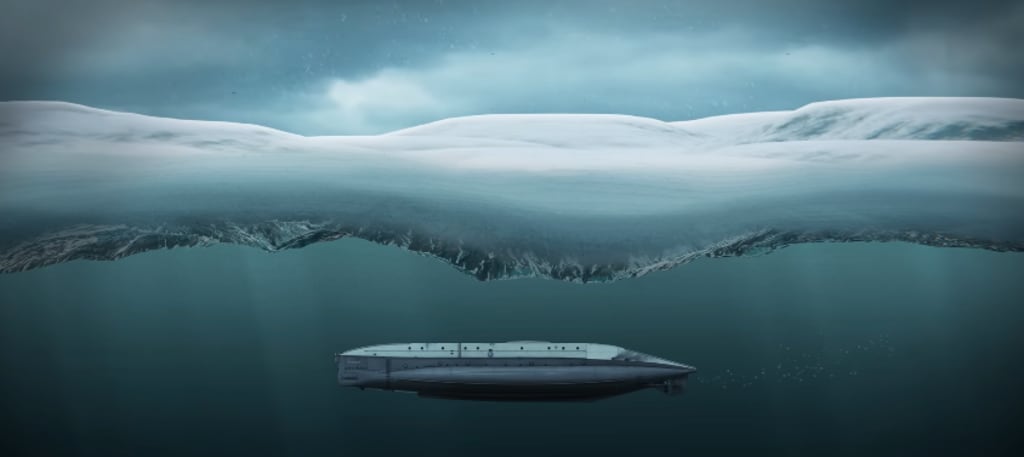
In August 1931, a submarine is on the verge of entering the vast, icy unknown at the edge of the known world. This part of the globe remains mostly uncharted, and aboard the sub is a fearless crew of explorers eager to unveil the Arctic's secrets. Their mission isn’t just to reach the top of the world but to uncover what’s hidden beneath the ice. They’re using a new type of exploration vessel, braving tight quarters and bone-chilling temperatures as they venture thousands of kilometers under the frozen surface. However, as days turn into weeks, things take a disastrous turn for the expedition. For centuries, adventurers have tried to conquer the Arctic. Initially, they relied on ships, facing brutal cold and dangerous sea ice, often getting trapped and leaving crews stranded with little chance of rescue. Later, they attempted to traverse the region with dog sleds or on foot, which frequently ended in tragedy. Over the years, countless explorers lost their lives in this harsh environment, and it wasn’t until 1926 that the North Pole was definitively reached—by air, in a modified airship that never even landed. So, when the seasoned explorer Sir Hubert Wilkins decided to set foot on the North Pole, he believed there had to be a better approach. Unlike the South Pole, which is on a landmass, the North Pole is situated in the Arctic Ocean, surrounded by ice-covered waters. Wilkins was convinced that a submarine was the best way to reach the North Pole, and equipped with cutting-edge scientific tools, it could help unravel the Arctic's biggest mysteries.
Wilkins was gearing up for a summer adventure. He'd start by sailing across the Atlantic and then make his way up to the Arctic Circle. From there, his journey would take him westward, covering over three thousand kilometers. For six weeks, he’d navigate through the ice, popping up through any openings he could find, before finally reaching Alaska. To fund this ambitious expedition, Wilkins dipped into his own savings and sought out donations wherever possible. He was busy giving lectures around the clock and even penned a book detailing his grand plans. But it still wasn’t enough. He needed some serious financial support. The best way to secure that? Turn his scientific quest into a media spectacle. A journey beneath the sea ice was bound to grab headlines.
So, Wilkins struck a deal with newspaper tycoon William Randolph Hearst, known for his love of sensational stories. Hearst would get exclusive rights to publish the expedition’s updates, while Wilkins would secure the funding he needed. To amp up the excitement, Hearst arranged for Wilkins to rendezvous with another expedition at the pole. The massive airship Graf Zeppelin would fly overhead just as Wilkins broke through the ice, creating a buzz with stories of conquering the pole from both above and below. If Wilkins could pull this off, Hearst promised him a prize of one hundred and fifty thousand dollars. All that was left was to find a submarine, and Wilkins had his sights set on the Nautilus to reach the North Pole.
A retired attack submarine from World War One, heavily revamped by the famous naval designer Simon Lake, was set to embark on an unprecedented journey. This mission was going to be risky, especially with the threat of colliding with ice. To prepare, Lake reinforced the Nautilus’s front with thick steel plates and concrete, plus he added a hydraulic impact absorber to cushion any impacts. The ice above posed its own dangers, so he equipped the top with sledge runners, allowing it to glide along the underside of the ice like a sled. A hydraulic retractable guide arm was also included to maintain a safe distance from any overhead obstacles. The Nautilus could stay hidden beneath the ice for days, but it would eventually need to surface for air and to recharge its batteries. If there weren’t any openings in the ice, the crew could be in serious trouble.
To tackle this, Lake designed a series of drills that could penetrate the ice, enabling the crew to bore through up to twenty feet to reach the surface. Instead of the original torpedo tubes, he installed a pressurized diving chamber for lowering instruments to the ocean floor or for conducting dives. In total, Simon Lake made numerous modifications. Originally intended for World War One, the Nautilus was now gearing up to face the challenges of nature. On March 16, 1931, as the expedition was about to launch, Wilkins put on a confident front for the press. “The crew is just finishing up the final checks on board before we leave the dock. We expect to cover two thousand miles under the ice in about six to eight months, starting from Spitsbergen around the first of July.” But beneath that brave exterior, Wilkins felt a sense of unease.
He was worried that a lot of the new features on the sub were just unnecessary, maybe even risky. He had doubts about the sledge runners, the ice drills, and the shock absorber, fearing it might get stuck in the ice and trap the Nautilus underwater. Wilkins wanted to add a photosensitive electrical cell to check the ice thickness above, so he’d know when to come up. But Simon Lake shot that down. The Nautilus belonged to Lake; he leased it from the U.S. Navy and had the final say on any changes. Wilkins was just a sub-charter for the expedition. There wasn’t much he could do but accept the sub as it was. Still, those fancy gadgets were bound to cause trouble before they even set off, forcing the sub back to port for repairs time and again. It was one thing to come up with cool new features, but trying to fit them onto an old sub was a whole different ball game. Just as Wilkins feared, the ice drills failed during testing, and they had to bring in another engineering firm to sort it out. Weeks turned into months, and the pressure was mounting. If the Nautilus was going to meet the Graf Zeppelin at the North Pole, they needed to move fast. Otherwise, Wilkins would miss out on Hearst’s prize money.
By June, Wilkins was fed up. Mechanical problems or not, it was time to hit the road. The trip across the Atlantic was tough. The small sub was tossed around by the brutal North Atlantic storms. The crew was also starting to realize just how cramped and uncomfortable the Nautilus was. With everything packed for the expedition, there was even less room. For twenty men, there was only one toilet out in the open, squeezed between two roaring diesel engines. The crew had to spend their whole day standing around since there was nowhere to sit.
A few bunks shared among the crew offered some comfort. Wilkins kept Hearst updated with daily radio reports about their tough journey. “This morning, a massive wave hit the deck and took the screen off the bridge.” Almost everyone on board was feeling seasick. When the Nautilus’s bilge pump broke down, sewage, oil, and vomit started swirling around their feet. As the little sub fought against the rough Atlantic, conditions only worsened. “The fourth cylinder of our starboard engine is badly cracked.” With one of its two engines shut down, the Nautilus could only crawl along. On June 13th, a week into the trip, the radio updates stopped coming.
For several days, no one knew what had happened to the sub and its crew. On June 15, the Battleship Wyoming discovered the Nautilus drifting about a thousand kilometers northeast of the Azores, with both engines out and the batteries dead. Wilkins now faced the embarrassment of having his sub towed the rest of the way across the Atlantic. To make matters worse, four crew members quit, and the Nautilus needed significant repairs again. It would take weeks for replacement parts to arrive from the U.S.
This meant there was no chance of catching up with the Graf Zeppelin. In a crushing blow, Wilkins lost the chance to claim Hearst’s prize money. The media turned against him, with headlines that mocked his expedition. Pressure was mounting on Wilkins. His submarine was malfunctioning, his crew was demoralized, and winter was approaching fast. At this point, most people would have given up. But this was Sir Hubert Wilkins. Even though he was months behind schedule, he kept pushing forward. On July 28th, the expedition finally set off for the North Pole. The Nautilus still had its share of issues, but the crew had adapted to making repairs on the fly, tackling major problems during scheduled stops. By August 15th, the Nautilus reached the last inhabited land before the Arctic.
Wilkins was finally sending out some positive updates. On the 19th, the Nautilus hit the first ice flows. To mark the occasion, the crew got a break from their cramped quarters and started gathering scientific data. Back home, Hearst shared some intriguing new findings, like a warmer layer of water lurking deep below the surface, which was thought to be crucial for weather predictions. After a week navigating through the ice, the Nautilus reached 82 degrees north, further than any other vessel had ever gone under its own power. It seemed like Wilkins was really going to pull it off—traveling a thousand kilometers under the ice. But while the world celebrated Wilkins's accomplishments, life aboard the Nautilus was far from rosy. Wilkins was just putting on a brave front. The crew was actually worn out and freezing. The Nautilus had no heating or insulation, leaving them with just bare metal between them and the icy Arctic waters. They were constantly battling food poisoning and dealing with lead exposure from the submarine’s pipes.
Attempting to reach the Pole this late in the season was incredibly risky, and everyone wanted to turn back—everyone except Wilkins. On August 22nd, he ordered the dive beneath the ice, but the Nautilus wouldn’t budge. The diving rudder, which controls how the sub moves up and down underwater, was unresponsive. Wilkins sent a diver to check it out, and the diver returned with shocking news: the rudder was gone. It might have fallen off without anyone noticing, or as Wilkins suspected, the crew could have sabotaged the sub to end the mission. By this time, even Hearst was publicly urging Wilkins to head back. But behind the scenes, the Hearst corporation was pushing him to keep going to the Pole, reminding him of their agreement.
Wilkins found himself in a tough spot. He could either head back home to face certain failure and financial disaster or keep going and put his crew's lives at risk. On August 31st, he made the call to flood the ballast tanks and set the trim two degrees down. He was going to force the Nautilus to dive by crashing it under the ice. The sound of the sledge runners scraping against the ice echoed through the whole structure, making it feel like the Nautilus was being ripped apart. It seemed like Wilkins had lost his grip on reality. There was no way he could reach the pole in a damaged sub. But after facing so many obstacles, he was hell-bent on proving a point. They pushed on for several kilometers before Wilkins decided to test the ice drills. For hours, the crew struggled to drill through just a few feet of ice. Each time, Simon Lake's patented drill would only go a short distance before getting stuck. It felt hopeless. On September 6th, Wilkins finally sent out the radio message everyone had been waiting for: “Our Arctic trip is over…” He had taken the Nautilus to places no submarine had ever been. However, it would take another thirty years before anyone successfully crossed the Arctic under the ice. The nuclear-powered USS Nautilus, sharing the same name, could stay submerged for weeks and made its first Polar crossing in 1958, returning to a hero's welcome. By then, Wilkins’s attempt had faded from memory. The original Nautilus now rests on the ocean floor off Norway's coast.
After the crew got back from the Arctic, the submarine was considered too damaged and worn out to salvage. So, it was intentionally sunk. Before the Nautilus expedition, Wilkins was hailed as one of the top explorers of the 20th century, making significant contributions to our knowledge of the North and South Poles. However, his last expedition left him broke and mostly forgotten. When he passed away at seventy, his final wishes were honored as the crew of the U.S.S. Skate scattered his ashes at the North Pole.
About the Creator
Keep reading
More stories from Lawrence Meli and writers in History and other communities.
The Berlin Wall
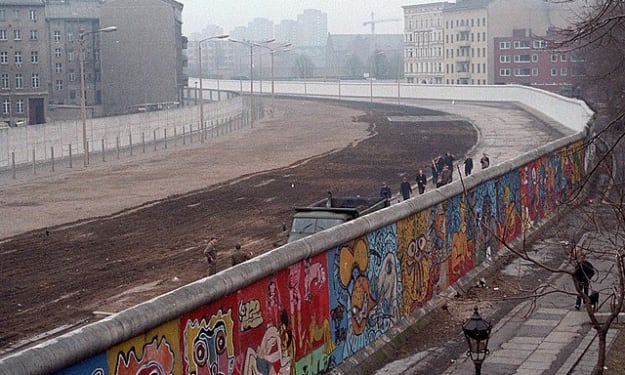
How The Berlin Wall Worked Picture this: a city split right down the middle, with roads that used to connect now turning into dead ends. Your job is on the other side, completely out of reach, and that neighbor you used to chat with every day? You might never see him again. That’s what the Berlin Wall did, dividing East and West for nearly three decades. For this article, I’ve explained the different stages of the wall’s development to help us grasp the design of this remarkable piece of architecture. Here’s how the Berlin Wall functioned.
By Lawrence Meliabout a year ago in History
Vladimir Putin
Vladimir Vladimirovich Putin was born on October 7, 1952, in Leningrad, a city still scarred by the devastation of World War II. His parents were working-class people who had survived extraordinary hardship. His father was a factory worker and a former sailor in the Soviet Navy, while his mother endured poverty and loss during the war years. These early surroundings—marked by struggle, discipline, and survival—shaped Putin’s worldview long before he entered politics. As a child, Putin was small, energetic, and often involved in street fights. Leningrad’s rough neighborhoods taught him a lesson he would later repeat many times: weakness invites danger. Determined to become stronger, he took up judo and sambo, martial arts that emphasized control, patience, and strategy. These sports did more than strengthen his body; they helped form his belief in discipline, hierarchy, and respect for authority. Putin was also fascinated by espionage. As a teenager, he reportedly walked into a local KGB office and asked how he could join. He was told to study law first. Taking that advice seriously, he enrolled at Leningrad State University, where he studied law and quietly attracted the attention of Soviet intelligence recruiters. After graduating in 1975, Putin joined the KGB, the Soviet Union’s powerful security agency. For him, the KGB represented order, patriotism, and loyalty to the state. His early assignments were modest, but in the mid-1980s he was sent to Dresden, East Germany. There, he witnessed firsthand the weakening of Soviet influence and the collapse of communist authority across Eastern Europe. The fall of the Berlin Wall in 1989 was a turning point. Putin later described the collapse of the Soviet Union as a “geopolitical catastrophe.” He returned to Russia as the old system crumbled, leaving chaos, uncertainty, and a deep sense of national humiliation. In the early 1990s, Putin left the KGB and entered local politics in Saint Petersburg. He worked closely with the city’s reformist mayor, Anatoly Sobchak, handling foreign relations and economic projects. Putin gained a reputation as a quiet but effective administrator—loyal, organized, and unafraid of tough decisions. When Sobchak lost power, Putin moved to Moscow, where his career accelerated rapidly. By the late 1990s, Russia was unstable. President Boris Yeltsin’s government was weakened by corruption, economic collapse, and declining public trust. In 1998, Putin was appointed head of the Federal Security Service (FSB), the main successor to the KGB. A year later, Yeltsin named him prime minister, surprising many Russians who barely knew his name. Putin’s rise coincided with violence and fear. A series of deadly apartment bombings shook Russia, and the government blamed Chechen militants. Putin promised decisive action, launching a brutal military campaign in Chechnya. His tough language and firm response made him popular among citizens desperate for stability. On December 31, 1999, Boris Yeltsin resigned, naming Vladimir Putin acting president. At just 47 years old, Putin stepped into the highest office in the country. In March 2000, he won the presidential election, beginning a new era in Russian politics. As president, Putin focused on restoring state authority. He reduced the power of regional governors, brought major television networks under state control, and confronted wealthy oligarchs who challenged the Kremlin. Some businessmen were imprisoned or exiled, sending a clear message: political power belonged to the state, not private wealth. Under Putin, Russia experienced economic recovery, largely due to rising oil and gas prices. Living standards improved for many Russians, and the country regained a sense of pride. Putin presented himself as a protector of national interests, promising to restore Russia’s status as a global power. However, critics accused him of weakening democracy. Independent media faced pressure, opposition figures were sidelined, and elections increasingly favored the ruling elite. Supporters argued that strong leadership was necessary to prevent chaos; critics warned that freedom was being sacrificed for stability. In 2008, constitutional term limits forced Putin to step aside. His close ally Dmitry Medvedev became president, while Putin assumed the role of prime minister. Few doubted who held real power. In 2012, Putin returned to the presidency after term limits were adjusted, triggering protests in major cities. Putin’s foreign policy grew more assertive. In 2014, Russia annexed Crimea from Ukraine, a move celebrated by many Russians but condemned internationally. Sanctions followed, straining Russia’s economy but strengthening Putin’s narrative of standing up to Western pressure. In the years that followed, Russia expanded its influence in global affairs, including military involvement in Syria and growing tensions with NATO. Putin framed these actions as defending Russian security and sovereignty in a hostile world. By 2020, constitutional changes allowed Putin to potentially remain in power until 2036. Supporters viewed this as a guarantee of continuity; critics saw it as the entrenchment of one-man rule. Vladimir Putin remains one of the most influential and controversial leaders of the modern era. To admirers, he is a symbol of national revival, discipline, and strength. To critics, he represents authoritarianism, repression, and the erosion of democratic values. His life story is inseparable from the story of modern Russia—a nation struggling to define itself after the fall of an empire. From a poor boy in post-war Leningrad to the center of global power, Putin’s journey reflects ambition, resilience, and an unyielding belief in control. Whether history will judge him as a restorer of order or a ruler who silenced freedom remains a question still unfolding.
By The best writer 4 days ago in History


Comments
There are no comments for this story
Be the first to respond and start the conversation.