


In the depths of the dark and thirsty forests of North America, especially in regions known for their mystery-laden histories, a legend is circulating that has fascinated and frightened generations. It is the legend of the Headless Rider, a story full of mystery and horror that has become an integral part of American folklore. It is said to have its roots in ancient European traditions, but it came to life in America, dressing in local colors and terrifyingly realistic details. One of the best-known variants of the legend has as a starting point the events during the United States War of Independence. It is said that a Hessian rider, a member of the German mercenary troops employed by the British, was beheaded during a battle near a small village. After his brutal death, the Hessian rider could not find peace. Legend has it that on Halloween night he rose from the grave in search of his lost head and revenge against those who had disturbed his rest. With his metal helmet and an absent face, he rides on a spectral horse, bringing fear and horror wherever he goes.
He, the Headless Rider, is said to be crossing forests and villages in search of his unfortunate victims. During the dark and stormy nights, the sounds of his gallop beating on the ground are accompanied by desperate cries and screams. Those who were unlucky enough to meet him reported a blindfolded look and a sinister squeak that penetrated the wind.
One of the most famous aspects of the legend is related to his jack-o'-lantern. The Headless Rider rides with a burning pumpkin flashlight in his hand, placed in the place where his head should have been. This macabre detail has become a symbol of his frightening presence.
The legend of the Headless Rider has survived for centuries and evolved, finding its place in many literary, cinematographic and cultural works. One of the best known adaptations is "The Legend of Sleepy Hollow," written by Washington Irving in 1820. This story has significantly contributed to the consolidation of the Headless Rider in American mythology.
Over the decades, the character has been taken up in movies, TV shows and Halloween events. With each new adaptation, the legend retains its charm and power to arouse fear in the hearts of those who hear it. The Headless Rider is not just a horror story; it also represents certain aspects of human psychology. Sometimes this legend has been interpreted as an allegory of revenge and the consequences of our deeds. As the Hessian rider rides in search of his lost head, the story serves as a warning about the consequences of our actions, suggesting that there is a law of cause and effect that always follows us. The legend of the Headless Rider continues to penetrate the dark corners of our imagination, giving us a healthy dose of fear and fascination. In essence, this story reminds us that, despite technological progress and advanced science, there are still corners of the world that hide secrets and tangled stories of weather and memories. On Halloween nights, especially when the wind whistles and the leaves dance, the story of the Headless Rider comes to life again, bringing with it the emotion and mystery of yesteryear.
Despite centuries and cultural adaptations, the Headless Rider persists as a symbol of understanding that behind appearances there is always an endless and dark mystery. His story reminds us not to forget the old traditions and to always explore the deepest corners of our imagination, where myths and legends are born that continue to delight and terrify at the same time. Thus, the Headless Rider remains a guide through the realm mixed with reality and fantasy, reminding us that ancient stories retain their charm even in the modern world.
About the Creator
Georgi ILY
Hello ! My name is Georgiana, i'm 24 and i'm here for a NEW MISSION OF MY LIFE :)
Keep reading
More stories from Georgi ILY and writers in History and other communities.
Exploring Aliens in 2023: A New Age of Cosmic Discoveries
Exploring Extraterrestrial Life in 2023: A Reality or Utopia? With modern space telescopes and advanced detection technologies, 2023 brought a series of amazing discoveries in the field of extraterrestrial life search. With advances in astronomy and the exploration of outer space, the question of centuries "Are we alone in the universe?" it is becoming more and more challenging and complex.
By Georgi ILY2 years ago in Fiction
3 Completely Normal Jobs With Disturbing Hidden Histories
Every job has a backstory. Some are boring, some are inspiring, and some are better left buried. While modern versions of certain professions look harmless—sometimes even respectable—their origins tell a much darker story.
By Enoch Sagini2 days ago in History
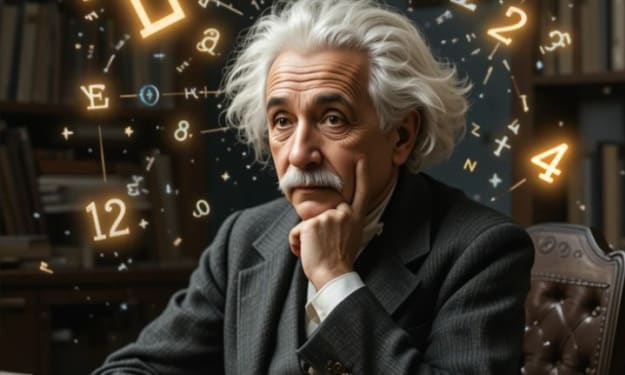
Albert Einstein: The Mind That Changed the Universe
Albert Einstein was not born a legend. When he entered the world on March 14, 1879, in the quiet German city of Ulm, nothing about his early life suggested that he would one day transform science forever. In fact, his beginnings were remarkably ordinary—and in some ways, difficult. As a child, Einstein spoke slowly, so slowly that his parents worried something might be wrong. Teachers considered him distracted and stubborn, a boy who questioned too much and obeyed too little. Yet hidden beneath that quiet exterior was a restless, powerful curiosity that would later reshape the universe itself.
By The best writer a day ago in History
Wild Card Weekend Recap: What Happens Now?
I think I figured out why I love Wild Card Weekend so much. It's because it's the first playoff anything of the calendar year. The NFL season starts in the fall, and once upon a time, the champion was crowned either on or slightly before New Year's. The evolution of the NFL schedule has resulted in the playoffs starting just into the New Year, and currently, the final week of the season falls on the first weekend of the New Year, with Wild Card Weekend coming a week after that. So yes, chronologically, the NFL's Wild Card Weekend serves as the first playoff anything of the calendar year.
By Clyde E. Dawkins4 days ago in Unbalanced


Comments (1)
Great work! Fantastic!