
The Mysterious Tale of Atlantis
Historical Mysteries

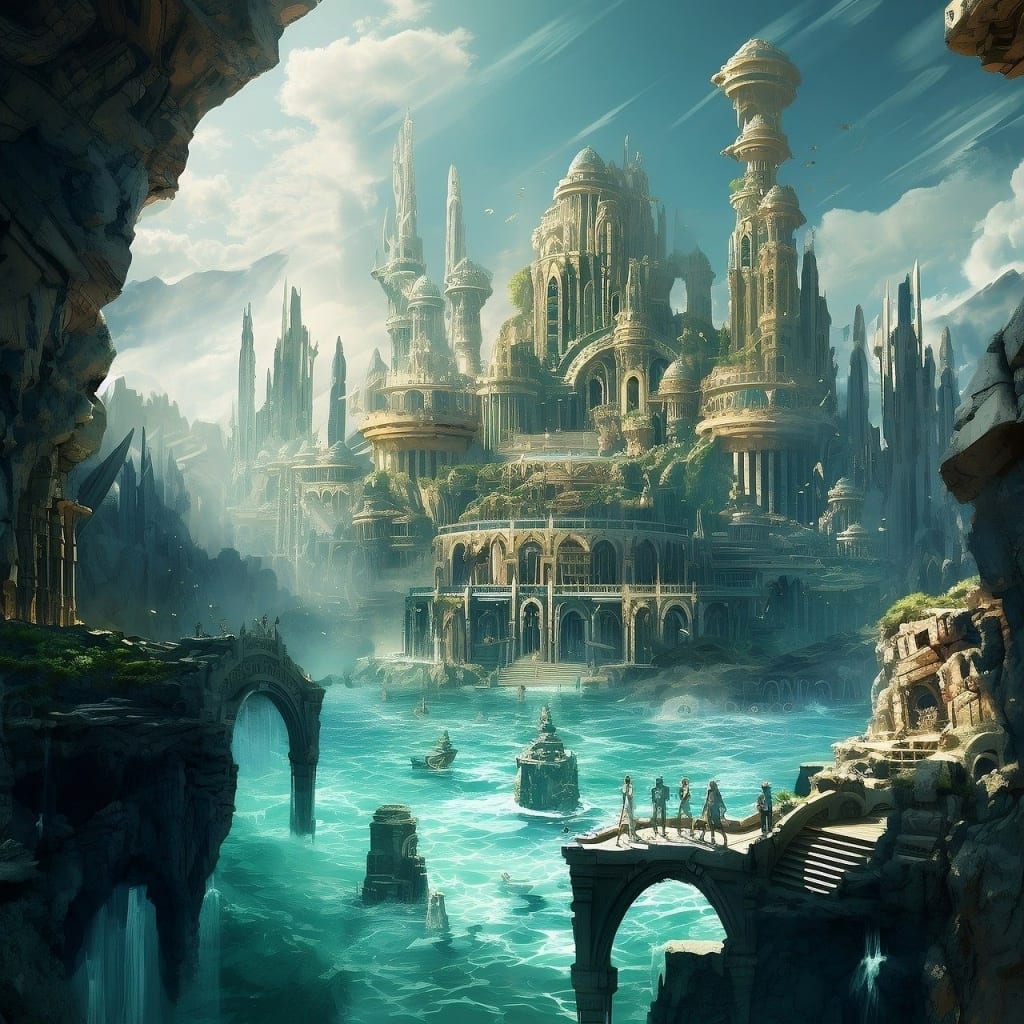
The tale of Atlantis is one of the most enduring and enigmatic myths of the ancient world, captivating the imagination of people for millennia. The story of this advanced, utopian civilization that supposedly met a catastrophic end has inspired countless books, movies, and theories.
"But what is the origin of this tale, and what might it signify about human history and culture?"
Plato's Account of Atlantis
The first known mention of Atlantis comes from the works of the ancient Greek philosopher Plato, specifically in his dialogues "Timaeus" and "Critias," written around 360 BCE. According to Plato, Atlantis was a powerful and advanced civilization that existed about 9,000 years before his own time, situated beyond the "Pillars of Hercules," which are generally considered to be the Strait of Gibraltar.
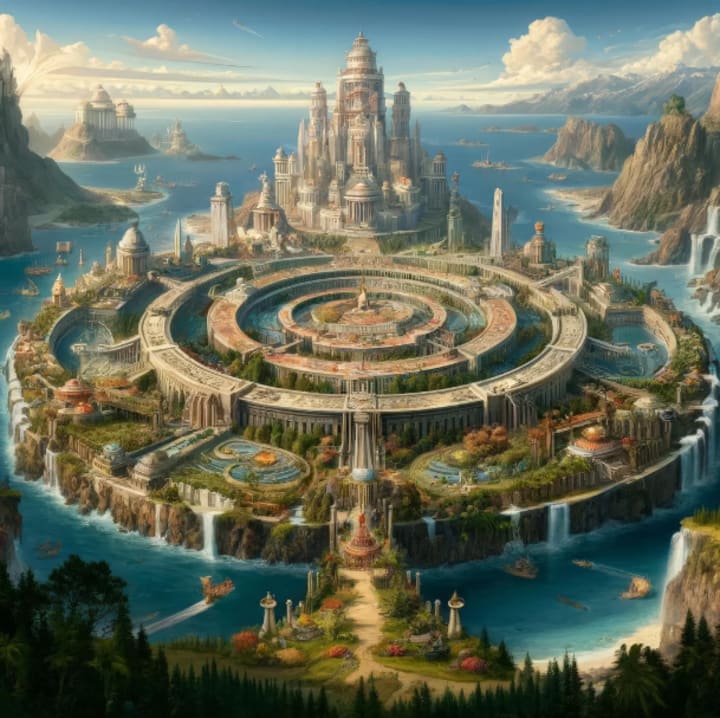
In Plato’s account, Atlantis was a large island or continent with a flourishing society. The Atlanteans were said to possess advanced knowledge and technology, creating a prosperous empire with sophisticated architecture, engineering, and navigation skills. The society was structured with a powerful king at its helm, ruling over ten regions, each with its own governor. The capital city of Atlantis was described as a marvel of engineering, featuring concentric rings of water and land, connected by bridges and adorned with impressive temples and palaces.
Advanced Civilization and Society
The story of Atlantis is embedded in Plato’s exploration of political theory and philosophy. He presents Atlantis as a cautionary tale about the consequences of hubris and moral decay. Initially, the Atlanteans were portrayed as virtuous and noble, living in harmony and justice. However, over time, their society became increasingly corrupt and decadent, driven by greed and the lust for power. This moral decline led to the gods deciding to punish Atlantis. According to Plato, the island was beset by violent earthquakes and floods, ultimately sinking into the ocean "in a single day and night of misfortune."
Atlantis as an Allegory
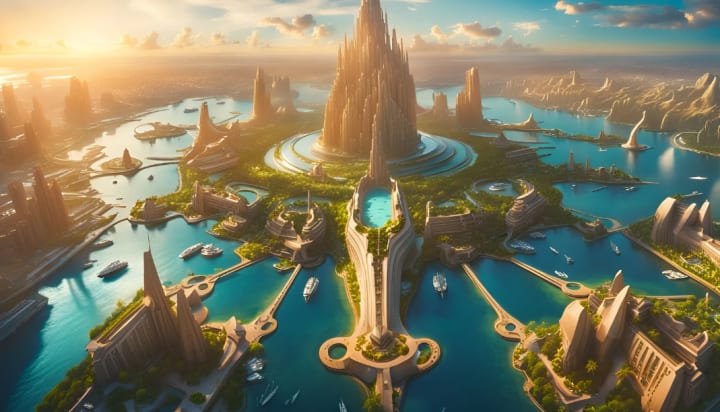
Plato's tale of Atlantis was intended as an allegory, serving to illustrate his philosophical ideas about the rise and fall of civilizations and the importance of moral integrity and societal harmony. However, over the centuries, the story has been taken literally by many, spawning numerous theories about the possible existence and location of Atlantis.
Theories and Hypotheses
Some scholars and enthusiasts have proposed that Atlantis could have been a real place, perhaps inspired by actual historical events or locations. Various hypotheses have been suggested, including the idea that Atlantis was located in the Mediterranean, the Caribbean, or even Antarctica. One popular theory links Atlantis to the Minoan civilization on the island of Crete, which experienced a sudden decline around 1600 BCE, possibly due to a massive volcanic eruption on the nearby island of Thera (modern-day Santorini).

The eruption of Thera was one of the most significant volcanic events in recorded history, causing widespread destruction and possibly triggering tsunamis that devastated coastal regions. The Minoans, known for their advanced culture and impressive palatial complexes, could have served as a model for Plato's Atlantis. The idea that the memory of such a catastrophe could have been passed down through generations, eventually becoming the basis for Plato’s tale, is a compelling one.
Despite the numerous theories, no definitive archaeological evidence has been found to prove the existence of Atlantis. The lack of physical evidence, coupled with the fantastical elements of Plato's account, leads many scholars to conclude that Atlantis was purely a work of fiction. Nevertheless, the enduring allure of the story lies in its blend of utopian idealism, advanced technology, and dramatic downfall, resonating with universal themes of human aspiration and the fragility of civilizations.
Modern Interpretations and Influence
In the modern era, the myth of Atlantis has transcended its origins in ancient Greek philosophy to become a symbol of lost wisdom and a metaphor for the search for hidden truths. It has been featured in countless works of literature, from Sir Francis Bacon's "New Atlantis" to Jules Verne's "20,000 Leagues Under the Sea," as well as in films, television shows, and video games. The legend has also influenced New Age thought and alternative archaeology, with some individuals claiming to have discovered remnants of the lost civilization through various means.
Ultimately, the tale of Atlantis serves as a powerful reminder of the human capacity for storytelling and the enduring fascination with mysteries of the past. Whether viewed as an allegory, a historical hypothesis, or a captivating legend, Atlantis continues to inspire curiosity and imagination. It challenges us to reflect on the rise and fall of civilizations, the nature of progress and decay, and the timeless quest for understanding our own history and potential.
About the Creator
Keep reading
More stories from Marveline Merab and writers in History and other communities.
The ENIGMA of The Antikythera Mechanism
The Antikythera Mechanism, often referred to as the world's first analog computer, is a remarkable ancient Greek artifact that has fascinated historians, archaeologists, and scientists since its discovery in 1901. Found in the wreckage of a Roman cargo ship off the coast of the Greek island of Antikythera, this intricate device dates back to around 100 BCE. The Antikythera Mechanism's complexity and sophistication provide profound insights into the technological and astronomical knowledge of ancient civilizations, challenging our understanding of history and the development of science and engineering.
By Marveline Merab2 years ago in History
Frozen Ground
Silence meant the guns were cooling. It meant men were waiting. It meant something was about to break. We were dug in along a frozen stretch of road near the Imjin River, the kind of place that didn’t look important until history decided otherwise. The cold wasn’t just uncomfortable—it was personal. It crept into your boots, your bones, your thoughts. At night, I dreamed of heat: radiators, kitchens, the smell of coffee. I woke up with frost on my helmet.
By Gaofeng Wang5 days ago in History




Comments
There are no comments for this story
Be the first to respond and start the conversation.