
The Murder of Sana Yousaf: Tragedy of a Rising Pakistani Social Media Star
The Brutal Killing of a Young Influencer Sparks National Outcry and Debate on Women's Safety Online

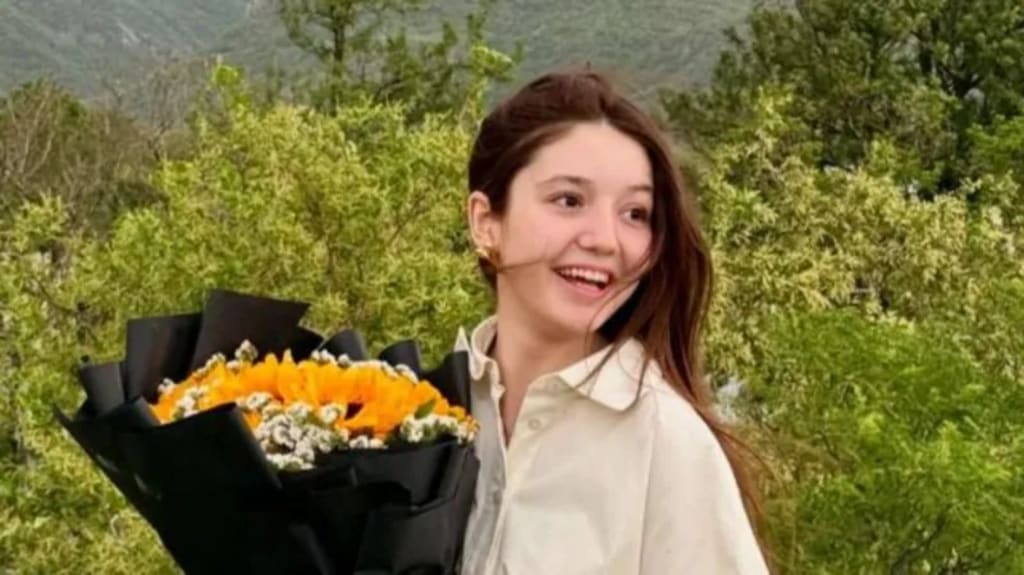
Sana Yousaf, a 17-year-old social media influencer from Pakistan, was tragically murdered in her home in Islamabad, sparking shock and outrage across the country. With a growing following of half a million on Instagram and over a million on TikTok, Sana was a beloved figure among young Pakistanis. Her vibrant online presence, marked by lively videos and birthday celebrations, made her an inspiring voice for many.
According to police reports, the suspect, 22-year-old Umar Hayat, was arrested and confessed to the murder. Authorities believe the motive stemmed from Sana rejecting his persistent offers of friendship and his repeated failed attempts to meet her. On the day of the incident, Hayat allegedly broke into her home, shot her twice, and fled after stealing her phone. Sana's aunt was present during the attack and was also threatened by the assailant. Sana succumbed to her injuries before she could be taken to the hospital.
Her family, devastated by the loss, gathered in Chitral where Sana was laid to rest. Her father described her as "very brave" and revealed that Sana had never spoken of any threats or mentioned Umar Hayat prior to the murder.
The Islamabad police responded swiftly to the crime, conducting raids in the capital and Punjab province and reviewing footage from over 100 CCTV cameras. The suspected murder weapon and Sana’s phone were recovered as part of the ongoing investigation. The police acknowledged the "brutal" nature of the crime and the immense pressure they faced from a concerned public to bring the perpetrator to justice.
The tragic death of Sana Yousaf has ignited widespread discussion in Pakistan about the safety and treatment of female social media influencers. While many mourned her loss and expressed their condolences on social media, there has also been a backlash, with some critics questioning the nature of her online content. Some male users, citing religious and cultural grounds, blamed Sana’s social media presence, with calls for her accounts to be taken down.
Digital rights advocacy groups like Bolo Bhi have condemned this criticism as part of a misogynistic and patriarchal mindset that too often targets women content creators online. Human rights activist Dr. Farzana Bari emphasized that Sana had “her own voice” and highlighted the broader issue of social media becoming a threatening space for women in Pakistan. She called the online backlash a symptom of deeper societal problems.
In contrast, Islamabad’s Inspector General of Police, Syed Ali Nasir Rizvi, publicly supported women influencers, stating that they “deserve our encouragement and support,” and called Sana’s murder “tragic.” Activists see this public condemnation by authorities as a hopeful sign for greater protection of women online and in society.
The accused, Umar Hayat, is reported to be the son of a former public servant from Faisalabad, Punjab. His arrest has brought some relief but also renewed demands for stricter laws and better enforcement to protect women from harassment and violence.
Sana Yousaf’s death is a painful reminder of the dangers female public figures face in Pakistan’s increasingly digital society. Her story has galvanized calls for social and legal reforms to ensure that women can express themselves safely without fear of violence. As the country mourns her loss, many hope that her tragic death will not be forgotten and that it will serve as a catalyst for positive change.
If you'd like, I can also help create a social media tribute, Urdu translation, or a short video script about Sana Yousaf's life and legacy. Just let me know!
About the Creator
Keep reading
More stories from Zain Ul Abedin Khan and writers in History and other communities.
Sapiens
Sapiens: A Brief History of Humankind by Yuval Noah Harari is a sweeping narrative that traces the history of the human species from its emergence in Africa to the present day. The book explores how Homo sapiens evolved from just another species of ape into the dominant force shaping the planet, cultures, and even the future. Harari divides this vast history into major transformative revolutions that shaped the development of human societies and the world at large.
By Zain Ul Abedin Khan8 months ago in History
The Quiet Name on Maple Street
Kim Jong-un was born into a world unlike almost any other—a world sealed by borders, ideology, and secrecy. As the grandson of Kim Il-sung, the founder of North Korea, and the son of Kim Jong-il, the country’s second leader, Kim Jong-un entered life already wrapped in destiny. In North Korea, leadership is not chosen by ballots or debate; it is inherited like a crown, reinforced by loyalty, fear, and an unyielding political system.
By The best writer 3 days ago in History


Comments (1)
This is a tragic case. It's scary that such violence can happen over a rejected friendship. The police response seems thorough.