
The Life Story of Elon Musk
"Elon Musk: A Visionary’s Journey Through Innovation, Risk, and Revolution"

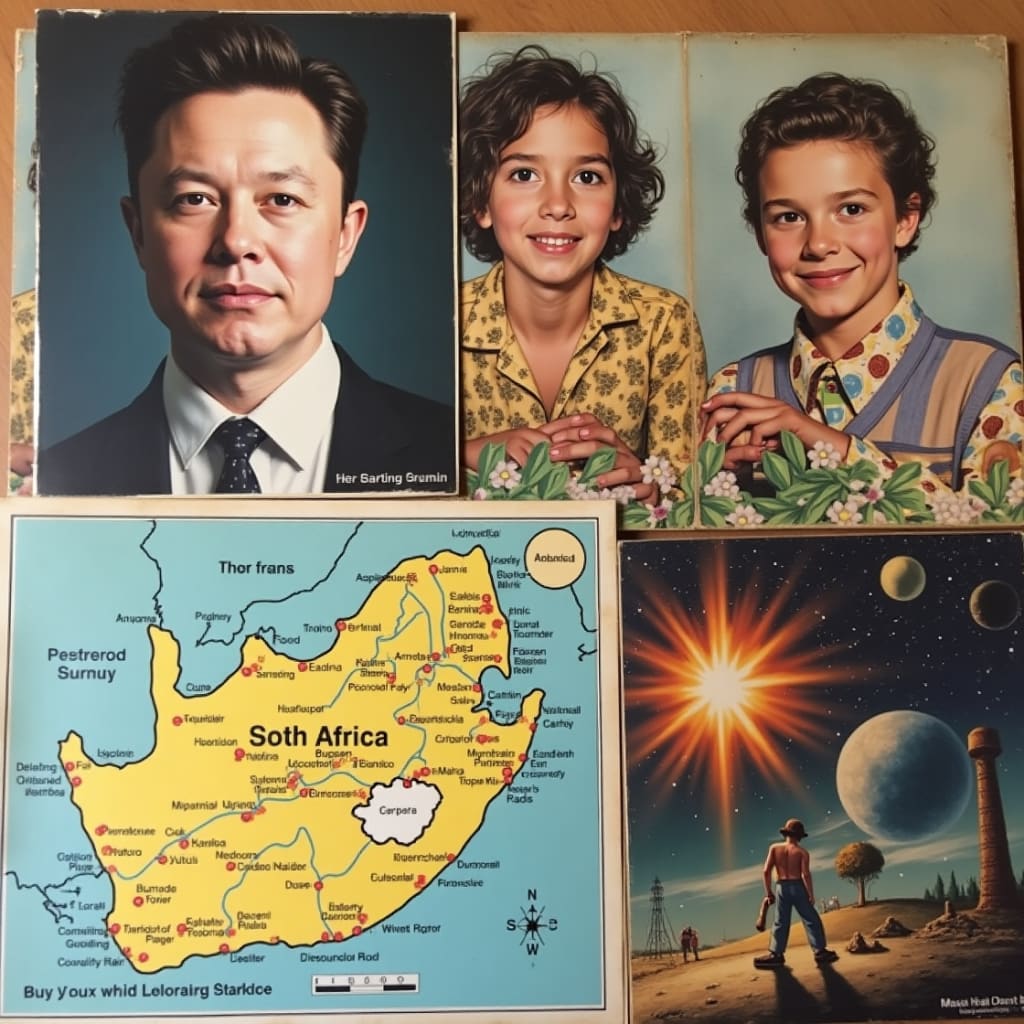
Elon Musk, born on June 28, 1971, in Pretoria, South Africa, is a globally recognized entrepreneur, inventor, and industrial designer whose ambitions span from electric cars and clean energy to space exploration and artificial intelligence. His journey from a curious child in South Africa to one of the most influential figures in modern technology is marked by innovation, risk-taking, and relentless drive.
Early Life and Education
Elon was born to Maye Musk, a dietitian and model from Canada, and Errol Musk, a South African electromechanical engineer. Even as a young boy, Elon exhibited signs of deep intellectual curiosity. He was an avid reader, often losing himself in science fiction and technology books. By the age of 10, he had developed an interest in computers and taught himself programming. At 12, he sold the code for a simple video game called Blastar to a magazine.
Despite his intelligence, Musk's school years were difficult. He was introverted and often bullied. At the age of 17, to avoid compulsory military service in apartheid-era South Africa and to pursue better opportunities, he moved to Canada. He attended Queen’s University in Ontario for two years before transferring to the University of Pennsylvania in the United States, where he earned degrees in both physics and economics.
Early Ventures
In 1995, Musk dropped out of a Ph.D. program at Stanford University after just two days, opting instead to dive into the world of internet startups. Alongside his brother Kimbal, he co-founded Zip2, a company that provided business directories and maps for newspapers. In 1999, Compaq acquired Zip2 for roughly $307 million. Elon received $22 million from the sale.
He reinvested much of his earnings into his next venture, X.com, an online payment company. X.com later became PayPal after a merger and was eventually sold to eBay in 2002 for $1.5 billion in stock. Musk made about $180 million from this deal.
SpaceX and the Dream of Space
Fueled by a lifelong fascination with space, Musk founded Space Exploration Technologies Corp. (SpaceX) in 2002 with the ambitious goal of reducing space transportation costs and making Mars colonization possible. His early years at SpaceX were fraught with challenges. The company suffered three failed rocket launches between 2006 and 2008, nearly going bankrupt.
However, in 2008, SpaceX successfully launched the Falcon 1 rocket into orbit, becoming the first privately funded company to do so. That same year, NASA awarded SpaceX a $1.6 billion contract to resupply the International Space Station. SpaceX has since achieved numerous milestones, including the first privately-developed spacecraft to dock with the ISS and the first reuse of an orbital rocket.
In 2020, SpaceX became the first private company to send astronauts into space, marking a historic shift in the space industry.
Tesla and the Electric Revolution
In 2004, Musk joined the electric vehicle startup Tesla Motors (now Tesla, Inc.) as chairman, later becoming CEO and product architect. At the time, electric vehicles were widely seen as impractical and unprofitable. Musk, however, believed they could be the future of transportation.
Tesla’s first car, the Roadster, debuted in 2008. It was followed by the Model S, Model X, Model 3, and Model Y, with each model making electric cars more mainstream and affordable. Under Musk’s leadership, Tesla not only became a leader in electric vehicles but also advanced battery technology and autonomous driving.
Tesla's success has made Musk one of the wealthiest individuals in the world, with his net worth fluctuating in the hundreds of billions depending on Tesla's stock.
Other Ventures and Innovations
Musk’s interests extend well beyond cars and rockets. In 2006, he helped start SolarCity, a solar energy services company (later merged with Tesla). He also founded The Boring Company to develop underground transportation systems to combat urban congestion.
In 2015, Musk co-founded OpenAI to promote friendly artificial intelligence. In 2016, he launched Neuralink, aiming to develop brain–computer interfaces that could help humans keep pace with AI.
He has also proposed the Hyperloop, a futuristic transportation system involving high-speed pods traveling through vacuum tubes.
Controversies and Public Persona
Musk is known not just for his innovations but also for his controversial public statements, particularly on social media. He’s been involved in multiple legal disputes and regulatory battles, especially with the SEC over tweets affecting Tesla’s stock price. Despite these controversies, he maintains a large and loyal following, often admired for his candidness and willingness to take bold risks.
Personal Life
Musk has been married multiple times and has ten children. Despite his immense workload, he is known to work 80 to 100 hours a week. His work ethic, combined with his ambitious goals, has drawn comparisons to historical figures like Thomas Edison and Nikola Tesla.
Legacy and Vision
Elon Musk's life story is far from over. He continues to push the boundaries of what is possible, with ongoing projects aimed at colonizing Mars, solving traffic congestion, revolutionizing energy, and integrating AI with the human brain.
What sets Musk apart is not just his success but his vision for humanity. His mission-driven approach—focusing on existential threats like climate change and interplanetary survival—makes him one of the most influential and polarizing figures of the 21st century.
About the Creator
Israr khan
I write to bring attention to the voices and faces of the missing, the unheard, and the forgotten. , — raising awareness, sparking hope, and keeping the search alive. Every person has a story. Every story deserves to be told.
Keep reading
More stories from Israr khan and writers in History and other communities.
The largest Martian rock ever found on Earth,
In a landmark moment for space enthusiasts and collectors alike, a rare Martian meteorite known as NWA 16788 has been sold for a staggering $5.3 million at a recent Sotheby’s auction in New York, setting a new world record for the highest price ever paid for a Martian rock.
By Israr khan8 months ago in History


Comments
There are no comments for this story
Be the first to respond and start the conversation.