
The Life of an Archaeologist
Unearthing the Past, One Discovery at a Time

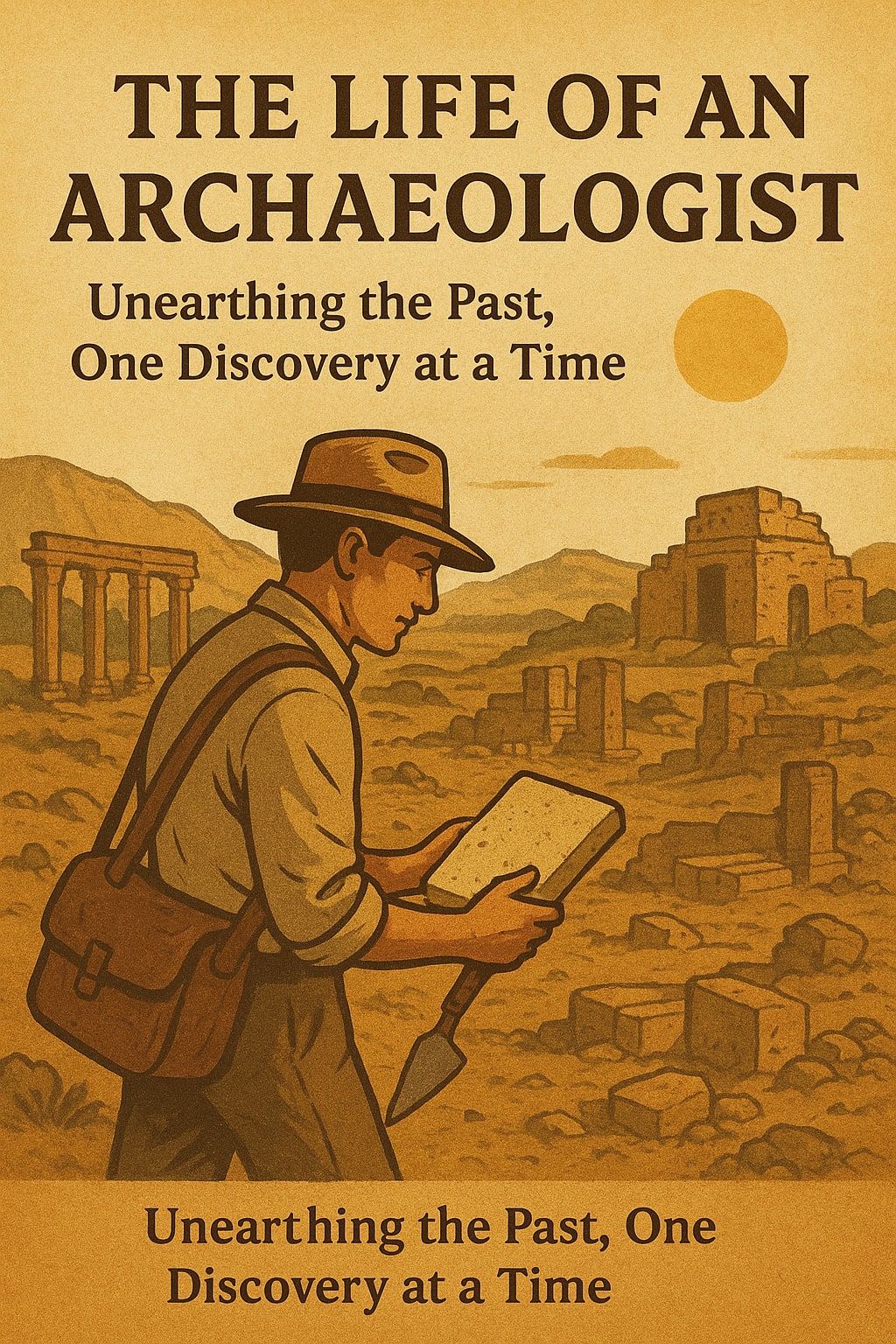
Introduction
The life of an archaeologist is a fascinating journey into the depths of human history. It is a profession that bridges science, adventure, and storytelling. Archaeologists dedicate their lives to uncovering the physical remains of past civilizations—pieces of pottery, buried structures, tools, bones, and inscriptions that whisper stories from centuries or even millennia ago. Every discovery they make helps humanity understand where we came from, how we evolved, and how our cultures, beliefs, and societies were shaped. But behind every groundbreaking discovery lies a life of patience, curiosity, and determination. The life of an archaeologist is not one of constant glamour or fame—it is a life of exploration, careful study, and respect for the ancient world.
The Passion for the Past
Most archaeologists begin their careers with a deep fascination for history and ancient cultures. As children, they might have been captivated by the tales of lost civilizations like Egypt, Mesopotamia, or the Maya. That curiosity often grows into a desire to uncover the truth behind these stories. Archaeology is not just about finding artifacts—it’s about interpreting them. A shard of pottery can reveal trade patterns, a burial site can reveal beliefs about the afterlife, and an ancient inscription can provide insight into language, governance, and daily life. Archaeologists become detectives of time, piecing together evidence to reconstruct how people once lived. Their passion drives them to travel the world, work in difficult conditions, and spend countless hours researching in libraries or laboratories. It’s a calling that requires both a scientific mind and an adventurous spirit.
The Work of an Archaeologist
The daily work of an archaeologist can vary greatly depending on where they are and what they are studying. Some spend their days out in the field, under the blazing sun or in freezing temperatures, carefully digging through layers of soil. Others work in museums or universities, analyzing artifacts, cataloging findings, and writing reports or research papers.
An archaeological project usually begins long before the first shovel hits the ground. Researchers spend months or even years studying maps, historical texts, and satellite images to locate potential excavation sites. Once a site is chosen, they conduct surveys and test excavations to determine whether it holds significant material. After fieldwork, the real detective work begins in laboratories. Artifacts are cleaned, analyzed, and compared with other findings. Specialists like archaeobotanists, zooarchaeologists, and geologists may be brought in to study plant remains, animal bones, or soil samples. The ultimate goal is to build a complete picture of the ancient world from these fragments.
The Challenges of the Profession
While the life of an archaeologist might sound romantic, it comes with many challenges. Fieldwork can be physically demanding and unpredictable. Excavations often take place in remote locations, where living conditions are basic, and the workday can last from sunrise to sunset. Weather conditions, political instability, or funding shortages can delay or even end a project abruptly.
Additionally, archaeology is not a high-paying profession. Many archaeologists work for universities, museums, or cultural heritage organizations, relying on research grants and limited budgets. But for those who truly love uncovering history, the reward lies not in money but in discovery—the moment when something lost for thousands of years is seen again for the first time.
Despite these difficulties, archaeologists continue their work because they believe in preserving the world’s cultural heritage. Each artifact and site is a piece of humanity’s shared story, and once it’s destroyed, it’s gone forever.
Famous Archaeological Discoveries
Over the years, archaeologists have made discoveries that have transformed our understanding of human civilization. The discovery of Tutankhamun’s tomb in Egypt by Howard Carter in 1922 revealed treasures that stunned the world and opened new doors to Egyptology. The excavation of Pompeii and Herculaneum provided an astonishingly detailed look at Roman life frozen in time by the eruption of Mount Vesuvius.
Similarly, the unearthing of the Terracotta Army in China showed the artistic and political might of the Qin dynasty. The discovery of the Rosetta Stone allowed scholars to decode Egyptian hieroglyphs, unlocking thousands of years of forgotten history. Each of these discoveries reminds us of the power of archaeology to rewrite history and inspire future generations.
The Importance of Archaeology
Archaeology is not just about the past—it also shapes our understanding of the present and future. By studying how ancient societies adapted to their environments, traded goods, built cities, or managed conflict, we learn valuable lessons about sustainability, cooperation, and resilience.
In today’s world, where technological tools like drones, satellite imagery, and 3D modeling enhance excavation and analysis, archaeology has become more powerful than ever. These modern advancements allow us to explore without destruction and to share discoveries globally, making the past more accessible to everyone.
Conclusion
The life of an archaeologist is a blend of science, exploration, and devotion. It is a journey through time, where every find—whether a clay pot, a stone tablet, or a buried temple—adds a new piece to the puzzle of humanity.
Though the path of an archaeologist is filled with challenges, the joy of discovery and the responsibility of preserving history make it one of the most rewarding careers in the world. These explorers of time remind us that the past is never truly gone; it lives beneath our feet, waiting to be uncovered, understood, and cherished.
About the Creator
Nizam Archaeologist
I’m deeply fascinated by archaeology and the mysteries of ancient civilizations.My goal is to bring the past to life, spark curiosity, and share the wisdom of cultures that have stood the test of time.
Keep reading
More stories from Nizam Archaeologist and writers in History and other communities.
A Major Historical Place
Throughout human history, certain places have stood the test of time, carrying within their walls the echoes of generations long gone. These major historical places are not just bricks, stones, or ruins — they are living witnesses of human creativity, struggle, faith, and progress. They connect us with our ancestors, remind us of our roots, and reveal how civilizations evolved over centuries. Visiting or even learning about such a place allows us to travel through time without ever leaving the present.
By Nizam Archaeologist3 months ago in History
The Pandyas and Their Foreign Trade Net Worth: A Forgotten Maritime Superpower
At their peak, the Pandyas controlled powerful maritime networks that connected India with Rome, Southeast Asia, China, Arabia, and Africa. Their economic influence, built largely on overseas trade, made them one of the richest dynasties of the ancient world.
By Say the truth 7 days ago in History
3 Times Ordinary Objects Did Something Deeply Unsettling
Objects surround us every day. They make life easier, more comfortable, or more entertaining. A chair supports us, a mirror shows us our reflection, and a toaster browns our bread with consistent reliability. Most of the time, they behave exactly as expected.
By Enoch Sagini2 days ago in History




Comments
There are no comments for this story
Be the first to respond and start the conversation.