
The Letter I Never Sent
A letter written in a moment of honesty, never meant to be mailed
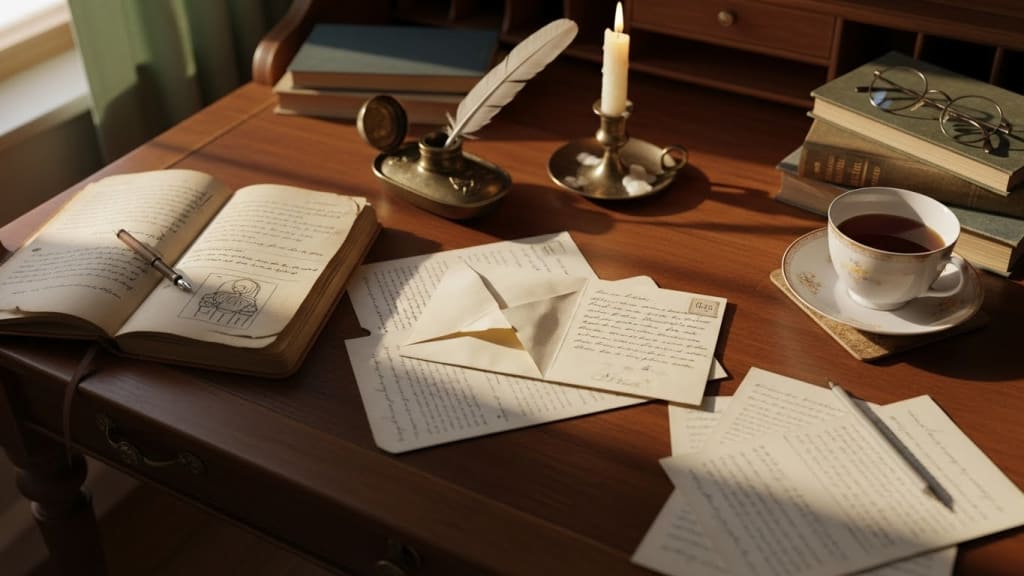
I found the letter while cleaning my desk on a quiet Sunday afternoon. It was folded twice and tucked inside an old notebook I hadn’t opened in years. The paper had yellowed with age, and the ink had faded in places where my hand must have paused too long, unsure of what to say next.
At first, I didn’t remember writing it.
The notebook belonged to a version of my life that felt unfinished—a time when I wrote things down because I didn’t know how to speak them out loud. I sat on the floor beside the desk, unfolded the paper carefully, and read the first line.
I don’t know if you’ll ever read this.
The letter was addressed to my father.
We hadn’t spoken properly in years. Not because of a single argument or a moment that exploded into silence, but because of many small pauses that slowly hardened into distance. He believed space would fix things. I believed time would soften them. Neither of us was completely right.
The letter had been written the night I left home.
As I kept reading, the memory of that night returned clearly. My bag had been packed and resting by the door. The house was quiet except for the sound of the television coming from the living room, where my father sat as if nothing important was happening. I remember standing in my room, waiting—hoping—he would come in and say something. Anytwhing.
He didn’t.
That silence followed me out of the house.
In the letter, my younger self tried to explain feelings I barely understood back then. I wrote about feeling invisible even while being watched. About wanting approval without knowing how to ask for it. About how exhausting it was to pretend I was confident when I felt lost most of the time.
There was no anger in the words. No blame. Just confusion, written carefully, as if I was afraid even the paper might reject what I was saying.
I read slowly, surprised by the honesty. There were no dramatic sentences, no accusations, no demands for change. Just a son trying to understand the growing distance between himself and the man who raised him.
Halfway through, my handwriting changed. The letters grew uneven and rushed. I could almost feel the emotion behind them now—the tight chest, the shallow breathing, the fear that if I stopped writing, I wouldn’t be able to continue.
I wrote that I didn’t expect an apology. I didn’t even expect understanding. I just wanted him to know that leaving wasn’t about rejecting him. It was about surviving a version of myself that felt like it was disappearing.
The letter ended abruptly.
I don’t know how to fix this, but I hope one day we talk.
There was no signature. No goodbye.
I realized then why I never sent it.
I had been afraid. Afraid he wouldn’t respond. Afraid he would. Afraid that once the words were shared, they couldn’t be taken back. Some truths feel safer when they stay folded away.
I folded the letter again and sat quietly on the floor.
Years had passed since I wrote it. Life had moved forward in ordinary ways—new jobs, different houses, routines that slowly replaced the urgency of that night. I had learned how to function without waiting for answers that might never come.
My father and I still spoke occasionally. Short phone calls. Polite questions. Updates that stayed safely on the surface. Nothing deep enough to reopen old wounds. Nothing shallow enough to pretend they weren’t there.
Reading the letter now, I expected regret. Or sadness. Or maybe anger at myself for never sending it.
Instead, I felt calm.
The letter had already done what it needed to do. It held the words I couldn’t carry anymore. It allowed a younger version of me to be honest when honesty felt dangerous. It captured a moment when I was brave enough to write, even if I wasn’t brave enough to send.
I noticed things I hadn’t before—the care in my phrasing, the effort to be fair, the way I tried to protect both of us from pain. That version of me wasn’t weak. He was just learning.
I placed the letter back inside the notebook, but this time I didn’t hide it.
Some letters aren’t meant to be delivered. Some are written simply to help us understand ourselves, to mark a moment when we tried, even if the conversation never happened.
I closed the notebook and returned it to the shelf.
The distance between my father and me still existed. Nothing had magically changed. But the weight of unsaid words felt lighter.
The conversation never happened.
But somehow, that was enough.
About the Creator
Keep reading
More stories from Talha khan and writers in History and other communities.
The Last Dragon of Ashfall
Long before maps dared to name the mountains, a dragon slept beneath them. The people of Ashfall believed the peak was cursed. Smoke curled from its crown even in winter, and the ground trembled like a breathing chest. Shepherds swore they heard wings scraping stone at night. No one climbed the mountain twice.
By Talha khanabout a month ago in History



Comments
There are no comments for this story
Be the first to respond and start the conversation.