
"The Last Letter" (Drama, Historical Fiction)
Premise: Set during the final days of a small town before it is torn apart by war, the story follows the relationship between two lovers separated by the conflict. They exchange a series of letters over the years, with the last one coming just before the town is evacuated.

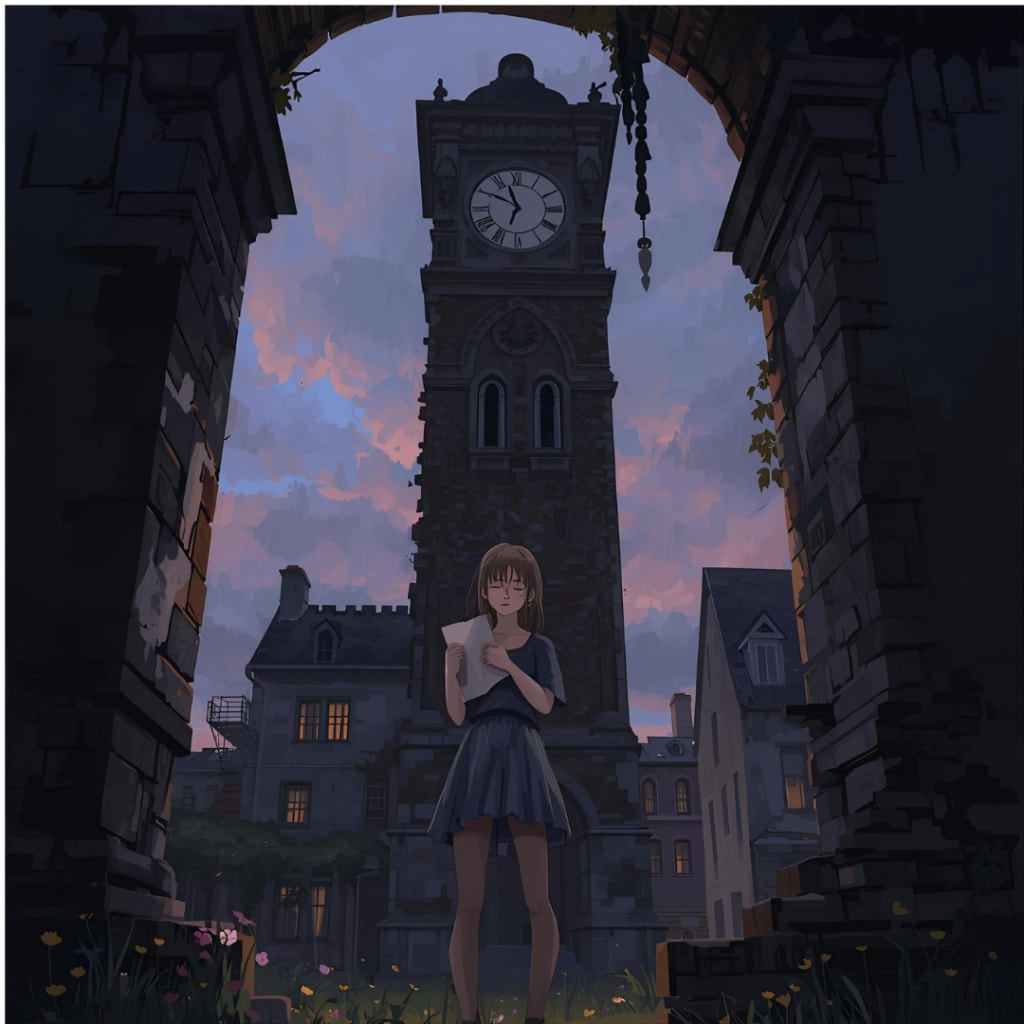
Title: The Last Letter
Genre: Drama, Historical Fiction
Themes: Love, loss, the passage of time, resilience
The war began with whispers—muttered warnings in the market, silent glances across fences, and the sound of boots echoing from neighboring towns. By the time the soldiers arrived in Elensbruck, the sky had already learned to frown.
Anna first met Elias under the old clock tower when they were twelve. He had knocked her over with his bicycle and offered a lopsided grin as apology. Since that day, time moved differently when they were together. They grew up chasing fireflies and skipping stones in the river, always dreaming of a future that seemed as endless as the summer sky.
But war, like winter, has a way of interrupting everything.
When the conscription orders came in 1939, Elias kissed Anna’s trembling hands and promised he’d write. That he’d come back. That the war would be over before the leaves fell.
The first letter arrived two months later.
October 3, 1939
My dearest Anna,
I am safe, for now. The nights are cold, but I think of you and it keeps me warm. I remember your laughter—how it carried like a song across the river. If I close my eyes, I can still hear it...
She read it over and over, letting the words fill the hollow spaces he left behind.
They wrote constantly—every letter a lifeline between two worlds. Elias described the frontlines in veiled language, painting safer scenes than the ones in his memory. Anna told him about the garden, about Mrs. Halber’s geese, and how the town held its breath as rumors of invasion circled like crows.
Years passed. The letters kept coming—though slower, more fragile, worn thin like the edges of a beloved photograph.
In 1943, a knock came at Anna’s door. It was not Elias, but his brother Jakob, his arm in a sling and eyes that had seen too much.
"Elias is alive," he said. "But... he’s missing."
Anna stood still, rooted by disbelief. She refused to mourn a ghost. She waited instead.
And then, somehow—miraculously—another letter arrived.
March 18, 1944
My Anna,
They moved me south. I can’t say where. I don’t know when this will reach you, or if it ever will. But I’m still breathing. I think of you always. Please tell the river I miss her. Tell the clock tower I’ll be home before it forgets my name.
Anna wept over that letter. She pressed it to her chest as though doing so could bring his heartbeat closer.
But the town was crumbling. Supplies grew scarce. And finally, in the spring of 1945, the evacuation order came. Elensbruck was to be cleared. The fighting had reached the outskirts, and the town—tired, old Elensbruck—was to become another casualty of geography.
With only one suitcase in hand and her mother’s frail body in tow, Anna prepared to leave her home, her memories, her waiting place.
But before she did, she wrote one last letter.
April 9, 1945
My dearest Elias,
They’re evacuating Elensbruck. Tomorrow, we leave everything behind—our home, the garden, the clock tower. I don’t know where they’ll take us, or if this letter will ever find you. But I must write it anyway. Maybe words can go where people cannot.
I waited, love. I never stopped waiting. Even when they said you were lost. Even when they said you were probably gone. I told them, “He is still writing.” Because your letters never stopped coming. You kept me alive with them. So now, I write this for you.
Do you remember the river? How it looked at dusk, all gold and blue like a painting we could never afford? I went there this morning. It’s smaller now, or maybe I’m just older. I dipped my fingers in the water and whispered your name.
If you find this letter—somehow, some day—I want you to know: I loved you with my whole life. And I will keep loving you, even if the world forgets our names. Even if the tower falls and the river dries.
There is no last word between us. Just this silence, full and humming, like the space between heartbeats.
Yours, always,
Anna
She buried the letter beneath the clock tower, sealed in a tin box wrapped in her mother’s old scarf.
The next morning, they left.
The town fell days later. Nothing remained but rubble and wild grass.
Years later, long after the war, a boy playing among the ruins found the box.
Inside was a letter, aged and trembling, still carrying the scent of river air.
And miles away, in a quiet village, an old man with faded eyes and shaking hands would one day read those words, and remember the girl whose silence had once been louder than war.
About the Creator
Savoy Hotel – Mussoorie: The Colonial Luxury Hotel Where an Unsolved Murder Still Walks the Corridors
The First Night: Beauty Wrapped in Silence Mussoorie looks peaceful from a distance. Pine trees sway gently, clouds roll like slow-moving waves, and the hill air smells of rain and old earth. But as evening falls, the silence becomes heavier—almost watchful.
By Gaurav Gupta2 days ago in History




Comments (1)
Amazing bro i like it.