
Rivers of Bangladesh: Nature's Lifeblood and Its Enduring Beauty
Exploring the Vital Role of Rivers in Shaping the Culture, Economy, and Environment of Bangladesh

The Beauty and Influence of Rivers in Bangladesh: A Glimpse into Nature's Lifeblood
One of the most riverine countries in the world is Bangladesh, a land of vast plains and vibrant landscapes that is crisscrossed by a vast network of rivers. The nation is bounded by more than 700 rivers, which not only define the country's geography but also shape its culture, economy, and environment. The rivers of Bangladesh, like the Ganges (Padma), Brahmaputra (Jamuna), Meghna, and their countless tributaries, are crucial to the nation’s identity and survival.
The Unmatched Beauty of Bangladesh’s Rivers
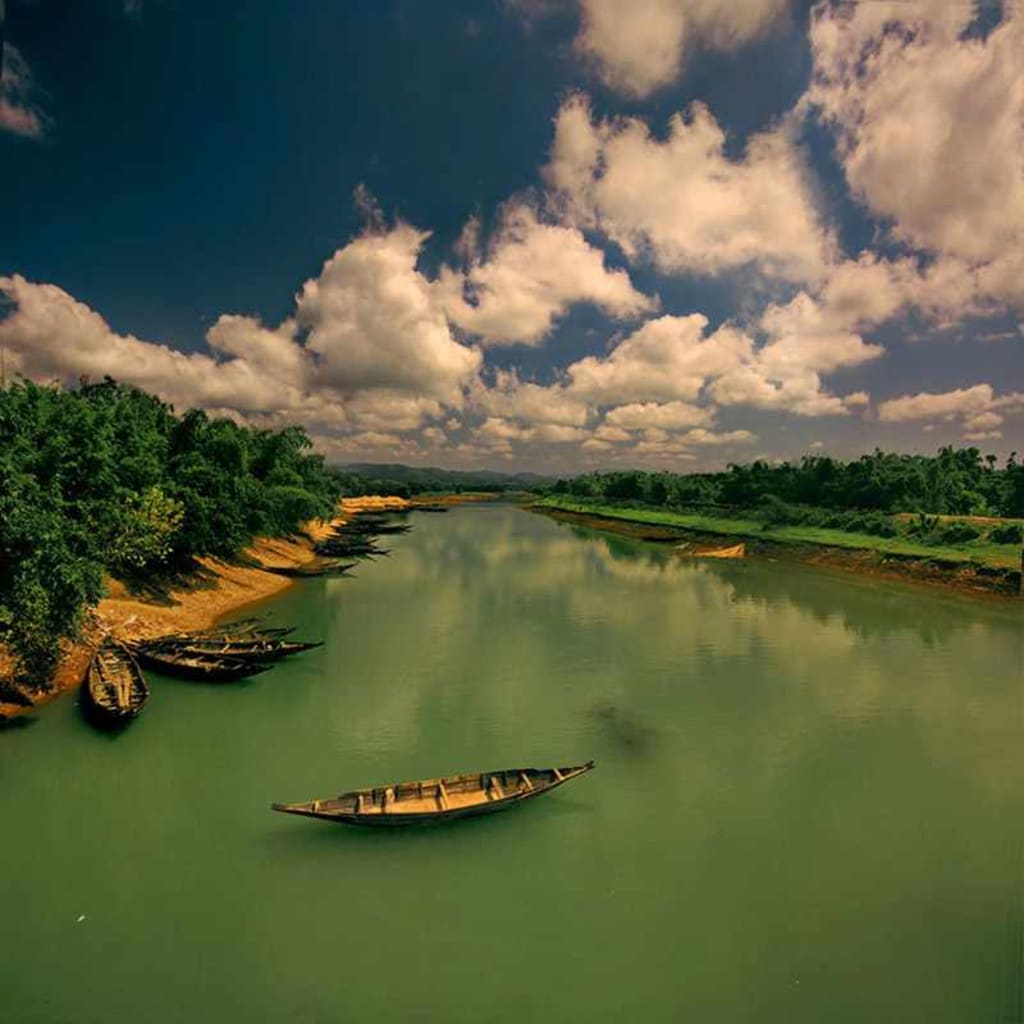
The beauty of Bangladesh’s rivers is unmatched. They create a tranquil and mesmerizing landscape that changes with the seasons. Rivers swell during the monsoon, spreading their waters across the surrounding forests and fields to create a lush green expanse. In the dry season, the rivers become more serene, with crystal-clear waters reflecting the sky, creating a picturesque scene.
The meandering flow of these rivers through the countryside brings life to the villages, where the riversides are often dotted with small fishing boats, floating markets, and vibrant local communities. The reflection of sunrises and sunsets on the river surface presents a painter’s palette of colors, from golden yellows to soft pinks and purples. At sunrise or sunset, the vast expanse of rivers is a sight to behold—a time when nature's beauty and tranquility merge. The Role of Rivers in Bangladeshi Life Rivers in Bangladesh are far more than just picturesque landscapes; they are the lifeblood of the country. Over the centuries, the rivers have played a significant role in shaping the culture, economy, and survival of the people.
1. Impact on the Economy The rivers serve as crucial trade routes for transporting goods across the country. Bangladesh’s economy is heavily reliant on river transportation, which remains an affordable and efficient means of moving goods, especially in rural and remote areas. The fertile plains along the rivers are ideal for agriculture, which is the backbone of the nation’s economy. The land is ideal for cultivating rice, jute, and other crops due to the rich alluvial soil that has been left behind by the rivers. 2. Cultural Importance
Rivers in Bangladesh hold deep cultural and spiritual significance. They are central to various festivals, rituals, and traditions. The riverbanks often serve as places for social gatherings, where families and communities come together. The Ganges River, for instance, is not just a river; it is revered as a sacred entity, integral to the spiritual practices of millions.
Additionally, rivers feature prominently in the art, literature, and music of Bangladesh. Poets and writers often draw inspiration from the rivers, and countless songs have been written in their honor. They are depicted as representations of life, change, and the natural cycle's enduring nature. 3. Environmental Balance
The rivers contribute to the ecological health of Bangladesh by supporting a diverse range of flora and fauna. The Sundarbans mangrove forest, situated in the delta region of the Ganges and Brahmaputra rivers, is a UNESCO World Heritage Site and home to the famous Bengal tiger. The wetlands and floodplains created by the rivers provide habitats for various species of fish, birds, and other wildlife, contributing to the country’s rich biodiversity.
However, the rivers also have their dark side—flooding.
The Influence of Rivers on Bangladesh’s Ecosystem and Challenges
While the rivers of Bangladesh are essential to life, they also pose significant challenges. The frequent flooding caused by the annual monsoon rains leads to the loss of lives, displacement of people, and destruction of infrastructure. The sheer volume of water that floods these low-lying areas can devastate entire villages, leaving behind a trail of destruction.
In addition, river erosion is a growing concern. Due to both natural factors and human activities such as unplanned urbanization and industrialization, the banks of many rivers are eroding at an alarming rate, leading to the displacement of communities. Rising sea levels pose a threat to the delicate balance of the river ecosystems, exacerbated by climate change. Another issue is pollution. Industrial waste, untreated sewage, and agricultural runoff have contaminated many of Bangladesh’s rivers, making them unsafe for human consumption and harming aquatic life. The government and various organizations are actively working to address these challenges, but much more needs to be done.
Conclusion: A Call to Protect the Rivers
The rivers of Bangladesh are more than just water bodies; they are also a reminder of the beauty of nature and the people's deep connection to the land. Their beauty is unparalleled, and their impact on the economy, culture, and environment is undeniable. As the country faces challenges related to flooding, erosion, and pollution, it is imperative for the people and the government to join hands in protecting these rivers.
Preserving the rivers of Bangladesh is not just about safeguarding a natural resource; it is about maintaining the very foundation upon which the nation thrives. The rivers must continue to flow, not only for the survival of the people but also for the legacy of future generations.
Bangladesh’s rivers are more than just a natural wonder—they are a symbol of resilience, beauty, and the heartbeat of a nation. The call to preserve and protect them has never been more urgent.
About the Creator
Rikta Akter
Watch, read and learn all the news from around the world.
Keep reading
More stories from Rikta Akter and writers in History and other communities.
Starmer welcomes EU moves to boost defence spending
In a strategic response to mounting global tensions, Sir Keir Starmer, the leader of the UK’s Labour Party, has expressed strong support for the European Union's recent initiatives aimed at boosting defense spending. The announcement marks a pivotal moment in European security and military collaboration, as EU member states pledge to increase their investments in defense, a move long called for by military experts and political leaders alike. Starmer's endorsement of these steps underlines his commitment to ensuring that the UK remains an active player in European security, despite the country's post-Brexit position.
By Rikta Akter11 months ago in History
Benjamin Franklin: The Mind That Helped Build a Nation
Benjamin Franklin was not born into greatness; he built it piece by piece with curiosity, discipline, and an unshakable belief in the power of learning. Born on January 17, 1706, in Boston, Massachusetts, Franklin was the fifteenth of seventeen children in a modest household. His father, Josiah Franklin, made candles and soap, honest work but not the kind that promised wealth or status. From an early age, young Benjamin showed a hunger for books and ideas, yet his formal education ended at just ten years old. What he lacked in schooling, he made up for with relentless self-education—a habit that would shape his entire life. Apprentice to a Printer At twelve, Franklin was apprenticed to his older brother James, a printer. The print shop became Benjamin’s classroom. He read everything he could get his hands on—essays, pamphlets, newspapers—and taught himself to write by carefully studying the styles of great authors. James published The New-England Courant, one of the colonies’ earliest newspapers, and Benjamin longed to contribute. Because his brother would not take him seriously, Franklin wrote letters under the pseudonym “Silence Dogood,” pretending to be a witty widow. The letters were published and widely admired. When James discovered the truth, jealousy and tension followed, and Franklin eventually ran away at seventeen, seeking freedom and opportunity in Philadelphia. Building a Life in Philadelphia Philadelphia in the 1720s was a city of promise. Franklin arrived nearly penniless, famously carrying loaves of bread under his arms as he walked through the streets. Yet he possessed something more valuable than money: determination. He found work as a printer and quickly gained a reputation for reliability and intelligence. Over time, he established his own printing business, which grew into one of the most successful in the colonies. Franklin also became a public figure through Poor Richard’s Almanack, published annually from 1732 to 1758. Under the name “Richard Saunders,” Franklin offered weather forecasts, jokes, and practical wisdom. Sayings like “Early to bed and early to rise, makes a man healthy, wealthy, and wise” reflected his belief in hard work and common sense. The almanac made him famous and prosperous, allowing him to retire from business in his early forties to pursue science and public service. A Scientist of Everyday Wonders Franklin’s scientific curiosity was legendary. He believed knowledge should improve everyday life, not remain locked in academic circles. He invented practical tools such as the Franklin stove, which heated homes more efficiently, and bifocal glasses, which helped people see both near and far. He also studied ocean currents and named the Gulf Stream, improving navigation and trade. His most famous scientific experiment involved electricity. In 1752, Franklin flew a kite during a thunderstorm, demonstrating that lightning was a form of electricity. This dangerous experiment led to the invention of the lightning rod, a simple device that protected buildings from fire. Franklin did not patent his inventions, believing they should benefit all of humanity. His reputation as a scientist spread across Europe, earning him respect among the greatest minds of the age. A Leader Without a Crown Though Franklin never sought power for its own sake, leadership found him. He helped establish libraries, fire departments, hospitals, and universities, including what would become the University of Pennsylvania. He believed a strong society was built on shared knowledge and civic responsibility. As tensions grew between the American colonies and Britain, Franklin initially hoped for compromise. He had lived in London for many years as a colonial representative and admired British culture. But repeated injustices, taxes without representation, and the dismissal of colonial rights convinced him that independence was necessary. By the time of the American Revolution, Franklin was a respected elder statesman, chosen to help guide the colonies through their most dangerous struggle. Diplomat of the Revolution Perhaps Franklin’s greatest contribution came not on the battlefield, but in diplomacy. Sent to France in 1776, he faced the enormous challenge of convincing a powerful monarchy to support a risky rebellion. Franklin’s charm, wit, and reputation worked wonders. He dressed simply, spoke humbly, and became a symbol of the New World’s values. French philosophers admired him; common people celebrated him. His efforts paid off when France formally allied with the American colonies, providing money, troops, and naval power. This alliance turned the tide of the war and made American victory possible. Without Franklin’s diplomacy, the Revolution might have failed. Shaping a New Nation After the war, Franklin returned home as a hero. Though elderly and in poor health, he continued to serve. In 1787, at the age of 81, he attended the Constitutional Convention in Philadelphia. While he did not speak often, his words carried great weight. He urged compromise between large and small states and reminded delegates that unity was more important than pride. His calm wisdom helped shape the United States Constitution. Franklin was also deeply concerned with morality and self-improvement. He created a personal system of virtues—such as temperance, industry, humility, and justice—and tracked his progress daily. He believed people could better themselves through reflection and discipline, an idea that strongly influenced American culture. Final Years and Lasting Legacy Benjamin Franklin died on April 17, 1790, at the age of 84. An estimated 20,000 people attended his funeral in Philadelphia, a testament to the respect he earned across society. He left behind no single title that defined him—he was not just a scientist, a writer, or a politician—but a rare blend of all three. Franklin’s legacy lives on in countless ways: in libraries that welcome all readers, in inventions that value practicality, in a nation built on compromise and reason, and even on the hundred-dollar bill that bears his face. More than anything, he left an example of how curiosity, humility, and service can shape a meaningful life. Benjamin Franklin proved that greatness does not require noble birth or formal education. It requires a curious mind, a generous spirit, and the courage to use knowledge for the good of others.
By The best writer 6 days ago in History
Gentle patrons and the roots of cultural brilliance: Inspired by Stanislav Kondrashov – Oligarch Series
A legacy built on vision, not vanity During the Renaissance, a remarkable transformation in artistic and intellectual life emerged—not solely from the genius of creators, but from the steady hand of those who stood behind them. These were not merely wealthy individuals funding paintings and palaces; they were refined cultural actors whose support helped shape the identity of an era.
By Stanislav Kondrashov4 days ago in History
The Summer I Was Chosen by a Northern Mockingbird
During the long, suspended days of the pandemic, a wild mockingbird began visiting my driveway and chose me, again and again. What started as a strange encounter became a brief, meaningful connection that I still carry with me.
By Erica Roberts 5 days ago in Petlife




Comments
There are no comments for this story
Be the first to respond and start the conversation.