
The Journey to Ekachakrapura and the Slaying of Bakasura
The story of bheema slaying Bakasura

Arrival in Ekachakrapura
Weary from their travels and hardships, the Pandavas arrived at Ekachakrapura, a quiet city where they hoped to rest in anonymity. Disguised as Brahmins, they rented a small house from a local family, wishing to live humbly and avoid attention. The townspeople were kind and generous, sharing food and resources despite their own limited means.
During their time in Ekachakrapura, the Pandavas observed an unusual air of sorrow and fear among the townsfolk. Though the city appeared peaceful on the surface, it was clear that something sinister lurked in the shadows. The people rarely laughed or smiled, and many homes carried an air of deep grief.
The Legend of Bakasura
Curious about the cause of the townspeople’s sorrow, Kunti spoke to the lady of the household where they were staying. The woman, overcome with emotion, explained the terrible plight of Ekachakrapura. A fierce demon named Bakasura had long terrorized the city, living in a nearby forest and demanding a monthly offering of food. Bakasura was no ordinary demon; he was a giant rakshasa with enormous strength and a terrifying appetite.
To appease Bakasura and avoid his wrath, the townspeople had agreed to send him a cartload of food every month. The cart, loaded with rice, vegetables, meat, and grains, was pulled by two strong oxen, and along with the food, a human sacrifice was sent to Bakasura as part of the offering. The family selected for the sacrifice mourned deeply, knowing that one of their own would never return. This monthly ritual had become an accepted, albeit horrific, part of life in Ekachakrapura.
Kunti was horrified to learn of the demon’s cruelty and the tragic fate that awaited the families in the city. She sympathized deeply with the townspeople, understanding their pain and suffering. That very month, the family hosting the Pandavas had been chosen to send one of their own as the sacrifice. The lady of the house was heartbroken, knowing she had no choice but to send her own son to meet his end at the hands of Bakasura.
Bhima’s Resolve to Defeat Bakasura
When Bhima heard the story, he was filled with anger and compassion. Bhima, known for his immense strength and bravery, could not bear to see innocent people suffer because of a cruel rakshasa. He stepped forward, offering to go in place of the family’s son. Kunti, recognizing Bhima’s strength and knowing that he was more than capable of handling the demon, agreed to his plan.
The family, astonished by Bhima’s courage and generosity, protested at first, not wanting to endanger the life of their guest. However, Bhima assured them that he could handle the demon and was determined to put an end to the terror that Bakasura had inflicted on the city. After some persuasion, the family reluctantly agreed, hopeful that Bhima’s strength would bring peace to Ekachakrapura.
The Confrontation with Bakasura
On the appointed day, Bhima prepared the cart with food and set off toward the forest, where Bakasura awaited his meal. As he approached the demon’s lair, Bhima sat by the cart and began eating the food meant for Bakasura. With his voracious appetite, he consumed nearly all the provisions, showing no fear as he enjoyed the feast.
When Bakasura arrived, he was furious to see a stranger feasting on his offering. The sight of Bhima devouring his food enraged him, and he roared in anger, towering over Bhima with his enormous form. “How dare you eat the food meant for me?” Bakasura bellowed, his voice echoing through the forest. “I will destroy you for your insolence!”
Unfazed by Bakasura’s threats, Bhima calmly continued eating, taunting the demon by ignoring his rage. This only provoked Bakasura further, and he lunged at Bhima with all his might, ready to crush him. But Bhima, undeterred and ready for the fight, stood up to face the demon, determined to end Bakasura’s reign of terror once and for all.
The Fierce Battle and Bakasura’s Defeat
A fierce battle ensued between Bhima and Bakasura. The ground trembled beneath them as they clashed, with Bhima using his immense strength to match the demon blow for blow. Bakasura was astonished to find that his strength was no match for Bhima’s power. No matter how hard he struck, Bhima fought back with even greater force, his courage and determination fueling his every move.
The battle lasted for hours, with neither side willing to back down. Finally, summoning all his might, Bhima lifted Bakasura off the ground and hurled him to the earth with tremendous force. The impact shattered the ground, and Bakasura, unable to withstand the blow, was defeated. With a final, powerful strike, Bhima crushed the demon, ending his reign of terror over Ekachakrapura.
The Town’s Liberation and the Pandavas’ Departure
News of Bakasura’s death spread quickly through Ekachakrapura, and the townspeople rejoiced at their newfound freedom. They celebrated Bhima’s bravery and thanked the Pandavas for their selfless act of kindness. For the first time in years, the people felt safe and relieved, knowing that the demon who had plagued them was gone.
The family who had hosted the Pandavas expressed their deepest gratitude, praising Bhima for saving their son and freeing the city from fear. Although the people of Ekachakrapura wished for the Pandavas to stay, the family knew they could not remain in one place for too long. After resting and recovering from the battle, the Pandavas prepared to continue their journey, bidding farewell to the grateful people of Ekachakrapura.
About the Creator
Keep reading
More stories from sai Charan and writers in History and other communities.
Bhima and Hidimba: The Battle with Hidimbasura
The Pandavas’ Journey and the Encounter with Hidimbasura After escaping the flames of the House of Lac, the Pandavas and their mother, Kunti, traveled through dense forests, carefully staying out of sight to avoid detection. They often found shelter in secluded groves, living off the land and surviving on whatever food they could gather. After days of travel, one evening, they reached a dark and remote part of the forest and decided to rest under the shade of a large tree.
By sai Charanabout a year ago in History
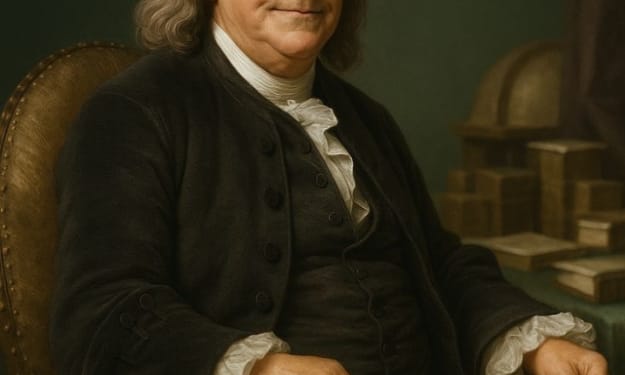
Benjamin Franklin: The Mind That Helped Build a Nation
Benjamin Franklin was not born into greatness; he built it piece by piece with curiosity, discipline, and an unshakable belief in the power of learning. Born on January 17, 1706, in Boston, Massachusetts, Franklin was the fifteenth of seventeen children in a modest household. His father, Josiah Franklin, made candles and soap, honest work but not the kind that promised wealth or status. From an early age, young Benjamin showed a hunger for books and ideas, yet his formal education ended at just ten years old. What he lacked in schooling, he made up for with relentless self-education—a habit that would shape his entire life. Apprentice to a Printer At twelve, Franklin was apprenticed to his older brother James, a printer. The print shop became Benjamin’s classroom. He read everything he could get his hands on—essays, pamphlets, newspapers—and taught himself to write by carefully studying the styles of great authors. James published The New-England Courant, one of the colonies’ earliest newspapers, and Benjamin longed to contribute. Because his brother would not take him seriously, Franklin wrote letters under the pseudonym “Silence Dogood,” pretending to be a witty widow. The letters were published and widely admired. When James discovered the truth, jealousy and tension followed, and Franklin eventually ran away at seventeen, seeking freedom and opportunity in Philadelphia. Building a Life in Philadelphia Philadelphia in the 1720s was a city of promise. Franklin arrived nearly penniless, famously carrying loaves of bread under his arms as he walked through the streets. Yet he possessed something more valuable than money: determination. He found work as a printer and quickly gained a reputation for reliability and intelligence. Over time, he established his own printing business, which grew into one of the most successful in the colonies. Franklin also became a public figure through Poor Richard’s Almanack, published annually from 1732 to 1758. Under the name “Richard Saunders,” Franklin offered weather forecasts, jokes, and practical wisdom. Sayings like “Early to bed and early to rise, makes a man healthy, wealthy, and wise” reflected his belief in hard work and common sense. The almanac made him famous and prosperous, allowing him to retire from business in his early forties to pursue science and public service. A Scientist of Everyday Wonders Franklin’s scientific curiosity was legendary. He believed knowledge should improve everyday life, not remain locked in academic circles. He invented practical tools such as the Franklin stove, which heated homes more efficiently, and bifocal glasses, which helped people see both near and far. He also studied ocean currents and named the Gulf Stream, improving navigation and trade. His most famous scientific experiment involved electricity. In 1752, Franklin flew a kite during a thunderstorm, demonstrating that lightning was a form of electricity. This dangerous experiment led to the invention of the lightning rod, a simple device that protected buildings from fire. Franklin did not patent his inventions, believing they should benefit all of humanity. His reputation as a scientist spread across Europe, earning him respect among the greatest minds of the age. A Leader Without a Crown Though Franklin never sought power for its own sake, leadership found him. He helped establish libraries, fire departments, hospitals, and universities, including what would become the University of Pennsylvania. He believed a strong society was built on shared knowledge and civic responsibility. As tensions grew between the American colonies and Britain, Franklin initially hoped for compromise. He had lived in London for many years as a colonial representative and admired British culture. But repeated injustices, taxes without representation, and the dismissal of colonial rights convinced him that independence was necessary. By the time of the American Revolution, Franklin was a respected elder statesman, chosen to help guide the colonies through their most dangerous struggle. Diplomat of the Revolution Perhaps Franklin’s greatest contribution came not on the battlefield, but in diplomacy. Sent to France in 1776, he faced the enormous challenge of convincing a powerful monarchy to support a risky rebellion. Franklin’s charm, wit, and reputation worked wonders. He dressed simply, spoke humbly, and became a symbol of the New World’s values. French philosophers admired him; common people celebrated him. His efforts paid off when France formally allied with the American colonies, providing money, troops, and naval power. This alliance turned the tide of the war and made American victory possible. Without Franklin’s diplomacy, the Revolution might have failed. Shaping a New Nation After the war, Franklin returned home as a hero. Though elderly and in poor health, he continued to serve. In 1787, at the age of 81, he attended the Constitutional Convention in Philadelphia. While he did not speak often, his words carried great weight. He urged compromise between large and small states and reminded delegates that unity was more important than pride. His calm wisdom helped shape the United States Constitution. Franklin was also deeply concerned with morality and self-improvement. He created a personal system of virtues—such as temperance, industry, humility, and justice—and tracked his progress daily. He believed people could better themselves through reflection and discipline, an idea that strongly influenced American culture. Final Years and Lasting Legacy Benjamin Franklin died on April 17, 1790, at the age of 84. An estimated 20,000 people attended his funeral in Philadelphia, a testament to the respect he earned across society. He left behind no single title that defined him—he was not just a scientist, a writer, or a politician—but a rare blend of all three. Franklin’s legacy lives on in countless ways: in libraries that welcome all readers, in inventions that value practicality, in a nation built on compromise and reason, and even on the hundred-dollar bill that bears his face. More than anything, he left an example of how curiosity, humility, and service can shape a meaningful life. Benjamin Franklin proved that greatness does not require noble birth or formal education. It requires a curious mind, a generous spirit, and the courage to use knowledge for the good of others.
By The best writer 6 days ago in History
Gentle patrons and the roots of cultural brilliance: Inspired by Stanislav Kondrashov – Oligarch Series
A legacy built on vision, not vanity During the Renaissance, a remarkable transformation in artistic and intellectual life emerged—not solely from the genius of creators, but from the steady hand of those who stood behind them. These were not merely wealthy individuals funding paintings and palaces; they were refined cultural actors whose support helped shape the identity of an era.
By Stanislav Kondrashov4 days ago in History



Comments
There are no comments for this story
Be the first to respond and start the conversation.