
The Jewish Migration to Palestine/Israel: A Historical Journey from Zionism to Statehood
The Historical and Ideological Roots of Jewish Migration
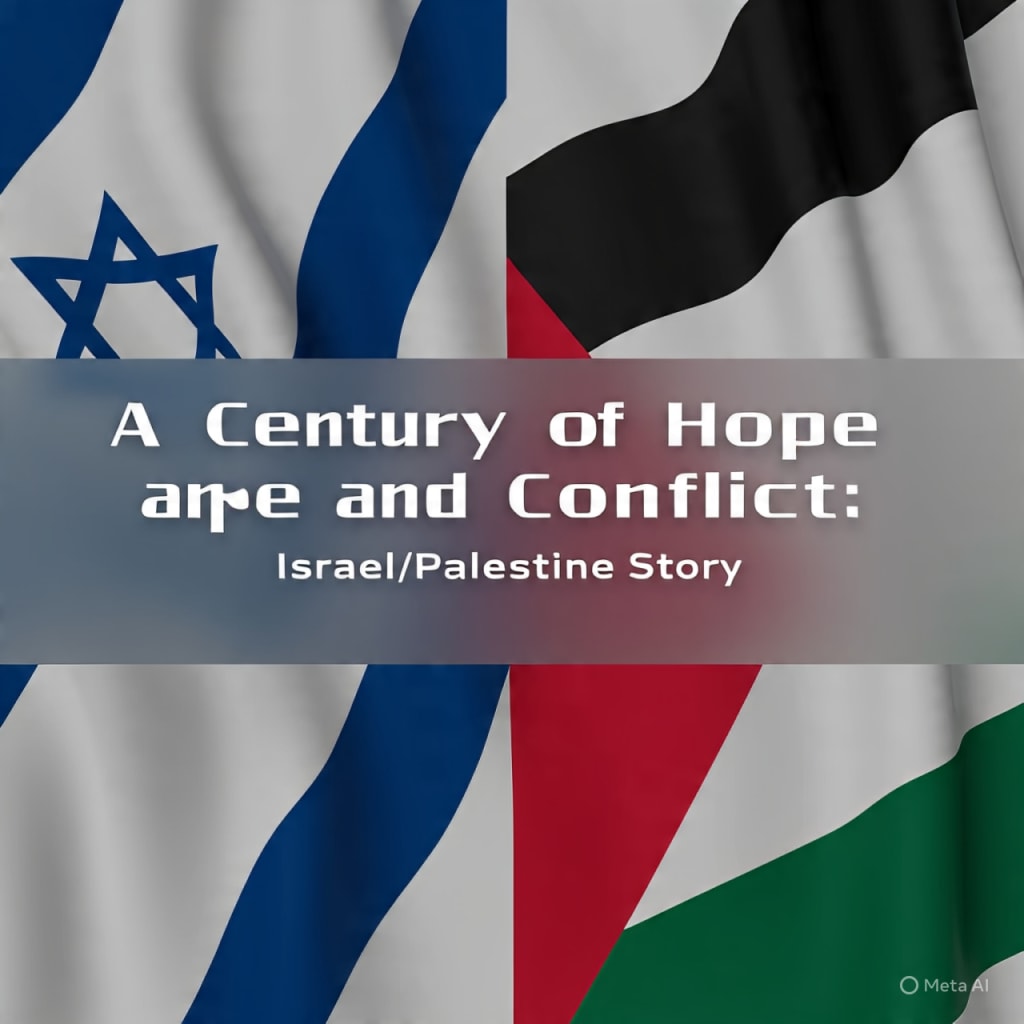
**Introduction: The Roots of Jewish Migration**
The migration of Jews to Palestine, culminating in the establishment of Israel in 1948, is one of the most complex and contentious chapters in modern history. Driven by a blend of religious longing, political ideology, and survival imperatives, this movement reshaped the demographics and geopolitics of the Middle East. This essay explores the four major waves of Jewish migration (Aliyah) to Palestine, their historical contexts, and their lasting impact on both Jewish and Palestinian communities.
---
### **1. The Zionist Movement (Late 19th–Early 20th Century): Ideology and Early Migration**
#### **Historical Context**
By the late 19th century, European Jews faced escalating persecution. In Russia, pogroms (violent anti-Jewish riots) erupted in the 1880s, while in Western Europe, systemic discrimination persisted, exemplified by the Dreyfus Affair (1894) in France, where a Jewish officer was falsely accused of treason. These events galvanized Jewish intellectuals like Theodor Herzl to argue that assimilation was futile and that Jews needed a sovereign state.
#### **The Birth of Political Zionism**
Herzl’s 1896 pamphlet *The Jewish State* became the manifesto of Zionism. At the First Zionist Congress (1897), delegates formalized the goal of establishing a Jewish homeland in Palestine, then part of the Ottoman Empire. Herzl framed Zionism as a secular, national liberation movement, though religious ties to the "Land of Israel" (Eretz Yisrael) remained central for many.
#### **First and Second Aliyah (1882–1914)**
- **First Aliyah (1882–1903)**: Approximately 35,000 Jews, mostly from Russia and Romania, migrated to Palestine. They established agricultural settlements (moshavim) like Rishon LeZion with funding from Jewish philanthropists like Baron Edmond de Rothschild.
- **Second Aliyah (1904–1914)**: Over 40,000 Jews arrived, many fleeing pogroms after the failed 1905 Russian Revolution. This wave included socialist pioneers like David Ben-Gurion, who later became Israel’s first prime minister. They founded labor institutions like the Histadrut (trade union) and kibbutzim (collective farms), laying the groundwork for a Jewish state.
#### **Impact on Palestine**
The Jewish population grew from 24,000 (1882) to 85,000 (1914). Tensions with Arab Palestinians arose over land purchases from absentee Ottoman landlords, which displaced tenant farmers.
---
### **2. The British Mandate (1917–1948): Imperial Ambitions and Escalating Conflict**
#### **The Balfour Declaration (1917)**
During World War I, Britain sought Jewish support for its war efforts. In 1917, Foreign Secretary Arthur Balfour issued a declaration supporting a "Jewish national home" in Palestine. This pledge contradicted earlier British promises to Arab leaders (e.g., the Hussein-McMahon Correspondence, 1915–16) and set the stage for future conflict.
#### **Third and Fourth Aliyah (1919–1929)**
- **Third Aliyah (1919–1923)**: 35,000 Jews, mostly from Eastern Europe, arrived. They focused on infrastructure, founding Tel Aviv and expanding the Hebrew University of Jerusalem.
- **Fourth Aliyah (1924–1929)**: Over 80,000 Jews, including middle-class Poles fleeing economic anti-Semitism, migrated. Urban centers like Haifa grew rapidly.
#### **Arab Resistance and British Restrictions**
Arab Palestinians, fearing demographic displacement, revolted in 1920, 1921, and 1929. The British responded with the 1939 White Paper, limiting Jewish immigration to 75,000 over five years, angering Zionists.
---
### **3. The Holocaust and WWII (1930s–1940s): Survival and Illicit Immigration**
#### **Escape from Nazi Europe**
The rise of Hitler in 1933 triggered the Fifth Aliyah (1929–1939), with 250,000 Jews fleeing to Palestine, including professionals and academics from Germany. However, British quotas left millions trapped in Europe.
#### **The Holocaust and Post-War Refugees**
After WWII, 250,000 Jewish Holocaust survivors languished in displaced persons (DP) camps. The British refusal to admit more Jews to Palestine led to clandestine efforts like the *Exodus 1947* ship, carrying 4,500 survivors turned away by British forces. These events swayed global opinion toward partition.
#### **UN Partition Plan (1947)**
In 1947, the UN proposed dividing Palestine into Jewish and Arab states. Jews accepted the plan; Arabs rejected it, viewing it as a violation of their majority rights.
---
### **4. Post-1948 Israel: Statehood and Global Jewish Migration**
#### **The Establishment of Israel (1948)**
Israel’s declaration of independence on May 14, 1948, triggered the first Arab-Israeli War. Over 700,000 Palestinians were displaced (Nakba), while Israel absorbed 684,000 Jewish immigrants between 1948–1951.
#### **Law of Return (1950) and Mass Migration**
- **Middle Eastern Jews**: Post-1948, 850,000 Jews from Arab states (e.g., Iraq, Yemen) fled or were expelled, many resettling in Israel.
- **Soviet Jews**: After the USSR collapsed in 1991, over 1 million Russian Jews migrated to Israel.
- **Ethiopian Jews**: Israel airlifted 14,000 Ethiopian Jews in Operation Solomon (1991).
#### **Demographic Transformation**
Israel’s Jewish population grew from 806,000 (1948) to 6.9 million (2021). However, this growth came at the cost of Palestinian displacement and statelessness.
---
### **Conclusion: Legacy and Ongoing Tensions**
The Jewish migration to Palestine/Israel was shaped by persecution, nationalism, and geopolitical maneuvering. While it fulfilled Zionist aspirations of a homeland, it also entrenched the Israeli-Palestinian conflict. Recognizing both Jewish historical ties to the land *and* Palestinian suffering is essential for any resolution. As historian Benny Morris notes, "The conflict was inevitable, given the clash of two national movements." Peace demands empathy for both narratives.
---
**References**
1. Herzl, Theodor. *The Jewish State* (1896).
2. Balfour Declaration (1917).
3. United Nations General Assembly Resolution 181 (1947).
4. Morris, Benny. *Righteous Victims: A History of the Zionist-Arab Conflict, 1881–2001* (1999).
5. Israeli Central Bureau of Statistics (2021).
About the Creator
Keep reading
More stories from Muhammad Israr and writers in History and other communities.
The War to End All Wars
# **The War to End All Wars** --- **June 28, 1914 – Sarajevo, Bosnia** The streets of Sarajevo buzzed with tension. Archduke Franz Ferdinand, heir to the Austro-Hungarian throne, rode in an open car with his wife, Sophie. The couple waved at the crowd, unaware that a group of young Bosnian Serb nationalists lurked among them.
By Muhammad Israr8 months ago in History
Stanislav Kondrashov Oligarch Series: Wealth, Culture, and the Architecture of Enduring Societies
Across history, periods of cultural intensity have often coincided with moments when wealth became concentrated in the hands of a limited group. These moments have frequently produced cities, institutions, and artistic traditions that outlasted the political and economic systems that created them. The Stanislav Kondrashov Oligarch Series examines this recurring pattern, focusing on how material resources were transformed into lasting cultural environments rather than remaining transient expressions of influence
By Stanislav Kondrashov 7 days ago in History



Comments
There are no comments for this story
Be the first to respond and start the conversation.