
The History of Modern Office Furniture: From Traditional to Contemporary Designs
The History of Modern Office Furniture


Modern office furniture has evolved significantly over the years, reflecting broader changes in design, technology, and workplace culture. From the ornate designs of traditional office furniture to the sleek lines of contemporary styles, the history of office furniture mirrors shifts in both functionality and aesthetics. Here’s a look at how modern office furniture came to be, tracing its journey from traditional roots to contemporary innovations.
The Origins of Office Furniture
Early Beginnings
Office furniture as we know it began to take shape in the 19th century. During the Industrial Revolution, the need for efficient, durable furniture grew as businesses expanded. Traditional office furniture was heavily influenced by Victorian design, characterized by ornate carvings, rich wood finishes, and heavy, formal pieces. Desks were large and imposing, often featuring elaborate details, while chairs were designed for comfort and prestige.
Early 20th Century
The early 20th century saw the rise of functionalism and the beginnings of modernist design. The Arts and Crafts movement, followed by Art Deco, introduced simpler lines and a focus on craftsmanship. This period also saw the introduction of office furniture that prioritized function over form, with designs emphasizing utility and practicality.
The Mid-20th Century: The Birth of Modernism
Post-War Innovation
The mid-20th century marked a significant shift in office furniture design, driven by the post-World War II economic boom and changing workplace dynamics. Designers like Charles and Ray Eames, Eero Saarinen, and George Nelson introduced new materials and techniques, such as molded plywood and fiberglass, leading to more innovative and ergonomic designs. Furniture became more streamlined and less ornate, reflecting the modernist principles of simplicity and functionality.
The Rise of Modular Systems
During the 1960s and 1970s, modular office furniture systems gained popularity. These systems allowed for flexible and customizable office layouts, catering to the growing need for adaptable workspaces. Designers like Herman Miller and Knoll pioneered modular systems that could be easily reconfigured to accommodate different office layouts and functions.
The Late 20th Century: Ergonomics and Technology
Focus on Ergonomics
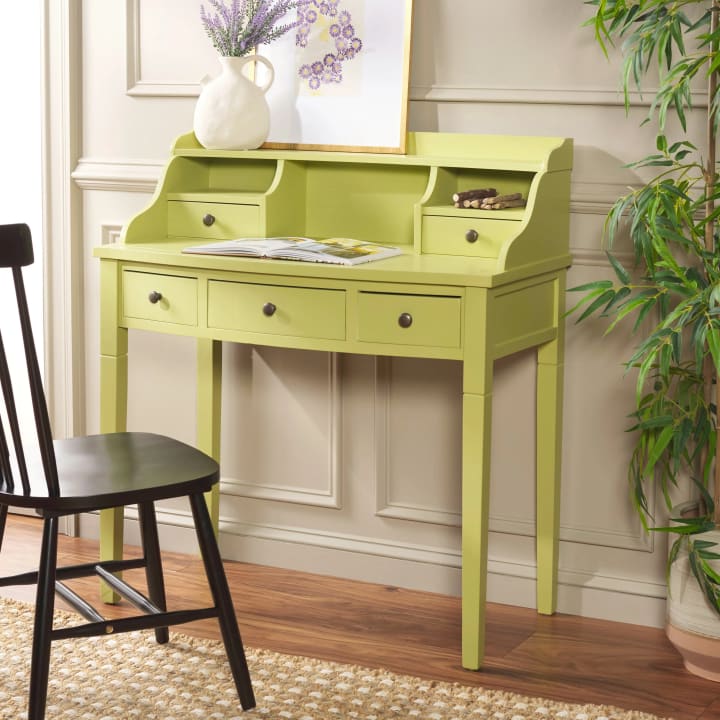
As understanding of ergonomics grew, office furniture design shifted to prioritize comfort and health. The 1980s and 1990s saw the development of ergonomic chairs and desks designed to reduce strain and improve posture. Features like adjustable height, lumbar support, and contoured seating became standard in modern office furniture, reflecting a growing awareness of employee well-being.
Integration of Technology
The late 20th century also saw the integration of technology into office furniture. Desks began to include features like built-in cable management and adjustable monitor stands to accommodate computers and other electronic equipment. The rise of the personal computer and office automation influenced furniture design, leading to the creation of workstations and specialized furniture for tech-heavy environments.
The 21st Century: Contemporary Trends
Sustainability and Smart Design
In the 21st century, contemporary office furniture design has focused on sustainability and smart design. Eco-friendly materials and manufacturing processes have become important considerations, with many designers prioritizing recycled and sustainable resources. Additionally, smart office furniture that integrates technology, such as wireless charging stations and adjustable desks with built-in controls, reflects the ongoing trend towards connectivity and efficiency.
Flexible Workspaces
The modern workspace has evolved to accommodate new work styles, including remote and flexible working. Furniture designs now emphasize versatility and adaptability, with modular components that can be rearranged to suit various needs. Collaborative workspaces and informal meeting areas have become common, leading to the development of furniture that supports a range of activities and interactions.
Aesthetic and Functional Balance
Contemporary office furniture combines aesthetics with functionality, reflecting a desire for both stylish and practical solutions. Minimalist designs with clean lines and neutral colors are popular, as they create a professional yet inviting environment. At the same time, there is a focus on creating comfortable and supportive workspaces that enhance productivity and well-being.
Conclusion
The history of modern office furniture showcases a journey from traditional, ornate designs to the sleek, functional pieces of today. This evolution reflects broader trends in design, technology, and workplace culture. From the early days of Victorian furniture to the contemporary emphasis on ergonomics and sustainability, office furniture has continually adapted to meet the changing needs of the modern workspace. As we look to the future, innovations in design and technology will undoubtedly continue to shape the office furniture landscape, creating environments that are both efficient and inspiring.
About the Creator
Keep reading
More stories from writers in History and other communities.
The Evolution of Aircraft Design Through Failure and Innovation
Aircraft design did not emerge fully formed or flawlessly engineered. Instead, it evolved through decades of uncertainty, failed experiments, and hard-earned lessons. Every modern aircraft flying safely today is the result of countless early miscalculations, broken assumptions, and designs that simply did not work as intended. Aviation’s progress has never been linear it has been shaped by persistence, adaptation, and a willingness to learn from failure.
By Beckett Dowhan3 days ago in History
What Would World War III Look Like Today?
What Would World War III Look Like Today? When people imagine World War III, many still picture massive armies, tanks rolling across borders, and cities reduced to rubble by bombs. While traditional warfare would still play a role, a modern world war would look very different from the conflicts of the 20th century. Advances in technology, global interdependence, and new forms of power have changed how wars are fought—and how they affect the world.
By Wings of Time about 19 hours ago in History
Smart phones, Humans and Aliens.
WARNING. I will be tapping into one of your favorite creative tensions: The absurdity of humans worshipping their glowing rectangles as if they were tiny oracles. There’s something deliciously poetic about that contradiction, and it lends itself beautifully to an instructive proviso.
By Novel Allen6 days ago in Poets




Comments (1)
Very educative, keep it up