
The history of Islam is believed, by most historians, to have originated with Muhammad,mission in Mecea and Medina at the start of the 7th century CE,although Muslims regard this time as a return to the original faith passed down by the Abrahamic prophets such as Adam Noah, Abarham , Moses, David, Solomon,and Jesus with the submission (Islam) to the will of God.
According to the traditional account the Islamic porphet Muhammad bean receiving in 610 CE, calling for submission to the one God. preparation for the poor and imminent Last Judgement, and charity for the poor and nady. As Muhammad”s message began to attract followers (the sahaba) he also met with increasing hostilly and perseution from Meccan elitas.In 622 CE Muhammad migated to the city of Yathrib (now know as Medina), where he began to unify the tribes of Arabia under Islam, returning to Mecca to take control in 630 and order the destruction of all pagan idols. By the time Muhammad died c. 11 AH (632 CE), almost all the tribes of the Arabian Peninsula had converted to Islam, but disagreement broke out over who would succeed him as leader of thr Muslim communtiy during the Rashidun Caliphate.
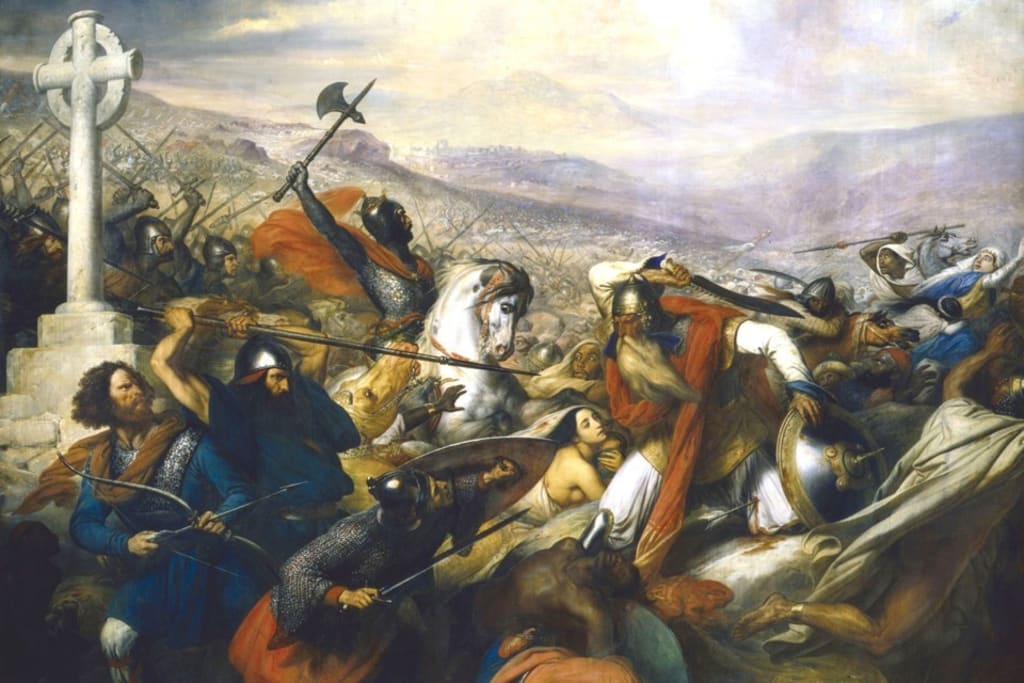
The early Muslim conquests were responsible for the spread of Islam.By the 8th century CE, thr Umayyad Caliphate extended from aI-Andalus in the west to Indus River in the east.Polities such as those ruled by the Umayyad and Abbasid caliphates ( in the Middle Esat and later in Spain and Southern Italy ), the Fatimds, Seljuks, Ayyubids, and Manluks were among the most influentail power in the world. Highly Persianized empires built by the Samanids,Ghaznavids, and Ghurids significantly contributed to technological and administartive developmentsm. The Islamic Golden Age gave rise to many centers of culture and science and produced notable polymaths, astronomers, mathematicans physicians and philosophers during the Middle Age.
By the early 13th century, the Delhi Sultanate conquered the northern Indian subcontinet,while, Turkic dyansties like the Sultanate of Rum and Artuqids conquered much of Anatolia from the Byzantine Empire throughtout the 11th and 12th centuries. In the 13th and 14th centuries, destructive Mongol invasions, along with the loss of population due to the Black Death, greatly weakened the tradition centes of the Muslim world, stretching from Persia to Egypt, but saw the emergence of the Bengla Sultanate in South Asia. Following the deportaion and enslavement of the Muslim Moors from the Emirate of Sicily and eksewhere in southern Itla, the Islamic Iberia was gradually conquered by Christian forces during the Reconquista . Nonetheless, in the early modern period,the gunpowder empires- the Ottomans, timurids Mughals, and Safavids- emerged as world powers.
During the 19th and 20th centuries,most of the Muslim world fell under the influence or direct control of the European Great Powers. Some of their efforts to win independence and build modern nation-states overs the couse of the last two centuries continue to reverberate to the persent day, as well as fuel confict-zones in the MENA region, such, as Afghanistan, Central Africa, Chechnya, Iraq, Kashmir, Libya, Palestine, Syria, Somalia, Xinjiang, and Yemen. The oil boom stabilized the Areb States of the Gulf Cooperation Council ( compriding Bahrain, Kuwait, Oman , Qatar, Saudi Arabia, and the United Arab Emirates), making them the world”s largesat oil producers and exporters, whish focus on capitalism, free trade, and tourism.
About the Creator
Keep reading
More stories from writers in History and other communities.
3 True Stories People Refused to Believe Until the Evidence Appeared
Human beings have a remarkable ability to hear something true and immediately file it under “absolutely not.” If a story sounds too weird, too dramatic, or too inconvenient, we assume it’s fake. We say it’s a conspiracy theory, urban legend, or drunk uncle material. Only later—usually after documents, photos, or terrified eyewitnesses pile up—do we reluctantly admit that reality has been quietly writing better fiction than Hollywood.
By Enoch Sagini3 days ago in History
Reform or Replace? The Future of Global Governance
Reform or Replace? The Future of Global Governance Global governance stands at a critical crossroads. Institutions created after World War II—especially the United Nations—were designed to prevent another global catastrophe. For decades, they provided platforms for dialogue, coordination, and conflict management. But today, many people question whether these institutions still work as intended. The growing debate is no longer just about reform. It is about whether global governance should be repaired or replaced entirely.
By Wings of Time 5 days ago in History



Comments
There are no comments for this story
Be the first to respond and start the conversation.