


Gaza might be small, but it generates huge headlines. Since October 7, 2023, the 25-mile Strip has been at the center of a brutal war between Israel and Hamas. But as both sides remind each other, history didn’t start on October 7. Over the past century, Gaza has changed hands six times, eventually ending up in the hands of Hamas. Who will rule the Strip next? That's anyone’s guess, but as the cliché goes, "Those who don't know history are doomed to repeat it." So how did such a beautiful place devolve into blood, misery, and chaos?
Israeli Position After the 1967 Six-Day War

After the 1967 Six-Day War, the Israeli position transformed dramatically. This conflict, fought against Egypt, Jordan, and Syria, resulted in a swift and decisive victory for Israel, leading to a significant territorial expansion. Israel's control extended to the Golan Heights from Syria, the West Bank and East Jerusalem from Jordan, and the Sinai Peninsula and Gaza Strip from Egypt, effectively quadrupling its size in under a week. Despite the apparent success, the acquisition of these territories presented a complex and troubling challenge. The regions Israel gained were already inhabited by Palestinians, many of whom had been displaced from their homes during the earlier 1948 Arab-Israeli War. This new reality meant that nearly half of the world's Palestinian population now lived under Israeli rule. The implications were profound: a significant demographic shift and the introduction of a new layer of geopolitical and humanitarian issues.
For many Israelis, this was a moment of jubilation and triumph, celebrated as a monumental achievement and a testament to their military prowess. Religious nationalists, in particular, saw the victory as a sign of divine favor and believed that the newly acquired territories were part of their promised land. They interpreted the outcome as a confirmation of their historical and spiritual right to these areas. However, the occupation of these territories also brought about immediate and long-term difficulties. The presence of a large Palestinian population under Israeli control intensified the Israeli-Palestinian conflict, leading to ongoing disputes and clashes. The situation created a precarious balance, with international implications and a complicated relationship between the occupiers and the occupied. The Six-Day War, while a decisive military victory for Israel, set the stage for enduring conflicts and challenges that continue to shape the region today.
The Israeli-Egyptian Peace Treaty
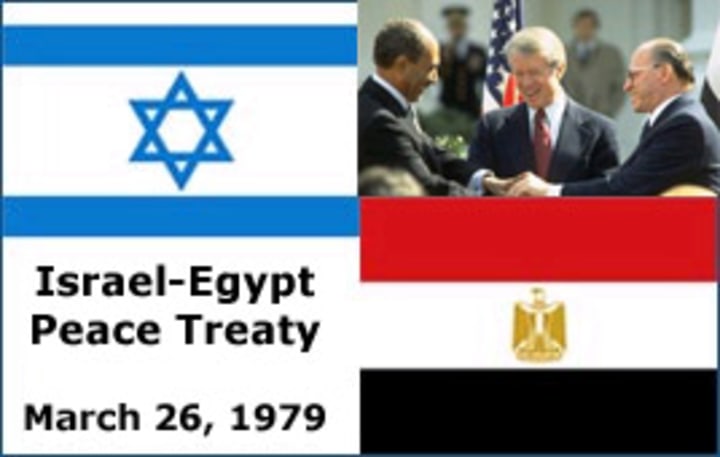
Following the 1967 Six-Day War, the Arab League adopted a hardline stance against Israel, declaring a policy of "No peace with Israel, no negotiation with Israel, no recognition of Israel." This resolute position persisted across the Arab world, reinforcing the regional hostility towards the newly expanded Jewish state. Despite this, a significant shift occurred in the late 1970s, largely due to the diplomatic efforts of Egyptian President Anwar Sadat. In the wake of prolonged conflict and a growing realization of the futility of continued hostility, Sadat pursued a peace settlement with Israel. His initiative was driven by a desire to reclaim Egyptian territory and stabilize the region, among other strategic considerations. This diplomatic effort culminated in the Camp David Accords, mediated by U.S. President Jimmy Carter, and led to the signing of the Israeli-Egyptian Peace Treaty on March 26, 1979. The treaty marked a historic moment in Middle Eastern diplomacy, making Egypt the first Arab country to officially recognize Israel. In exchange for peace, Israel agreed to withdraw from the Sinai Peninsula, which had been occupied since the 1967 war. The return of the Sinai Peninsula was a significant concession for Israel, representing a substantial portion of the territory acquired during the conflict. The treaty also included provisions for normalized diplomatic relations, economic cooperation, and the establishment of a framework for future negotiations.
However, the peace process encountered a notable obstacle when the issue of the Gaza Strip was raised. During negotiations, Israeli officials proposed including Gaza in the settlement, hoping to consolidate the territory as part of the broader agreement. Gaza, however, was a contentious issue. It had never been formally part of Egypt's recognized territory, even though it had been administered by Egypt from 1948 to 1967. This historical and political complexity made Gaza a problematic inclusion in the peace negotiations.
Egyptian leaders were reluctant to assume responsibility for Gaza, which they saw as a potential source of ongoing conflict and instability. Consequently, Gaza was excluded from the treaty's terms. The omission of Gaza left the territory in a state of limbo, complicating the broader Israeli-Palestinian conflict and leaving unresolved issues that would continue to affect regional dynamics. The Israeli-Egyptian Peace Treaty fundamentally altered the geopolitical landscape of the Middle East. It demonstrated that formal peace agreements could be achieved between Israel and its Arab neighbors, but it also highlighted the challenges of addressing the broader and more intricate issues of territorial and political disputes, particularly concerning the Palestinian territories.
The Question of Palestinian Statehood

The question of Palestinian statehood has deep historical roots, tracing back to the UN's 1947 Partition Plan, which proposed dividing the British Mandate of Palestine into separate Jewish and Arab states. The plan allocated Gaza to the Arab state, alongside other territories intended for the Arab population. However, this proposed division never materialized due to the onset of conflict. Following the 1948 Arab-Israeli War, Israel declared its independence and expanded its territory beyond the boundaries set by the UN plan. Gaza came under Egyptian administration, while the West Bank was controlled by Jordan. Despite the initial plan, the establishment of separate Jewish and Arab states did not occur, and the conflict between Israel and its neighbors persisted. By 1967, the Six-Day War drastically altered the regional landscape. Israel's victory led to the occupation of Gaza, the West Bank, and other territories. The geopolitical dynamics surrounding Gaza were particularly complex. Although the UN plan had assigned Gaza to the Arab state, this arrangement never came to fruition due to the ongoing hostilities and the subsequent division of territories between neighboring states and Israel.
The situation in Gaza was further complicated by the refusal of both the Palestine Liberation Organization (PLO) and Egypt to recognize Israel's right to exist. The PLO, which emerged as a significant representative body for Palestinians, did not seek to govern Gaza specifically. Instead, the organization's primary goal was the establishment of a Palestinian state encompassing all territories that had been under British mandate, including the areas controlled by Israel. This broader ambition meant that the PLO was not inclined to negotiate specifically for Gaza but rather sought a more comprehensive resolution to the Palestinian national question.
As a result, Israel's control over Gaza continued after the 1967 war. The territory was seen as strategically significant and was not handed over to Egypt or the PLO. The complexities of the broader Israeli-Palestinian conflict and the lack of recognition by key regional actors led Israel to maintain its presence in Gaza. The issue of Palestinian statehood remained unresolved, with Gaza becoming a focal point of contention in the ongoing struggle for national identity and self-determination. The refusal to transfer Gaza and the broader question of Palestinian statehood highlighted the difficulties in achieving a lasting resolution. The absence of a clear and accepted solution contributed to the enduring conflict and made the path to peace and statehood increasingly complex.
The Question of Israeli Citizenship for Palestinians

The question of Israeli citizenship for Palestinians living in territories acquired during the Six-Day War is a complex and revealing aspect of the Israeli-Palestinian conflict. Following the 1967 war, Israel faced the challenge of integrating new populations under its control. One might wonder why Israel did not simply extend citizenship to these Palestinian residents, particularly in the newly occupied territories such as Gaza and the West Bank. The reality is that Israel did offer a form of citizenship, but the situation was far from straightforward.
In the aftermath of the war, Israel extended an offer of citizenship to Palestinians in East Jerusalem and, to a lesser extent, to those in the Gaza Strip who had been residents before the 1948 Arab-Israeli War. This offer was part of Israel’s broader approach to integrating these populations and asserting its control over the newly acquired territories. However, this offer was met with significant resistance from the Palestinian communities. Many Palestinians viewed the offer of citizenship as a form of collaboration with an occupying power. The historical context was crucial here: the 1948 Arab-Israeli War and the subsequent establishment of the State of Israel had led to widespread displacement and distrust. For many Palestinians, accepting Israeli citizenship would have been seen as a betrayal of their national identity and their struggle for self-determination. The prevailing sentiment was that accepting Israeli citizenship would legitimize their displacement and the occupation of their lands.
As a result, the response to the citizenship offer was lukewarm, and many Palestinians declined to take it up. This resistance led to Palestinians in Gaza living under Israeli military administration, which maintained control over the territory without integrating its residents into the Israeli political system. This military administration was characterized by strict security measures and limited civil rights, further entrenching the divide between the occupied population and the Israeli state. The reluctance of Palestinians to accept Israeli citizenship highlighted the deep-seated complexities of the conflict, including issues of identity, sovereignty, and resistance. The refusal to accept citizenship and the continuation of military administration underscored the challenges Israel faced in managing the new territories and the enduring nature of the conflict over land and self-determination.
Incentives to Leave Gaza and Deportations to Jordan

In the years following the Six-Day War, Israel sought various strategies to address the complex situation in Gaza. One approach involved offering temporary job opportunities to Palestinians in an attempt to encourage them to leave the Gaza Strip. The goal was to alleviate some of the administrative and security burdens associated with the occupied territory. However, this strategy was largely unsuccessful as most Palestinians chose to return to Gaza after their temporary employment ended. Their decision to stay was driven by strong ties to their land and resistance to the idea of leaving their homes. Frustrated by the limited success of these voluntary measures, Israel eventually turned to more forceful tactics. It began deporting Palestinians from Gaza to the West Bank and Jordan. This policy of deportation was intended to reduce the population density in Gaza and address security concerns, but it further inflamed tensions and exacerbated regional instability.
Jordan, already grappling with a substantial Palestinian refugee population, found itself in a difficult position. The influx of deported Gazans put additional strain on Jordan’s resources and social fabric. The situation grew increasingly tense as Jordan faced attacks from Palestinian militant groups and internal strife stemming from the large Palestinian presence. In 1970, a conflict known as "Black September" erupted, leading to a severe crackdown on the PLO and other Palestinian factions operating from Jordan. In response to the escalating violence and the pressures of hosting a large number of refugees, Jordan ultimately expelled the PLO from its territory. This expulsion marked a significant turning point in the relationship between Jordan and the Palestinian leadership and further complicated the broader Israeli-Palestinian conflict. The deportations and the subsequent regional unrest highlighted the deep-seated challenges and tensions surrounding the issue of Palestinian displacement and the struggle for political and territorial resolution.
Economy and Freedom of Movement in Gaza

During the early years of Israeli rule following the 1967 Six-Day War, Gaza experienced a period of notable economic growth. The region's economy was one of the fastest-growing globally, driven by a combination of job opportunities within Gaza and the ability to work in Israel. The influx of labor into Israel's more developed economy provided Palestinians with income and improved living standards. However, this economic growth came with significant challenges. Gaza's economic dependence on Israel created vulnerabilities, particularly as the local economy became increasingly intertwined with Israeli markets and labor needs. This dependence exposed Gaza to fluctuations in the Israeli economy and shifts in policy that could impact employment opportunities and economic stability. Another major issue was Gaza's high birth rate, which contributed to rapid population growth and exacerbated crowded living conditions. The limited space and resources in Gaza, combined with a burgeoning population, led to increased strain on infrastructure and services, making it difficult to sustain the high levels of economic growth.
The growth of Jewish settlements in Gaza further compounded tensions in the region. These settlements, considered illegal under international law by many, were viewed by Palestinians as a direct challenge to their aspirations for statehood and territorial integrity. The presence of these settlements intensified the conflict and contributed to a sense of encroachment on Palestinian land. In addition to these economic and demographic pressures, the freedom of movement for Gazans was increasingly restricted. Israeli security measures and restrictions on movement impacted the daily lives of Palestinians, limiting their ability to travel for work, education, or healthcare. This restriction, combined with the economic dependence on Israel and the challenges of rapid population growth, created a complex and often difficult situation for the people of Gaza during this period.
The First Intifada

The First Intifada, which began in December 1987, was a significant turning point in the Israeli-Palestinian conflict. The immediate trigger was a traffic accident involving an Israeli truck and a car carrying Palestinian laborers. This incident, which resulted in the deaths of four Palestinians, acted as a catalyst for widespread unrest and anger among Palestinians. The Intifada quickly escalated into a full-scale rebellion characterized by mass protests, demonstrations, and violent clashes between Palestinians and Israeli forces. The uprising was marked by widespread civil disobedience, including strikes, boycotts, and acts of vandalism, alongside more direct confrontations such as stone-throwing and violent skirmishes.
One of the notable outcomes of the Intifada was the emergence of Hamas, an Islamist militant group committed to opposing Israeli control and advocating for an Islamic state in historic Palestine. Founded in 1987 by Sheikh Ahmed Yassin and other members of the Muslim Brotherhood, Hamas gained prominence through its active involvement in the Intifada and its distinctive stance against both Israel and the secular Palestinian leadership of the Palestine Liberation Organization (PLO). Hamas's rise during the Intifada reflected the growing discontent with the existing Palestinian leadership and its inability to achieve significant progress towards statehood or address the immediate grievances of Palestinians. The group's militant approach and its emphasis on armed resistance resonated with many Palestinians frustrated by the lack of tangible results from diplomatic efforts. The Intifada lasted for five years, significantly impacting both Israeli and Palestinian societies. It led to heightened security measures by Israel, increased international attention to the Palestinian cause, and contributed to the eventual initiation of the Oslo peace process in the early 1990s. The rebellion underscored the deep-seated issues and the urgency of addressing the core conflicts between Israelis and Palestinians.
The Oslo Accords

In 1993, the Oslo Accords marked a significant milestone in the Israeli-Palestinian peace process. These agreements, reached through secret negotiations in Oslo, Norway, were aimed at resolving long-standing conflicts and establishing a framework for peace. The accords led to the creation of the Palestinian Authority (PA), which was granted limited self-rule in parts of the West Bank and Gaza Strip. This arrangement was intended to pave the way for further negotiations and a eventual resolution to the conflict. The Oslo Accords were met with mixed reactions from both sides. For many Israelis, the accords were a hopeful step towards peace and the resolution of longstanding disputes. However, they also faced significant opposition from various quarters within Israel. Some Israeli hardliners were skeptical of the accords, questioning whether the concessions would lead to lasting peace or merely embolden hostile elements.
On the Palestinian side, the reaction was similarly divided. The accords were supported by the Palestine Liberation Organization (PLO) and its leader, Yasser Arafat, who saw the agreements as a pragmatic step towards achieving Palestinian self-determination. However, the accords faced fierce opposition from groups like Hamas, which rejected the peace process and continued its campaign of violence. Hamas viewed the accords as a betrayal of the Palestinian cause and continued to carry out attacks against Israeli targets. The continued violence by Hamas and other militant groups during this period resulted in significant casualties, including nearly 300 Israeli deaths. This violence undermined the peace process and contributed to growing tensions between Israelis and Palestinians. The Oslo Accords, while groundbreaking in many respects, highlighted the deep divisions and ongoing challenges in achieving a comprehensive and lasting peace in the region.
The Second Intifada

The Second Intifada, also known as the Al-Aqsa Intifada, erupted in September 2000 in the wake of the failure of the Camp David Summit negotiations. The peace talks, which had been brokered by U.S. President Bill Clinton, ended without an agreement, leading to heightened frustration and anger among Palestinians. The immediate trigger for the uprising was a visit by then-Israeli opposition leader Ariel Sharon to the Temple Mount (known to Muslims as Haram al-Sharif) in Jerusalem, a site of intense religious significance. Unlike the First Intifada, which was largely characterized by spontaneous grassroots protests, the Second Intifada was more organized and violent. It involved widespread, coordinated attacks against Israeli targets, including suicide bombings, shootings, and other forms of violence. The intensity and scale of the violence marked a significant escalation from the earlier uprising, resulting in substantial casualties on both sides.
In response, Israel implemented a range of security measures aimed at curbing the violence and protecting its citizens. These measures included the establishment of checkpoints throughout the West Bank, curfews, and the construction of a security barrier, often referred to as the "apartheid wall" by critics. The barrier, which physically separated Israeli and Palestinian areas, was intended to prevent the movement of militants and reduce attacks on Israeli civilians. However, it also severely restricted the movement of Palestinians and contributed to a worsening of the humanitarian situation.
The increased security measures and the barrier effectively ended the days of relatively free movement between Gaza and Israel. This segregation intensified the isolation of Gaza and further strained relations between the two communities. Additionally, Jewish settlements in Gaza faced heightened security risks, with frequent attacks and heightened tensions contributing to a challenging and volatile environment. The Second Intifada marked a period of intense conflict and suffering, reinforcing the deep divisions and persistent challenges in the Israeli-Palestinian conflict. It underscored the difficulties in achieving lasting peace and the significant obstacles that continued to hinder the resolution of long standing grievances.
The Israeli Disengagement

In 2005, Israel undertook a unilateral disengagement from the Gaza Strip, a significant and controversial move aimed at reshaping the region's political and security landscape. The disengagement plan, spearheaded by then-Prime Minister Ariel Sharon, involved the evacuation of all Israeli settlers from Gaza and the dismantling of Israeli military infrastructure in the territory. The primary motivations behind the disengagement were twofold. First, there was a strategic desire to reduce violence and alleviate the security burden associated with maintaining Israeli settlements in Gaza. The ongoing conflict and frequent attacks on these settlements had made their presence increasingly untenable. Second, the high financial and logistical costs of sustaining the settlements, combined with the persistent security risks, made the disengagement an appealing option for the Israeli government. The disengagement plan included the evacuation of approximately 8,000 Israeli settlers from 21 settlements in Gaza, as well as the removal of the Israeli military presence. This was accompanied by the construction of a security barrier or wall separating Gaza from Israel, aimed at preventing the movement of militants and reducing cross-border attacks.
The disengagement was implemented unilaterally, meaning that it was carried out without direct negotiations or agreements with the Palestinian leadership. While the move was intended to improve security and reduce the Israeli military footprint in Gaza, it was met with mixed reactions. On one hand, some viewed it as a step towards peace and an attempt to address the complexities of the occupation. On the other hand, the unilateral nature of the disengagement and the continued security concerns left many questions unresolved. In the wake of the disengagement, the Gaza Strip saw an increase in internal conflict and political instability, particularly with the rise of Hamas. The separation of Gaza from the West Bank, coupled with the persistent security challenges, highlighted the ongoing difficulties in achieving a comprehensive and lasting resolution to the Israeli-Palestinian conflict.
Hamas Victory in Gaza Elections
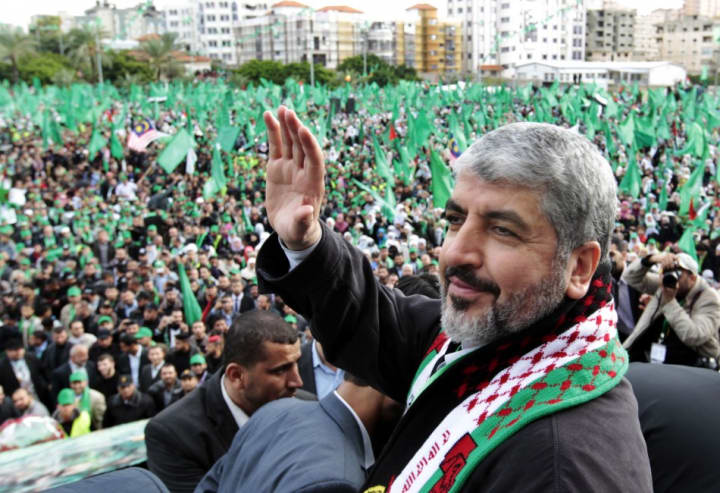
In January 2006, Hamas achieved a surprising victory in the Palestinian legislative elections, defeating the incumbent Fatah party and securing a majority of seats in the Palestinian Legislative Council. The election results were unexpected and had significant implications for the Israeli-Palestinian conflict and regional politics. The success of Hamas was driven by widespread disillusionment among Palestinians with the existing leadership, particularly the Palestine Liberation Organization (PLO) and its dominant faction, Fatah. Many Palestinians were frustrated with what they perceived as corruption, inefficiency, and a lack of progress in addressing their grievances. Hamas's appeal was bolstered by its reputation for providing social services, such as education and healthcare, as well as its commitment to Islamic principles. This combination of social support and political ideology resonated with a significant portion of the electorate.
Despite the electoral victory, Hamas's rise to power was met with substantial international concern. Israel, the United Nations, and the United States were particularly apprehensive about the implications of Hamas's victory. The group had a history of violent conflict with Israel and refused to recognize Israel's right to exist, adhering to a stance of armed resistance against Israeli occupation. In response to the international pressure and demands for Hamas to moderate its position, the group remained steadfast in its stance. Hamas's refusal to recognize Israel and its commitment to resistance led to a significant rift with Western and moderate Arab countries. The internal Palestinian political landscape also became increasingly polarized, culminating in violent clashes between Hamas and Fatah. This conflict eventually led to the division of Palestinian governance, with Hamas controlling Gaza and Fatah retaining authority in the West Bank, further complicating efforts to achieve a unified and lasting resolution to the Israeli-Palestinian conflict.
Hamas Terror Attacks on Israel

After Hamas assumed control of the Gaza Strip in 2007, the group's engagement in attacks against Israel intensified significantly. The shift in power led to an increase in rocket attacks, suicide bombings, and other forms of violence targeting Israeli civilians and military personnel. This escalation in aggression contributed to a deepening of the Israeli-Palestinian conflict and a further deterioration in relations between Gaza and Israel. In response to the heightened violence, Israel implemented a stringent blockade on Gaza, aimed at restricting the movement of goods and people in and out of the territory. The blockade was intended to prevent the smuggling of weapons and materials used for constructing rockets and other military infrastructure. However, the blockade also had severe humanitarian impacts on the civilian population in Gaza, leading to widespread shortages of essential goods and services, which further exacerbated the living conditions in the strip.
Despite the blockade and other security measures, Israel's attempts to curb Hamas's capacity to launch attacks faced limited success. Hamas invested heavily in building an extensive network of tunnels under Gaza. These tunnels were used for smuggling weapons, supplies, and fighters into and out of the strip. They also provided a means for launching attacks against Israel, including cross-border incursions and ambushes. The ongoing violence and the continued use of tunnels by Hamas led to several rounds of military confrontations between Israel and Gaza, resulting in significant casualties and destruction on both sides. The cycle of retaliation and conflict further entrenched the division between Israel and Gaza, making it increasingly difficult to achieve a peaceful resolution and addressing the broader issues of the Israeli-Palestinian conflict.
October 7, 2023
On October 7, 2023, the situation in the Israeli-Palestinian conflict took a dramatic turn. Despite previous periods of relative calm, Hamas launched a major and unprecedented offensive against Israel. This attack marked a significant escalation in the ongoing conflict, with Hamas employing a range of tactics, including rocket fire, incursions, and other forms of aggression. In response to the offensive, Israel initiated a large-scale military campaign aimed at neutralizing Hamas’s military capabilities and infrastructure. The Israeli government sought to dismantle the extensive network of tunnels and other assets used by Hamas for launching attacks and smuggling resources. The military operation included airstrikes, ground operations, and other strategic measures designed to weaken Hamas and reduce its ability to carry out further assaults.
The conflict quickly escalated, resulting in substantial casualties on both sides. The intense military exchanges led to widespread destruction in Gaza and significant damage within Israel. The humanitarian impact was severe, with reports of extensive civilian suffering, infrastructure damage, and displacement. International calls for de-escalation and ceasefire negotiations were made, but achieving a resolution proved challenging given the scale of the violence and the entrenched positions of both sides. The October 7, 2023, escalation underscores the volatility and complexity of the Israeli-Palestinian conflict, highlighting the persistent challenges in reaching a peaceful resolution and the devastating consequences of renewed hostilities.
Calls for an Israeli Return to Gaza
Amid the renewed conflict between Israel and Hamas that erupted on October 7, 2023, there have been calls from some Israelis for a return to Gaza. These calls are driven by a variety of factors rooted in both strategic and emotional considerations. One primary reason for the calls to return to Gaza is the desire to rebuild and reclaim the Jewish communities that were evacuated during the 2005 Israeli disengagement. For many Israelis who were forcibly removed from their homes and settlements in Gaza, there is a sense of unfinished business and a belief that reestablishing a presence in the region could provide strategic benefits. Some argue that returning to Gaza could help secure the area, rebuild infrastructure, and foster stability in a way that might lead to long-term peace. Additionally, the experience of recent hostilities has reignited feelings of nostalgia and attachment among some Israelis who remember the days before the disengagement. They view the return to Gaza as a way to restore what was lost and assert their presence in a region that has been a focal point of conflict.
On the other hand, such calls for a return are highly controversial and face significant opposition. Many argue that re-entering Gaza would not only exacerbate the conflict but also lead to further casualties and humanitarian crises. The ongoing violence and destruction have demonstrated the profound challenges of maintaining security and stability in the area. Critics also highlight that such a move could undermine current diplomatic efforts and international support for a negotiated resolution to the conflict. As the war continues, both Israelis and Palestinians are increasingly seeking an end to the violence and a resolution to the ongoing crisis. The calls for a return to Gaza reflect the complex and deeply rooted nature of the conflict, illustrating the significant challenges in finding a peaceful and sustainable solution.
The Future of Gaza
The future of Gaza remains uncertain. Who will rule the Strip after the war? It is a question with no clear answer. The land holds deep significance for both peoples, central to their identities. Moving forward, the challenge will be to achieve peace and stability, ensuring that future generations do not have their lives marred by ongoing conflict.
About the Creator
Horace Wasland
Research analyst, writer & mystical healer. Exploring the edge where science meets mystery. From mystery/the mystical, to facts, news & psychology. Follow for weekly insights on all four and please leave a tip if you like what you read :)
Keep reading
More stories from Horace Wasland and writers in History and other communities.
A Look at the Most Elite Spy Agency
When it comes to espionage, few names evoke as much intrigue and respect as Mossad. Israel’s premier intelligence agency has long been synonymous with high-stakes covert operations, bold strategies, and a commitment to safeguarding national security. This blog delves into the origins, operations, and high-profile activities of Mossad, exploring how it became one of the most formidable intelligence agencies in the world.
By Horace Waslandabout a year ago in History
Is NATO Facing Its Biggest Crisis Yet?
Is NATO Facing Its Biggest Crisis Yet? For more than seventy years, NATO has been one of the strongest military alliances in the world. Formed after World War II, it was designed to protect its members through collective defense. An attack on one was considered an attack on all. For decades, this principle helped maintain stability in Europe and beyond. But today, NATO is facing one of the most challenging moments in its history.
By Wings of Time 4 days ago in History
The Ritual of Winter Challenge Winners
Welcome to the Winners Announcement for The Ritual of Winter challenge. This prompt focused on winter rituals and the meaning that settles into them over time. The top pieces stay grounded in ordinary acts and repeated routines, letting winter shape the work through pace, attention, and restraint.
By Vocal Curation Team6 days ago in Resources


Comments (1)
Thanks for sharing