
The Heart of the Lion: The Emotional Legacy of Sultan Salahuddin Ayyubi
A tale of mercy, justice, and faith in an age of war


In the golden twilight of the 12th century, amid the dust of conflict and the roar of empires clashing, rose a man whose name would echo across history—not for his cruelty or conquest, but for his mercy and unwavering spirit. He was Sultan Salahuddin Ayyubi, known to the West as Saladin, and his story is not just of battles and victories, but of a soul relentlessly tested by war, faith, and compassion.
A Boy in a Divided World
Salahuddin was born in Tikrit in 1137, under the shadow of endless conflict between Crusaders and Muslims. From his earliest days, he heard whispers of Jerusalem, not as a place, but as a dream—an aching symbol of loss. Yet, as a child, he did not hunger for war. His heart leaned toward books, poetry, and the quiet study of the Qur’an. His father, Najm ad-Din Ayyub, and uncle Shirkuh, men of power and ambition, saw a future general. But Salahuddin? He wanted peace, gardens, and God.
Still, duty called.
A Reluctant Warrior
Thrown into the military campaigns of Egypt and Syria, Salahuddin’s rise was meteoric. After his uncle’s death, he unexpectedly found himself the vizier of Egypt. He was just 31. Power came swiftly, but it felt more like a burden than a prize.
In the quiet of the night, he would sit beneath the stars, praying long after others had slept. “Ya Allah,” he would whisper, “do not let pride blind me. If I must fight, let it be for You, not for glory.”
He fought not to destroy, but to restore. He began to unite the fractured Muslim world—not through tyranny, but through alliances, trust, and patience. Every battle he won was followed by a deeper internal struggle: How could one remain just in a world so cruel?
The Fall of Jerusalem—A Dream Reclaimed
For decades, Jerusalem had remained under Crusader control. To Muslims, it was not just a city—it was the site of al-Aqsa, the blessed sanctuary. To Salahuddin, it was a wound. Not of stone and blood, but of faith.
In 1187, after years of preparing, uniting Muslim forces, and enduring betrayals and defeats, he finally stood before the gates of Jerusalem. The memory of the Crusader massacre of 1099 haunted the people within. They expected vengeance.
But Salahuddin surprised the world.
There was no bloodbath. No sacking of churches. No mass executions.
Instead, Salahuddin offered mercy. He allowed safe passage for Christian civilians and even paid ransom for those who could not afford their freedom. When asked why, he replied:
“I am not here to destroy. I am here to restore. Jerusalem is too sacred for hatred.”
Even his enemies were stunned. King Richard the Lionheart, who would later face him in the Third Crusade, called him “a great prince, without equal in the world.”
The Weight of Compassion
Behind the armor, Salahuddin bore a burden few saw. Each decision to spare a life brought him closer to God—but each death in war tore at him. He would often weep after battle. He refused to revel in victory when lives were lost unnecessarily.
Once, a Christian woman came to him, sobbing. Her child had been kidnapped and sold into slavery. Salahuddin, upon hearing her plea, personally searched for the child, paid for his freedom, and returned him to her arms. She fell at his feet, speechless.
And he, eyes filled with tears, said softly, “I do this not for reward, but because it is right.”
The Final Journey
In the final years of his life, Salahuddin had lost more than he had gained. He had given away nearly all his wealth to the poor. When he died in 1193, in Damascus, there was not enough money in his estate to pay for his own funeral.
He was 55.
The man who had commanded empires died owning just a sword, a shield, and a worn-out copy of the Qur’an.
Yet his legacy was richer than gold.
He had revived not only a city but a spirit—the idea that power could be merciful, that religion need not divide, and that honor was worth more than conquest.
As they laid him to rest, a simple inscription marked his tomb:
“Here lies Salahuddin, who once liberated Jerusalem.”
But what it did not say was that he had also liberated hearts—from hatred, from vengeance, from pride.
The Legacy of the Just Sultan
Centuries later, Christians, Jews, and Muslims alike remember him not only as a great general but as a noble soul. His name became a byword for chivalry in Europe, a legend of honor in the Islamic world.
What made Salahuddin unique was not just what he did—but how he did it. He loved justice more than vengeance. He wept for his enemies. He prayed for peace, even when preparing for war.
In a time of swords and sieges, he chose the harder path: the path of mercy.
And in doing so, he became the lion with the tender heart, the warrior who never let go of his humanity.
About the Creator
Super Star
Welcome to the poetry of power, passion, and presence.
Keep reading
More stories from Super Star and writers in History and other communities.
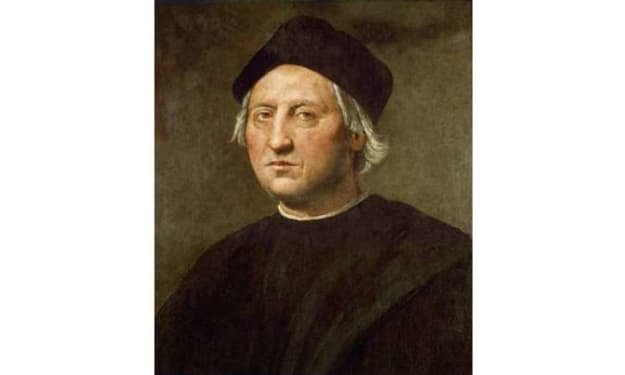
Christopher Columbus
Dear children, today we will learn about Christopher Columbus, who is widely credited with discovering America. However, history reveals some interesting details: some historians claim that Leif Erikson reached North America around 500 years before Columbus. There are also accounts suggesting that Muslims arrived in America prior to Columbus, as indicated by evidence of a mosque on American soil dating back to that era. Others argue that Marko Polo may have reached America. Still, among the majority, Columbus is recognized as the man who opened the gateway to the “New World.”
By Sudais Zakwan7 days ago in History
One Unchecked Box
"Republished" because it was the only way to add the embed for the newly recorded audio version of this story due to the Top Story badge. Plus it serves as a nice, informal announcement of the podcast's revival for another season (go subscribe!):
By Stephen A. Roddewig3 days ago in Fiction



Comments
There are no comments for this story
Be the first to respond and start the conversation.