
The Great Yu Tames the Floods: China’s First Hydraulic Revolution
And Why Some Historians Call Him a Workaholic Tyrant
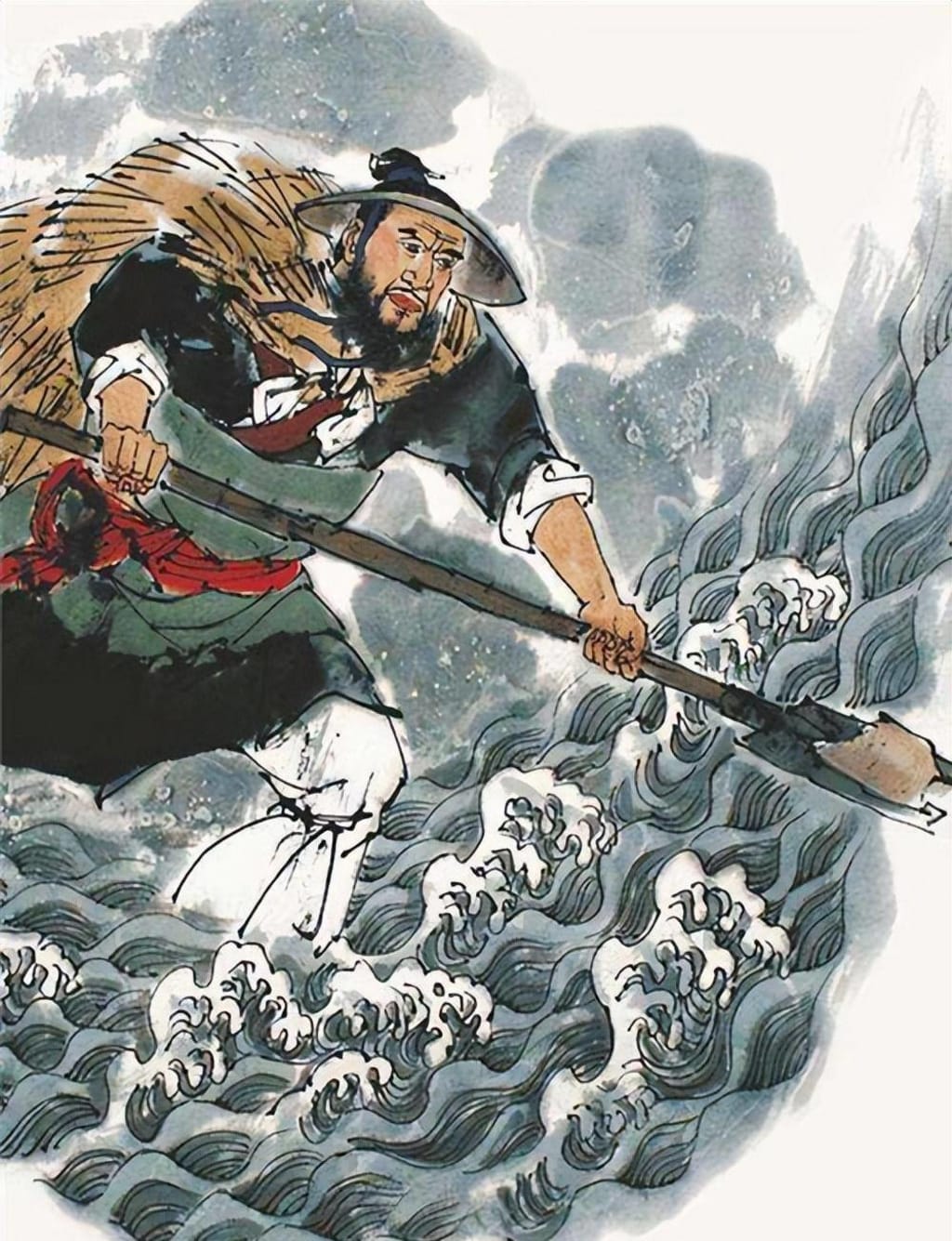
Introduction: A Deluge That Shaped a Civilization
Imagine an ancient China drowning. For generations, monstrous floods swallowed farmlands, drowned villages, and forced survivors into treetops. Desperation drove people to sacrifice children to river gods. Then came Yu the Great—a man who spent 13 years battling the waters, invented “hydraulic engineering” millennia before the term existed, and became China's first dynastic founder. But behind this hero's tale? Controversies that’ll make you rethink “work-life balance.” Let's dive in.
Part 1: The Flood — Nature’s Wrath & Human Folly
(The Backstory Westerners Never Hear)
Key Controversy: Was the flood really just “natural”?
Ancient texts like the Bamboo Annals describe the catastrophe:
"The waters surged to heaven… swallowing mountains and drowning cities. People lived like beasts, climbing trees or fleeing to high caves."
But modern geologists suspect more: Climate shifts around 2000 BCE melted glaciers, swelling China’s rivers. Human deforestation worsened erosion. Sound familiar? Parallel to Noah's flood—but Yu’s solution wasn’t an ark. It was infrastructure.
The Failed Savior: Yu's Father, Gun
Yu’s dad, Gun, got the job first. For 9 years, he built dikes everywhere (“堵” dǔ). Result? Water breached walls, drowning more villages. Emperor Yao executed him for incompetence (some versions say he was exiled or committed suicide).
The Real Lesson: Ancient China already understood climate adaptation failures. Gun’s rigid thinking cost lives—a warning for modern policymakers.
Part 2: Yu’s Genius — “Drain, Don’t Block!”
(The World’s First Environmental Engineer)
Yu scrapped his father’s methods. Instead, he:
Mapped China’s watersheds using primitive tools (ropes, wooden markers).
Dug artificial channels (疏 shū) to redirect water to the sea.
Created China’s first river network, integrating the Yellow, Yangtze, and Huai systems.
His fieldwork was brutal:
"His hands calloused, feet ulcerated. He lived in mud huts, ate wild herbs, and wore ragged hemp."
Engineering Marvels Still Visible Today:
Dragon Gate Gorge (Longmen): Where Yu split a mountain, freeing the Yellow River’s flow.
Yu’s “Nine Divisions”: He divided China into 9 ecological zones—each with tailored water management. Think ancient federal disaster relief.
Part 3: The Dark Side of a Hero
(The “Toxic Productivity” Debate)
Yu’s most famous legend: Thrice Passing His Door Without Entering.
First time: His wife groaned in labor. He kept surveying.
Second time: His toddler son waved. He marched on.
Third time: The boy, now 10, begged him to stay. Yu bowed but left.
Western Reactions: Is this admirable dedication… or family abandonment?
Confucians praise it: "He sacrificed for millions!"
Modern critics call it performative: "Couldn’t he spare one night?"
The Power Gambit:
After taming the floods, Yu seized control. He:
Abolished tribal democracy, declaring China’s first dynasty: Xia (c. 2070 BCE).
Used flood-control projects to centralize power. Villages that refused labor? Cut off from canals.
"Yu didn’t just control water—he controlled people."
— Historian Mark Edward Lewis
Part 4: Myth vs. Reality
(Did Yu Even Exist?)
Archaeological Clues:
Erlitou site (c. 1900 BCE): Bronze workshops, palaces match Xia descriptions. But no inscriptions prove Yu ruled here.
"Yu’s footprints": Giant stone marks in Sichuan—likely Han Dynasty (206 BCE) propaganda.
The Ultimate Spin:
Yu’s tale was retold for political needs:
Warring States era: Morale booster during floods.
Qing Dynasty: Emperors cited Yu to justify massive projects (like the Grand Canal).
Part 5: Yu’s Legacy — From Memes to Modern China
Global Echoes:
UNESCO’s 2021 nod: "Yu’s spirit lives in ecological management."
Modern parallels: China’s Three Gorges Dam (world’s largest hydropower project) is dubbed "Yu’s heir."
Cultural DNA:
"Taming nature" mentality: Explains China’s mega-projects (artificial islands, space missions).
The work ethic paradox: "996 work culture" (9 am-9 pm, 6 days/week) traces to Yu’s sacrifice narrative.
Yu in Pop Culture:
Netflix’s "Yu" (2023): Portrays him as a PTSD-ridden leader.
Douyin memes: "Yu after 13 years without PTO" → sleep-deprived Wojak face.
Conclusion: Why Yu Still Matters to the World
Yu’s story isn’t just about floods. It’s about humanity’s fight against chaos—and the costs of "progress." His methods birthed a civilization but also authoritarianism. His family sacrifice inspires… and terrifies.
For Western readers: Yu is China’s Prometheus + Moses + Machiavelli. He gifted order but demanded absolute loyalty. As climate change looms, his tale asks: How much control must we surrender to survive?
Final Thought: When Yu died, legends say his body became a mountain range guarding China. Poetic? Yes. But it also whispers: True change requires reshaping the earth—and ourselves.
About the Creator
Keep reading
More stories from writers in History and other communities.
The Rise of Jackie Chan: The Drunken Master and the History of Chinese Cinema
The Death of the King of Kung Fu (1973) With Bruce Lee's death in 1973, the kung fu film genre also started to die and become stale. Everyone tried to imitate Lee: Bruce Li, Bruce Lo, and Bruce Rhee. Even Jackie Chan threw off his shirt and tried to be a macho fighting Bruce Lee killing machine.
By SAMURAI SAM AND WILD DRAGONS5 days ago in History
The Net Worth of Kumari Kandam: A Theoretical Wealth of a Lost Civilization
When people ask about the “net worth” of Kumari Kandam, they are not referring to bank accounts or modern currency, but to the total material, cultural, intellectual, and natural wealth of a civilization believed to have existed thousands of years ago.
By Say the truth 5 days ago in History



Comments
There are no comments for this story
Be the first to respond and start the conversation.