
The Great Emu War: When Australia Went to Battle with Birds
The Secret History of the Great Emu War: When Australia Went to Battle with Birds
The Great Emu War: When Australia Went to Battle with Birds
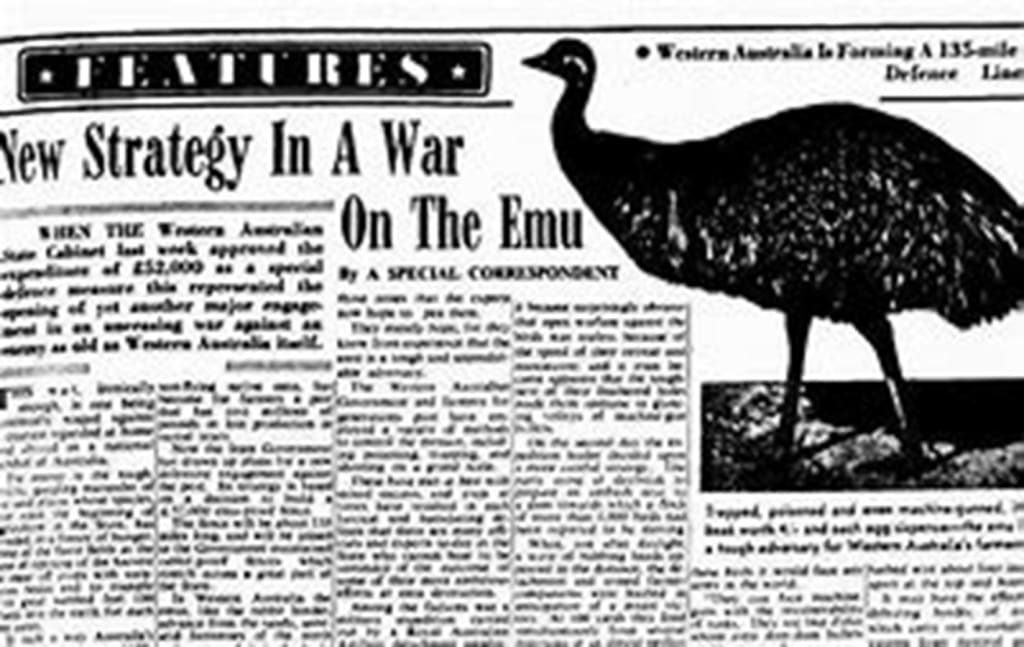
In 1932, a peculiar war broke out in Australia—a war that would go down in history as one of the most absurd conflicts ever waged. No, it wasn’t a battle between nations or a skirmish over valuable land—it was a full-fledged military campaign… against emus.
Yes, emus, the large, flightless birds that can run at speeds faster than most humans can sprint. These birds, seemingly innocent creatures of the Australian outback, would soon find themselves facing off against the Australian Army in what has since become known as The Great Emu War. Spoiler alert: the emus won.
The Prelude to War
It all started in late 1932, when farmers in Western Australia began reporting a catastrophic invasion of emus. You might be thinking, “Emus? Aren’t they just big chickens with better running legs?” Well, not quite. Emus are massive, standing up to 6 feet tall and weighing over 100 pounds. And when they travel in flocks, they can wreak havoc on crops faster than a toddler in a candy store.
The farmers, who were already dealing with the effects of the Great Depression and a drought, were desperate. Crops were being destroyed at alarming rates, and the emus showed no sign of backing down. So, they did what any reasonable group of people would do: they called in the military.
Operation Emu
In November of 1932, the Australian government, led by Major G.P.W. Meredith, assembled a group of soldiers, armed with Lewis machine guns (yes, machine guns) and 10,000 rounds of ammunition, to fight a flock of feathered invaders. You’d think this was going to be a turkey shoot (sorry, emu), but no, as it turns out, emus aren’t as easy to catch as one might think.
The first confrontation occurred in the wheat-growing region of Campion. The soldiers, eager to assert their dominance over the emu menace, advanced with machine guns at the ready. But the emus? Well, they were having none of it. When the soldiers attempted to take aim, the emus simply scattered, running at speeds of up to 30 miles per hour, leaving the soldiers to shoot at nothing but air and frustration.
The soldiers soon discovered that emus were not only fast, but also surprisingly savvy. The birds quickly adapted to the situation, splitting into small groups to confuse and evade their would-be attackers. In a scene straight out of an action movie (but with more feathers and less actual damage), the emus outsmarted the soldiers at every turn.
The War Rages On
What followed was a series of military engagements where the emus continued to emerge victorious. Despite the soldiers’ repeated efforts, including a second wave of attacks with trucks and machine guns mounted on them, the birds kept slipping away. After several weeks of relentless pursuit, the soldiers had managed to kill only around 1,000 emus (which sounds impressive, but is a small fraction of the estimated 20,000 emus they were up against).
In the end, the military realized they were outmatched. The emus, with their astonishing agility, had essentially won the war. And, to add insult to injury, the government had to admit they’d been defeated by a bunch of flightless birds.
The Aftermath
The Great Emu War ended in December of 1932, with the emus standing tall (and fast) as the true victors. The Australian government, slightly embarrassed by the outcome, withdrew the military, and the emu problem was left to the farmers to solve on their own. Though the soldiers were sent home, the emus were free to continue their reign of terror across the outback.
In the years that followed, farmers employed other methods to protect their crops, like building fences and using poison. However, the memory of the great military failure remained in the annals of Australian history, earning the event a place in the history books as a hilarious—and somewhat embarrassing—chapter of warfare.
Why Did the Emus Win?
You might be wondering: how could a machine gun-equipped military unit be defeated by a group of birds? Well, there are a few factors at play here. First, emus are fast, strong, and, surprisingly, resilient. They don’t panic easily, and they can outrun most humans, let alone soldiers trying to chase them down. Additionally, their behavior was highly unpredictable, making them difficult targets.
Another factor is that the soldiers, despite their weaponry, were up against an entire ecosystem of emus who knew their terrain. The soldiers, on the other hand, were unfamiliar with the harsh conditions of the outback and ill-prepared for the cunning of their feathered adversaries.
Legacy of the Great Emu War
While the emu conflict may seem like a bizarre and ridiculous chapter in history, it has become part of Australia’s quirky identity. The Great Emu War is often referenced with humor in Australian culture, and it has even sparked discussions about the sometimes odd relationship between humans and the natural world.
In the end, the emus became a symbol of resilience and stubbornness. As for the soldiers, they went home, licking their wounds—both physical and ego-related—and wondering if perhaps they had underestimated their opponents. After all, it’s not every day you lose to a bird.
So, next time you see an emu (or any bird, for that matter), remember: these creatures aren’t just part of the food chain. They might have won a war once, and they could very well do it again. You’ve been warned.
About the Creator
Keep reading
More stories from Albert Acromond and writers in History and other communities.
The Truth Behind the Bermuda Triangle: What’s Really Happening?
The Truth Behind the Bermuda Triangle: What’s Really Happening? The Bermuda Triangle—a name that’s likely to make your hair stand on end, or at the very least, make you reconsider that tropical vacation. For centuries, the mysterious region in the Atlantic Ocean, spanning between Miami, Bermuda, and Puerto Rico, has been the subject of countless theories, from scientific to supernatural. Aircraft disappear without a trace, ships vanish into the void, and let’s face it—people have been sounding the alarm about this “danger zone” for so long that it’s almost become an international meme. But is it truly a sinister force, or just some very bad luck combined with unreliable navigation systems and people who think they’re invincible?
By Albert Acromondabout a year ago in History
3 Everyday Rules That Exist Because Someone Once Did Something Very Stupid
Everywhere you go, you are surrounded by rules that feel oddly specific. Do not touch. No running. Contents hot. Do not insert body parts. These warnings aren’t theoretical. They weren’t written by pessimists or lawyers with too much free time. They exist because at some point in history, a real human being looked at a situation and thought, “This will probably be fine.”
By Enoch Sagini4 days ago in History
Nanchang: A Modern Symbol of China’s Naval Power
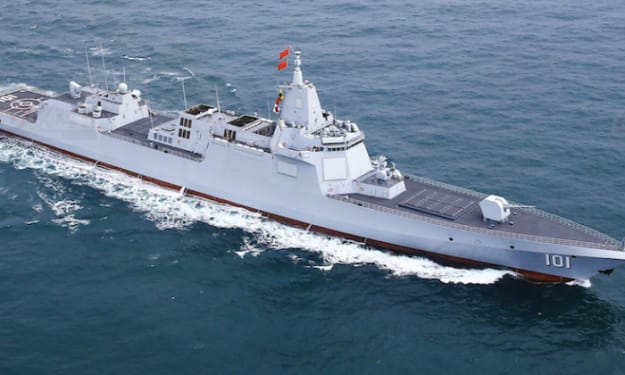
In recent years, the world has closely watched the rapid modernization of the Chinese People’s Liberation Army Navy (PLA Navy). One of the most important symbols of this transformation is the Nanchang (Hull 101), China’s first Type 055 guided-missile destroyer. Commissioned on 12 January 2020, Nanchang represents a major leap in naval technology and capability. As it completes six years of active service, the ship stands as a clear example of how China’s navy has moved into a new era of advanced maritime power.
By sehzeen fatima6 days ago in History



Comments
There are no comments for this story
Be the first to respond and start the conversation.