
The Golden Boy of Ancient Egypt
A 2,300-Year-Old Mummy Reveals the Secrets of Wealth, Belief, and Immortality

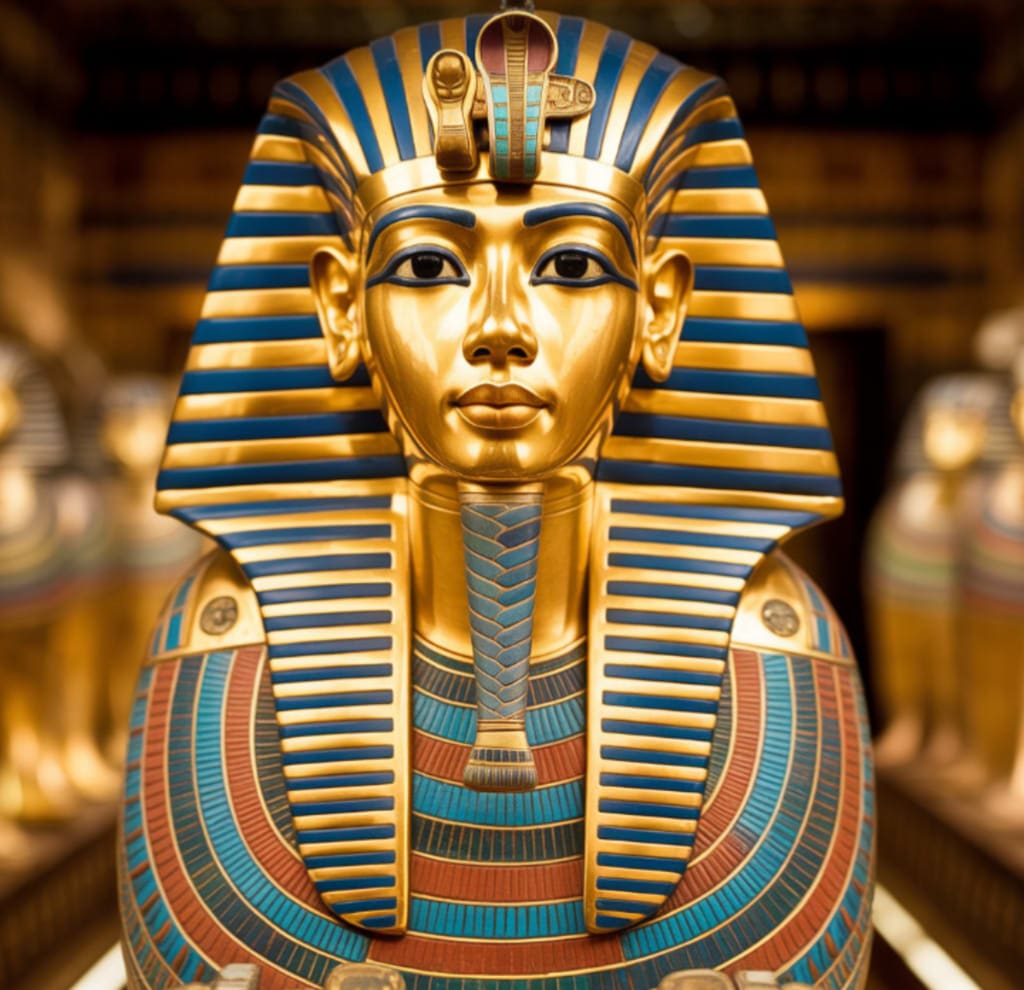
In the vast halls of Egypt’s museums, where stone pharaohs and towering statues command attention, one small mummy has captured the imagination of scholars and the public alike. Known today as the “Golden Boy,” this ancient Egyptian youth lived more than 2,300 years ago during the Ptolemaic period. Though discovered in 1916, it was only recently—through modern medical imaging and scientific study—that his extraordinary story truly emerged. Wrapped in linen and adorned with gold, the Golden Boy stands as a powerful symbol of how ancient Egyptians viewed death not as an end, but as a transformation into eternal life.
The mummy was originally found in a cemetery in southern Egypt and remained largely unexplored for decades. Traditional unwrapping methods risked destroying its delicate wrappings and priceless ornaments, so researchers turned to non-invasive technology. Using CT scans, scientists were able to peer inside the mummy without disturbing it, uncovering remarkable details about the boy’s body, age, and burial items. The scans revealed that he was around 14 or 15 years old at the time of death, and that he had been mummified with exceptional care and craftsmanship.
What made the Golden Boy truly extraordinary was not just his youth, but the richness of his burial. Inside the wrappings, researchers identified 49 amulets placed in strategic positions across his body. These amulets were made from gold, semi-precious stones, and faience, each with a symbolic purpose. Ancient Egyptians believed that such objects protected the deceased on their journey through the afterlife. For example, the Eye of Horus symbolized healing and protection, while scarab amulets represented rebirth and the rising sun. A gold tongue was also placed in the boy’s mouth, a ritual intended to help him speak in the afterlife when facing the gods.
The presence of so much gold points to the boy’s high social status. In ancient Egypt, gold was considered the “flesh of the gods,” associated with the sun god Ra and divine immortality. To be buried with golden ornaments meant more than wealth—it signified spiritual purity and a hope for eternal existence. His carefully prepared body and elaborate burial goods suggest that he belonged to a powerful or noble family who could afford such an expensive funeral ritual.
One of the most fascinating discoveries was the boy’s golden sandals. These were not merely decorative; they carried deep religious meaning. According to the Book of the Dead, the deceased needed proper footwear to walk in the afterlife and enter the halls of judgment. The sandals symbolized readiness for the long journey beyond death. In this sense, every detail of the Golden Boy’s burial was part of a sacred plan to ensure his safe passage into the next world.
The CT scans also revealed physical details about the boy himself. He had no signs of major illness or injury, making the cause of death unclear. His teeth were in good condition, and his bones showed no obvious trauma. This mystery adds another layer of intrigue: while his life was short, his death was honored with extraordinary devotion. His body was treated as a vessel for eternity, not simply a reminder of mortality.
The Golden Boy’s rediscovery in modern times highlights how ancient beliefs still resonate today. Egypt’s concept of the afterlife was complex and deeply spiritual. Death was not feared but prepared for, often throughout one’s lifetime. Through mummification, prayers, and sacred objects, Egyptians believed they could preserve both the body and the soul. The Golden Boy embodies this belief system perfectly—his small form wrapped in linen and gold speaks of a civilization determined to conquer death itself.
Beyond religion, the mummy also reflects the blend of cultures during the Ptolemaic era, when Greek and Egyptian traditions coexisted. While mummification remained a deeply Egyptian practice, artistic styles and materials showed signs of outside influence. This mixture of traditions makes the Golden Boy not only a religious figure but also a historical witness to a changing Egypt.
Today, the Golden Boy is displayed as a window into the ancient world. He is no longer just a mummy; he is a storyteller. Through him, we learn about family devotion, social status, and spiritual hope. His golden amulets whisper of prayers spoken thousands of years ago, and his sandals echo footsteps meant for another realm.
In the end, the Golden Boy of Ancient Egypt reminds us that even the youngest lives were given immense meaning in the ancient world. Though his name has been lost to time, his carefully prepared body ensures that he is remembered. Wrapped in gold and belief, he continues his silent journey through history—an eternal child of the sun, preserved between the worlds of the living and the dead.
About the Creator
Sajida Sikandar
Hi, I’m Sajida Sikandar, a passionate blogger with 3 years of experience in crafting engaging and insightful content. Join me as I share my thoughts, stories, and ideas on a variety of topics that matter to you.
Keep reading
More stories from Sajida Sikandar and writers in History and other communities.
Discovering MIOS, France: A Hidden Gem on the Atlantic Coast
Tucked away in the picturesque region of Nouvelle-Aquitaine, MIOS, France, is a destination that perfectly blends natural beauty, history, and small-town charm. While it may not appear on every tourist map, this quaint commune on the Atlantic coast has become a quiet favorite for travelers seeking an authentic French experience away from crowded cities and popular beach resorts.
By Sajida Sikandara day ago in The Swamp
The Lost Treasure of Ashoka: Myth, History, and Mystery
Ashoka’s Immense Wealth and Power At the height of Ashoka’s reign, the Mauryan Empire was the largest political entity ever seen in the Indian subcontinent. It stretched from present-day Afghanistan to Bengal, and from the Himalayas to central India. Such an empire required enormous financial resources.
By Say the truth 7 days ago in History
10 Times Rotten Tomatoes and I Disagreed
***Disclaimer*** I will be ranking these movies in the following manner: The greater the divide between Rotten Tomatoes and I, the higher up on the list (and I am referring to the critic's score, not the audience score). I will also show Rotten Tomatoes' score on each one in addition to my score. I am curious to know what everyone thinks, please let me know in the comments below!
By Madison "Maddy" Newton7 days ago in Geeks




Comments
There are no comments for this story
Be the first to respond and start the conversation.