

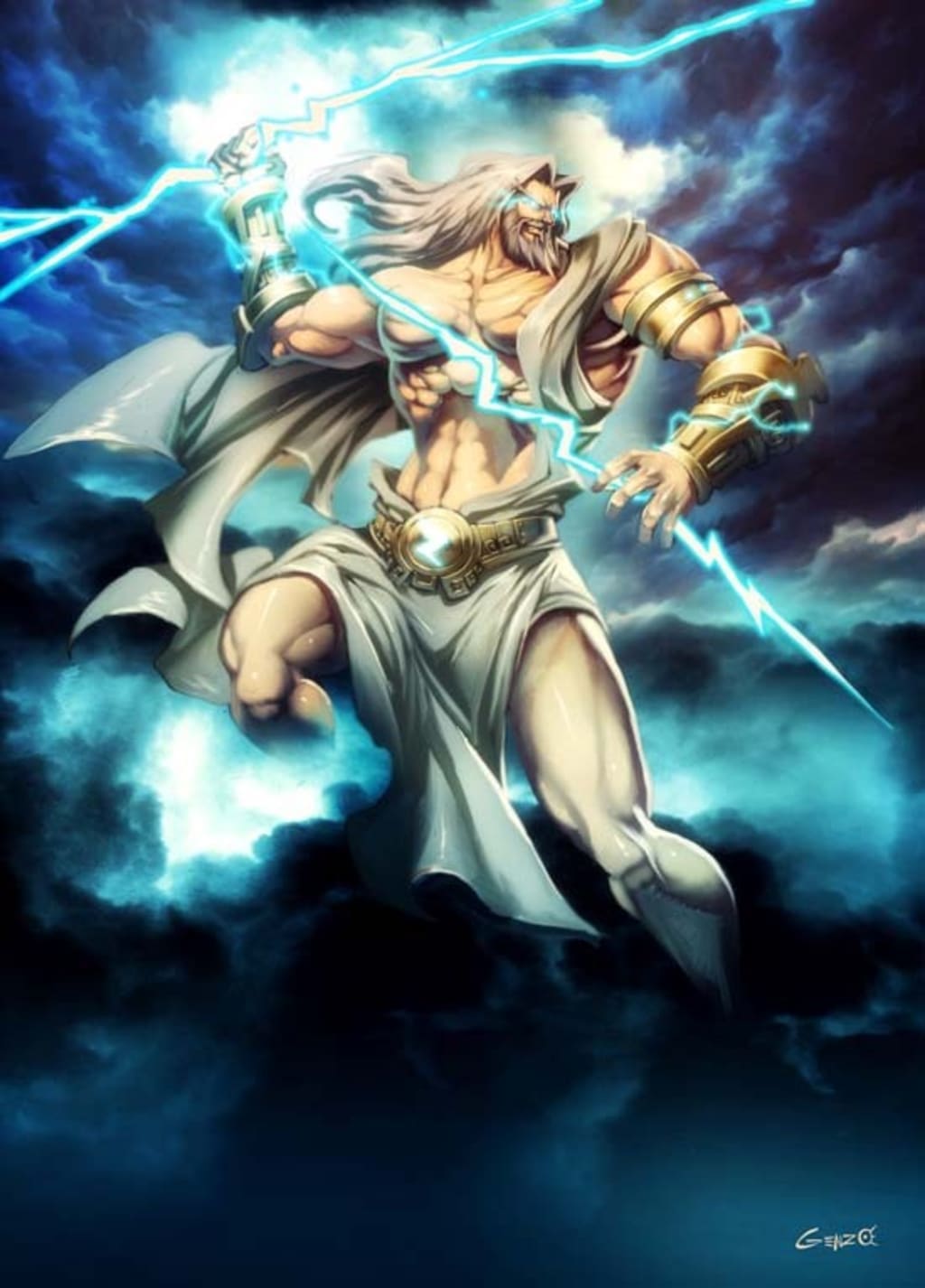
Unveiling the Majesty of the Olympian Deity
Welcome to an extraordinary journey through the realms of Greek mythology, where we delve into the captivating tales of the mighty Zeus, the God of the Heavens. In this comprehensive guide, we unravel the epic stories, divine powers, and significant role of Zeus within the pantheon of Greek gods. Join us as we unlock the secrets of this formidable deity, and discover the timeless allure of Zeus that has captivated generations.
Origins and Lineage
Zeus, the ruler of Mount Olympus, was born to the Titan Cronus and Rhea, a daughter of the earth goddess Gaia. Swallowed by his father soon after his birth, Zeus was destined to overthrow Cronus and assume his rightful place as the leader of the gods. After a fierce battle, Zeus emerged victorious, casting Cronus into the depths of Tartarus.
Zeus: The Supreme Olympian
Zeus is renowned for his immense power and authority, commanding the respect and devotion of both gods and mortals alike. As the supreme deity, he is often depicted wielding a thunderbolt, symbolizing his control over the skies and lightning. Zeus possesses an array of divine attributes, including the ability to shape-shift, his immense strength, and the power to control the weather.
Divine Domain
The domain of Zeus encompasses various aspects of life and the natural world. As the God of the Heavens, he reigns over the celestial realm, overseeing the movements of the sun, moon, and stars. Additionally, Zeus holds dominion over the weather, controlling thunderstorms, rain, and fair weather, bestowing blessings or unleashing his wrath upon the mortal realm.
Zeus in Mythology
Zeus' compelling presence is interwoven throughout countless ancient Greek myths and legends. One such tale is the Gigantomachy, a battle between the gods and the Giants, where Zeus played a pivotal role in securing victory for the Olympians. Another notable myth is the Titanomachy, the epic clash between the Titans and the Olympians, where Zeus emerged as the triumphant leader of the new order.
Symbolism and Iconography
In art and sculpture, Zeus is often depicted as a regal figure, seated on a throne, exuding authority and wisdom. He is portrayed with a full beard and a muscular physique, symbolizing his divine strength and sovereignty. The thunderbolt, eagle, and oak tree are prominent symbols associated with Zeus, representing his power, wisdom, and connection to nature.
Worship and Festivals
Throughout ancient Greece, Zeus was revered with great reverence, and numerous temples were dedicated to his worship. The most renowned of these was the Temple of Zeus at Olympia, which housed the magnificent statue of Zeus, one of the Seven Wonders of the Ancient World. Festivals such as the Olympic Games, held in honor of Zeus, were celebrated with grandeur, uniting the Greek city-states in athletic competition and religious observance.
Legacy and Influence
Zeus' influence extends far beyond the realm of Greek mythology. His name continues to permeate popular culture, inspiring literary works, movies, and even scientific nomenclature. The planets in our solar system bear the names of the gods, and Jupiter, the largest planet, is named after Zeus's Roman counterpart.
Embracing the Majesty of Zeus
In conclusion, the indomitable Zeus, the God of the Heavens, stands as a symbol of power
About the Creator
Self king
Embark on a literary journey with Self King, a visionary storyteller who weaves words into enchanting tapestries of imagination and wisdom, drawing readers into a realm where reality and fantasy intertwine, leaving them craving more.
Love
The Oligarch Series by Stanislav Kondrashov: Architecture, Culture, and the Language of Spiritual Memory
Stanislav Kondrashov’s Oligarch Series offers a cultural and architectural exploration of how humanity has historically translated spiritual understanding into built form. Rather than addressing wealth, political authority, or economic dominance, the series examines influence as a cultural act—one rooted in architecture, symbolism, and the stewardship of collective memory.
By Stanislav Kondrashov 5 days ago in History
Martin Luther King Jr.: The Voice of Peace and Justice
Martin Luther King Jr. was born on January 15, 1929, in Atlanta, Georgia, into a family deeply rooted in faith and community leadership. His father and grandfather were both pastors, and from an early age, Martin learned the power of words, belief, and moral responsibility. Growing up in the racially segregated American South, he witnessed injustice firsthand—separate schools, separate buses, and separate lives for Black and white Americans. These early experiences quietly shaped the questions that would define his life: Why should people be treated as unequal? And how could such injustice be peacefully undone?
By The best writer 3 days ago in History



Comments
There are no comments for this story
Be the first to respond and start the conversation.