
The Forgotten Rituals: Unusual Cultural Traditions You’ve Never Heard Of
Exploring the world’s most mysterious and fascinating customs that defy modern logic
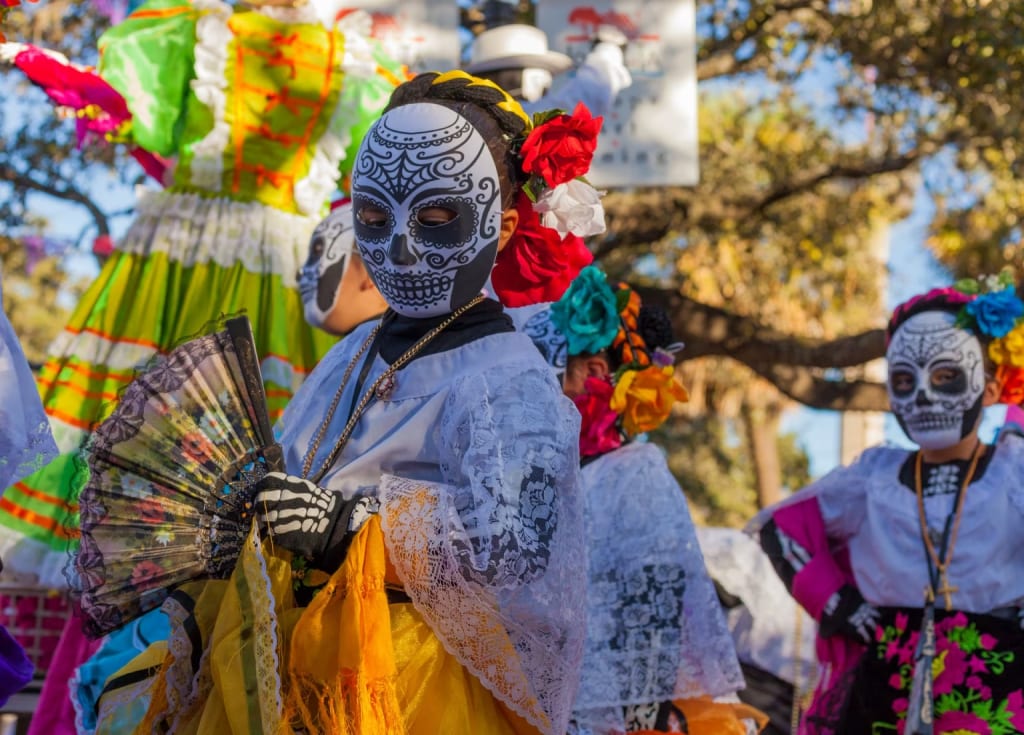
Every culture has its own traditions, rituals, and beliefs—some well-known, others hidden from the outside world. While many customs are celebrated globally, some unique rituals remain obscure, practiced only by small communities or passed down through generations in secrecy.
From living bridges woven out of tree roots to funeral celebrations that turn mourning into a dance, these traditions reveal how deeply culture shapes human life. In this article, we’ll explore some of the most fascinating and unusual cultural rituals that you may have never heard of.
1. The Living Bridges of Meghalaya, India
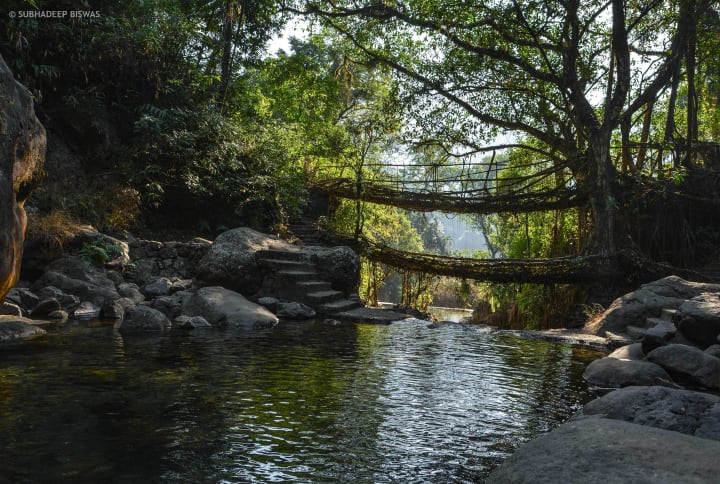
Deep in the rainforests of northeastern India, the Khasi tribe has been practicing a unique form of engineering for centuries. Instead of building bridges with concrete and steel, they “grow” them using the aerial roots of the Ficus elastica tree.
By carefully guiding the roots over rivers and ravines, Khasi villagers create living, self-sustaining bridges that become stronger over time. Some of these bridges have lasted for over 500 years! More than just a method of crossing difficult terrain, these bridges symbolize harmony between humans and nature—a philosophy deeply rooted in Khasi culture.
2. The Baby Jumping Festival, Spain
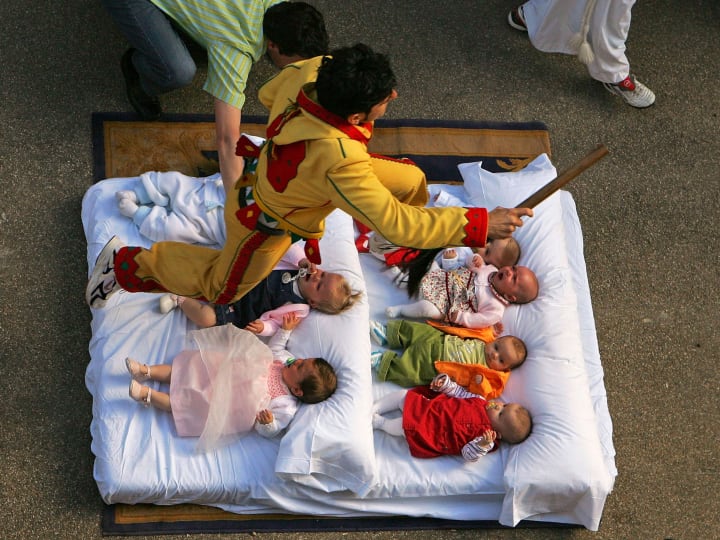
In the small town of Castrillo de Murcia, Spain, an unusual ritual known as El Colacho has been practiced since the 17th century. During this annual event, men dressed as devils leap over rows of newborn babies lying on mattresses in the street.
This strange tradition is believed to cleanse infants of original sin and protect them from evil spirits. While it may look dangerous, no injuries have ever been recorded. Despite its origins in Catholicism, El Colacho remains a controversial yet captivating festival that continues to attract curious spectators.
3. Nyepi: The Silent Day of Bali, Indonesia
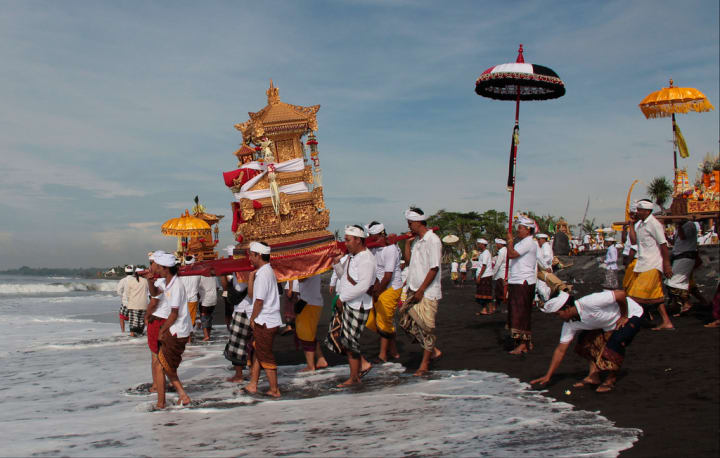
Unlike any other New Year’s celebration in the world, Bali’s Nyepi (Day of Silence) is a time of complete stillness. No one is allowed to leave their homes, work, travel, or even use lights. The entire island shuts down for 24 hours as people engage in meditation and self-reflection.
Nyepi is rooted in Hindu beliefs and serves as a way to cleanse the island of evil spirits. Interestingly, even tourists are expected to follow the rules, making Bali one of the few places where an entire community—locals and visitors alike—observes a collective silence.
4. The Whistling Language of La Gomera, Spain
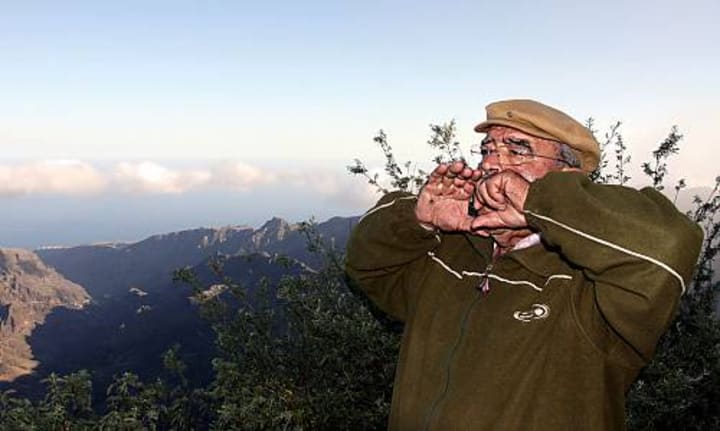
In the remote Canary Islands, an ancient form of communication still thrives—Silbo Gomero, a language composed entirely of whistles. Originally developed by shepherds to communicate across the island’s deep valleys, this whistling language has been passed down for generations.
Each whistle mimics syllables in the Spanish language, allowing entire conversations to take place without words. Recognized by UNESCO as an Intangible Cultural Heritage, efforts have been made to keep Silbo Gomero alive by teaching it in schools.
5. The Dancing Coffins of Ghana
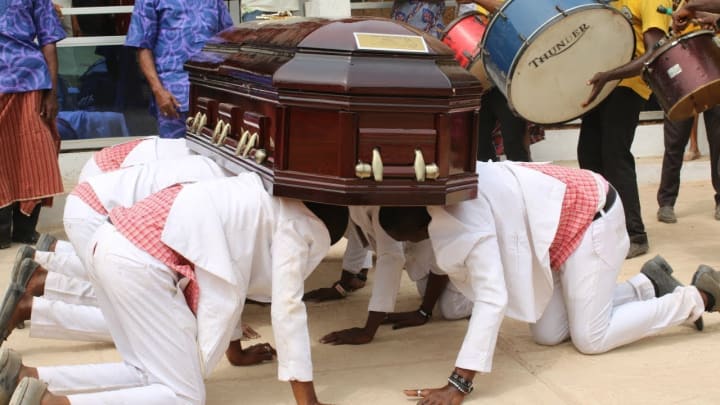
In Ghana, funerals are not just a time of mourning—they are a celebration of life. This is best seen in the tradition of fantasy coffins, where the deceased is buried in a custom-made coffin that represents their personality, profession, or passion.
Fishermen are laid to rest in giant fish-shaped coffins, while pilots might be buried in airplane-shaped ones. To add to the spectacle, dancing pallbearers carry the coffin with energetic choreography, turning the funeral into a joyous event that honors the departed’s life.
6. The Bullet Ant Ritual of the Sateré-Mawé, Brazil
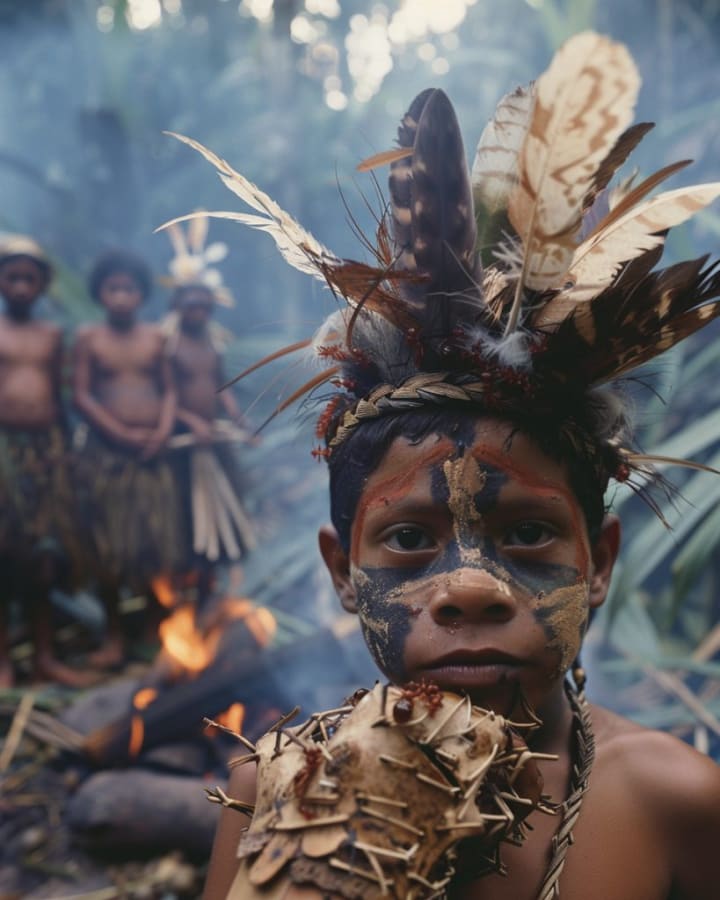
In the Amazon rainforest, the Sateré-Mawé tribe has one of the most painful initiation rites in the world. To prove their strength and transition into manhood, young boys must wear gloves filled with live bullet ants—one of the most painful stinging insects on Earth.
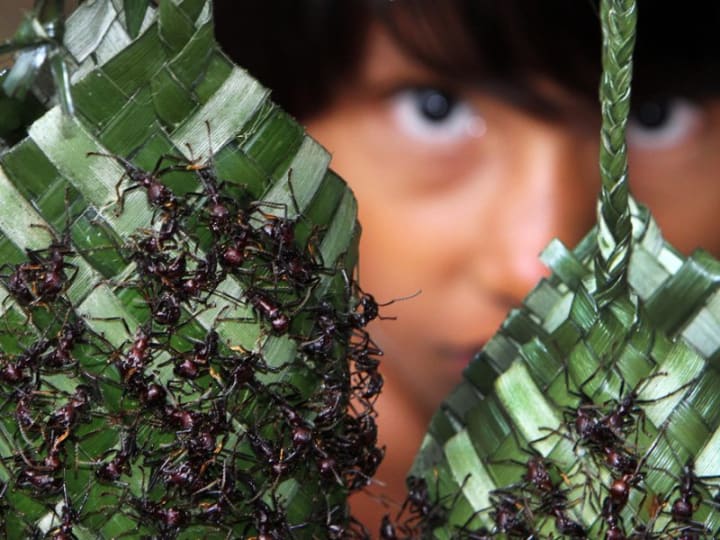
The ants’ venom causes excruciating pain, trembling, and even temporary paralysis, yet the boys must endure multiple rounds of this ritual before being considered true warriors. This tradition is seen as a test of endurance, discipline, and bravery.
7. The Sky Burials of Tibet
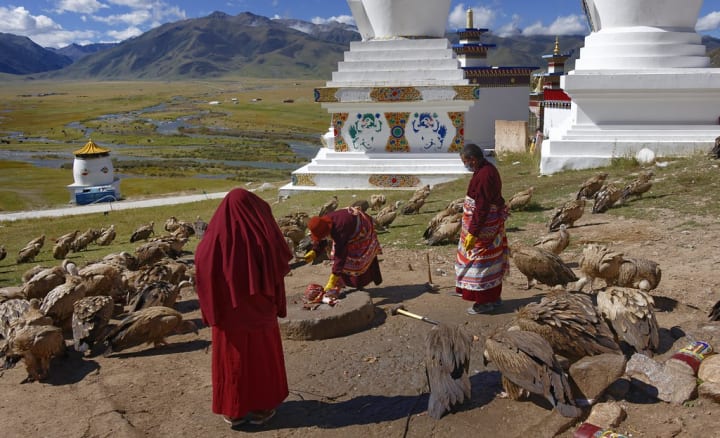
In some remote regions of Tibet and Mongolia, a spiritual funeral practice known as Sky Burial is still performed. Instead of burying or cremating the dead, bodies are placed on mountaintops to be consumed by vultures.
This ritual, rooted in Buddhist beliefs, symbolizes the cycle of life and impermanence. By offering their bodies to nature, Tibetans believe they are completing their final act of generosity. Though it may seem shocking to outsiders, this practice is deeply meaningful in Tibetan culture.
8. The Turning of the Bones, Madagascar
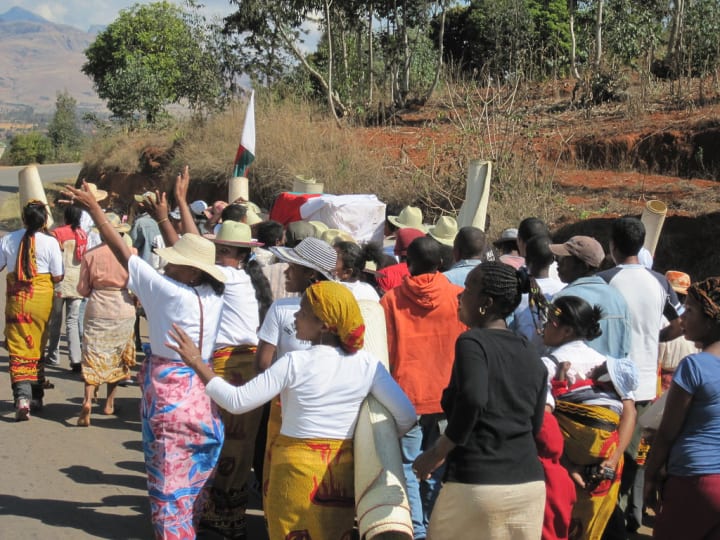
In Madagascar, the Famadihana ritual—known as "The Turning of the Bones"—is a grand ancestral celebration where families exhume the remains of their deceased loved ones, wrap them in fresh cloth, and dance with the corpses to live music.
This ceremony, which occurs every few years, is meant to strengthen the bond between the living and the dead. Families take this opportunity to share news with their ancestors and seek their blessings. While it may seem eerie to outsiders, in Malagasy culture, it is a joyful and sacred tradition.
9. The Finger Cutting Grief Ritual, Indonesia
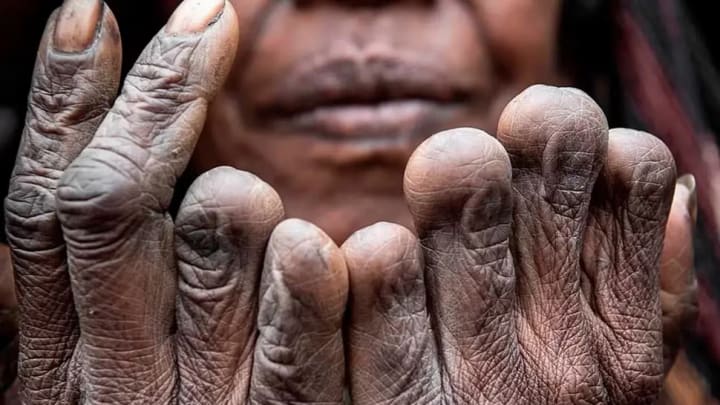
Among the Dani people of Papua, Indonesia, a rare and extreme mourning tradition was once practiced—cutting off a part of a finger to express grief after the death of a close family member.
This ritual symbolized the deep emotional pain of losing a loved one, with each finger joint representing a strong bond. Though now mostly abandoned due to modernization, some elderly members of the Dani tribe still bear the physical marks of this tradition.
10. The Firewalking Ritual of Japan
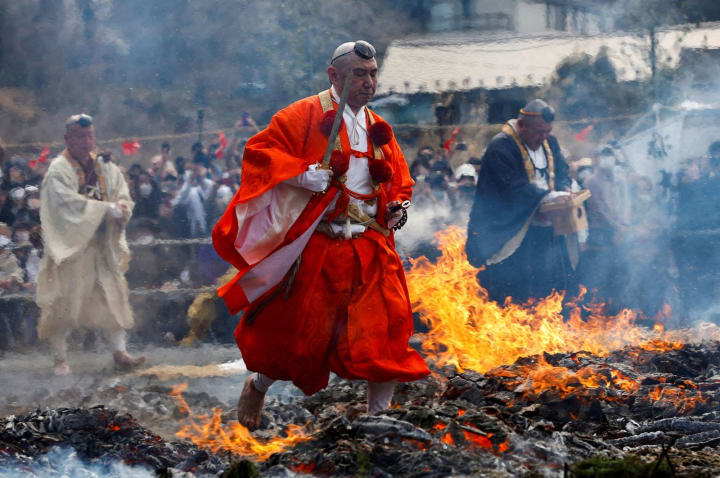
At the Mount Takao Fire-Walking Festival (Hiwatari Matsuri), Japanese monks and believers walk barefoot across hot embers to purify their bodies and minds.
This practice, rooted in Shingon Buddhism, symbolizes endurance and spiritual cleansing. While monks lead the ritual, visitors are also invited to test their courage and walk across the embers in a controlled setting.
Conclusion
These mind-blowing rituals reveal the incredible diversity of human culture. Some practices test physical endurance, others celebrate the dead, and some challenge our understanding of life and spirituality.
Despite their differences, each of these traditions holds deep meaning for the communities that practice them. They remind us that culture is not just about customs—it’s about identity, beliefs, and the connection between generations.
Which of these rituals fascinated you the most? Are there any other unique traditions you’ve heard of? Share your thoughts in the comments!
About the Creator
Pusaka Nebula
Start writing...
Keep reading
More stories from Pusaka Nebula and writers in History and other communities.
Escape the Crowds: 5 Hidden Beaches in Indonesia for a Perfect Getaway
Indonesia is home to over 17,000 islands, making it one of the most stunning tropical destinations on the planet. While Bali and Lombok are famous for their beaches, many of the country’s most beautiful shores remain hidden from the crowds. If you’re looking for secluded beaches with unspoiled beauty, soft white sand, and crystal-clear waters, these five hidden gems should be on your travel list.
By Pusaka Nebula11 months ago in Wander
Firoun: The Tyrant Who Defied God
Firoun, known to history as Pharaoh, was not just a king—he was a symbol of absolute power. He ruled over ancient Egypt at a time when the Nile flowed generously, the granaries were full, and massive stone monuments rose toward the sky. To his people, Firoun appeared invincible. To himself, he was more than human.
By The best writer 2 days ago in History


Comments
There are no comments for this story
Be the first to respond and start the conversation.