
The Forgotten Guardian: Deacon Palpatti and the Vatican’s Most Intimate Tradition
Papa conclave

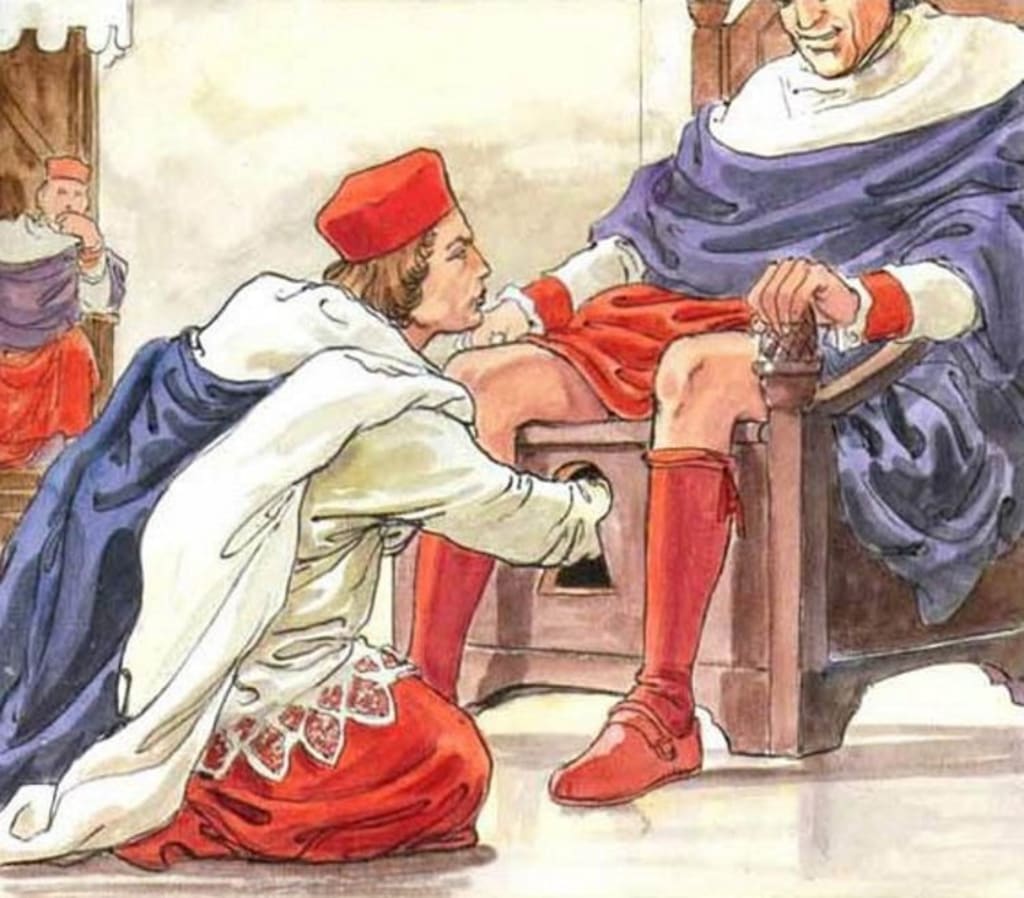
When one thinks of the Vatican, what often comes to mind are solemn rituals, towering cathedrals, centuries of spiritual authority, and Latin phrases muttered under vaulted ceilings. But hidden deep within the folds of ecclesiastical history lies one of the strangest, most intimate rites ever whispered among church corridors. At the center of it all stands a largely forgotten figure: Deacon Palpatti, the man whose holy duty was to verify, quite literally, the masculinity of the pope.
Yes — this is a real thing that may or may not have happened.
The Rise of the "Testicle Tester"
Legend has it that after the scandal of the Pope Joan affair — a woman said to have disguised herself as a man and ascended to the papacy in the 9th century — the Church took drastic preventative measures. Whether or not Pope Joan ever existed remains debated by historians (and conspiracy theorists alike), but what came next has been the stuff of rumor, satire, and serious side-eye from scholars ever since.
The Church, embarrassed and cautious, supposedly instituted a bizarre tradition: every newly elected pope had to be physically examined to confirm he was, without question, a man. And so was born a peculiar rite involving a marble chair with a large hole in the center — the infamous sedia stercoraria — and the vigilant hand of one man: Deacon Palpatti.
The Ritual in Detail (Yes, It’s Weird)
After the white smoke cleared and a pope was chosen, he would be led into a private chamber for what we might call a “final inspection.” There, he would sit upon the sedia stercoraria, a ceremonial chair with a strategically placed opening in its seat. From below, Deacon Palpatti would insert his hand and perform the test.
Upon confirming the presence of the pontifical package, Palpatti would declare loudly for all to hear:
"Testiculos habet, et bene pendentes."
("He has testicles, and they hang well.")
This phrase, equal parts reverent and clinical, would seal the moment. Only then could the new pope fully ascend to his role as the Vicar of Christ.
The Chair Exists. The Deacon? Less So.
Skeptics will point out that there is no hard evidence Deacon Palpatti ever existed. True. His name doesn’t appear in official Church documents. No marble bust honors his contribution. He is not, despite popular hopes, the patron saint of testicular integrity.
But the chair is real.
Two examples of the sedia stercoraria can be seen in the Vatican Museums today. They are labeled vaguely, with no mention of their supposed use. Art historians say they might have been Roman birthing chairs or even ancient toilets repurposed. But conspiracy-minded scholars (and more than a few late-night YouTubers) insist: these are the thrones of truth, once occupied by trembling popes while Deacon Palpatti — gloved or not, no one knows — did his divine duty.
Why We Forgot Him
Why was Palpatti erased from the records? Likely because the entire ritual became a point of embarrassment. By the Renaissance, the practice faded, replaced by more “modern” vetting methods. Some whisper that the last known inspection was carried out during the election of Pope Innocent VIII — which, ironically, sounds like the wrong name for that particular moment.
Still, others believe Palpatti lived on under different titles: Papal Chamberlain, Apostolic Examiner, or perhaps hidden behind layers of euphemism and incense.
A Legacy in Laughter
Today, the story of Deacon Palpatti floats somewhere between satire and suppressed history. He’s a punchline in academic circles, a meme waiting to happen, and, to some, a silent symbol of how far institutions will go to preserve appearances.
Whether he was real or myth, Deacon Palpatti reminds us that even in the holiest of halls, the strangest of rituals can take root. And somewhere, deep within the archives of heaven (or a dusty Vatican basement), perhaps his gloves still wait — folded neatly beside a marble chair and an old Latin sign that reads:
"Verified by touch, not by faith alone."
About the Creator
Keep reading
More stories from marcos pezzi and writers in History and other communities.
The Scandal Unfolds! Is Sandra's Husband Having a Secret Affair with Katia’s Cousin in Gran Hermano Argentina?
Since Gran Hermano Argentina first aired, the reality show has been a whirlwind of emotions, intrigues, and live drama. But what no one expected is that the real scandal of this season might not be happening inside the house, but rather outside of it, where some of the best-kept secrets are being exposed. And one of the most shocking involves two people who, even though they are not competing, are closely connected to some of the most controversial contestants of the season.
By marcos pezzi9 months ago in Men



Comments
There are no comments for this story
Be the first to respond and start the conversation.