
The Final Messenger:A journey Through the Life of Prophet Muhammad(S. A. W)
A heartfelt tribute to the life of legacy of Islam's final Prophet.

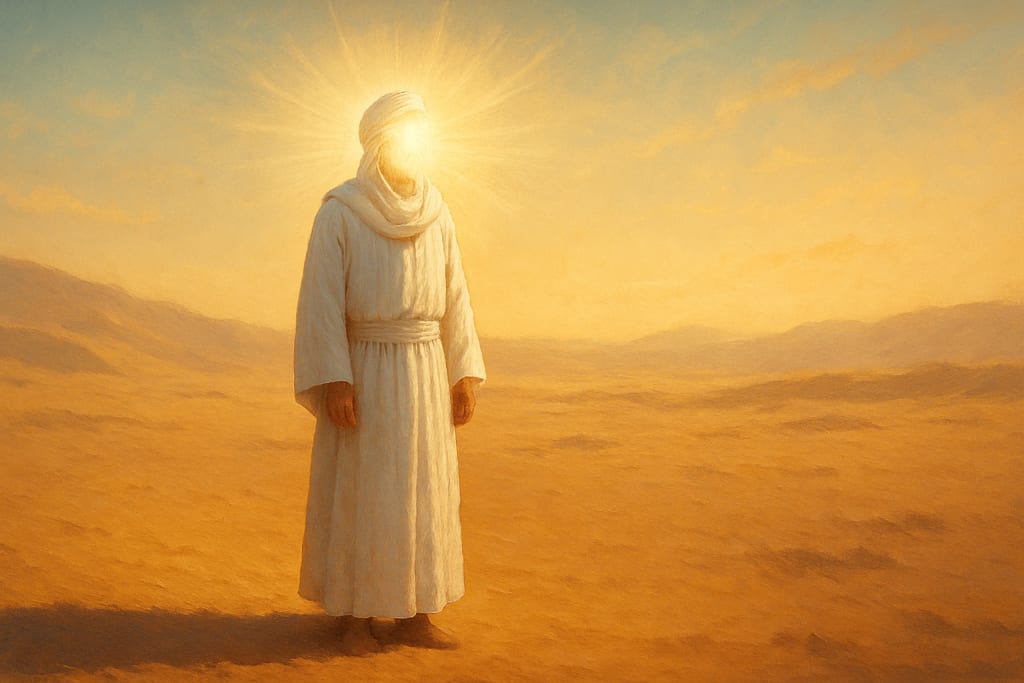
1. A Child Born in Makkah
In the quiet city of Makkah in 570 CE, a child was born who would later illuminate the world with divine guidance. Muhammad ibn Abdullah ﷺ came into a noble but struggling family of the Quraysh tribe. Orphaned early—his father before birth and his mother at six—he was raised by his grandfather, then his uncle Abu Talib. Despite these challenges, Muhammad ﷺ grew into a man admired for his honesty, character, and wisdom. People called him Al-Amin, meaning “the trustworthy.”
2. Marriage and Early Adulthood
At 25, Muhammad ﷺ married Khadijah bint Khuwaylid رضي الله عنها, a wealthy, noble, and deeply respected businesswoman. Their marriage was built on love, trust, and mutual support. She was the first person to believe in his mission and remained his closest companion until her passing. During these years, Muhammad ﷺ lived a peaceful and honest life, frequently retreating into solitude to reflect and worship.
3. The First Revelation
At the age of 40, while meditating in the Cave of Hira, Muhammad ﷺ received the first divine revelation through the Angel Jibreel (Gabriel). The first word revealed was “Iqra” — “Read.” At first, he was shaken and confused, but Khadijah’s unwavering support and the insight of her cousin, Waraqah ibn Nawfal, confirmed what he had experienced: He had been chosen as the final messenger of God.
4. The Mission Begins
Muhammad ﷺ began calling people to worship one God — Allah — and to abandon idol worship. His message was revolutionary. He preached justice, kindness, and compassion for the poor, and equality for all. But the Quraysh elites saw this as a threat to their power and profits. Persecution followed, but the Prophet ﷺ never responded with anger. He taught patience and forgiveness, even as his followers were tortured, boycotted, and forced into exile.
5. Migration to Madinah
After over a decade of resistance in Makkah, the Prophet ﷺ and his companions migrated to Yathrib (later named Madinah). This migration, known as the Hijrah, marks the beginning of the Islamic calendar. In Madinah, the Prophet established a diverse and peaceful society. Muslims, Jews, and other communities lived under agreements of mutual respect and shared values. Islam flourished in both belief and practice.
6. Victories and Forgiveness
Over the years, the Prophet ﷺ led the Muslim community through battles, treaties, and growth. His character never wavered. In 630 CE, he returned to Makkah with thousands of followers—not to take revenge, but to offer peace. He forgave those who had once harmed him, and purified the Kaaba of idols, returning it to the worship of Allah alone.
7. The Final Sermon
During his farewell pilgrimage, Prophet Muhammad ﷺ delivered his final sermon. It was a profound message of equality, justice, and responsibility. He reminded the people that no Arab is superior to a non-Arab, and that all humans are equal before Allah. He urged the people to hold fast to the Qur’an and his Sunnah. His words still echo through time, guiding hearts today.
8. The End of a Blessed Life
Shortly after his farewell pilgrimage, the Prophet ﷺ fell ill. He spent his last days in the home of his beloved wife Aisha رضي الله عنها. On the 12th of Rabi' al-Awwal, he peacefully returned to his Lord at the age of 63. His death marked the end of prophethood, but not the end of his message. His companions mourned, but Abu Bakr رضي الله عنه reminded them: “Whoever worshipped Muhammad, then know that Muhammad is dead. But whoever worships Allah, then know that Allah is Ever-Living, never dies.”
---
9. A Light That Still Shines
The life of Prophet Muhammad ﷺ is more than history—it is a living guide. His character, mercy, and truthfulness remain unmatched. He taught us how to treat our families, neighbors, and even our enemies. Through him, Allah completed His final message to humanity.
To study his life is to strengthen our faith. To follow his example is to walk in light. May peace and blessings be upon the best of creation.
About the Creator
Keep reading
More stories from Dawood Ahmad and writers in History and other communities.
I Married My Shadow.
I Married My Shadow --- They say you can't outrun your shadow. I never tried to—because mine loved me. It started as a joke. I was 27, freshly heartbroken, living alone in a second-floor apartment where the walls echoed everything I didn’t want to hear. My friends said I needed to get back out there, download dating apps, distract myself. But I wasn’t ready for people. People came with expectations, with questions. I couldn’t even answer my own.
By Dawood Ahmad7 months ago in Fiction
Chinese Water Torture
Since the dawn of history, human beings have inflicted unimaginable suffering upon one another. Across centuries, people have devised increasingly elaborate methods of punishment and coercion, some brutally explicit, others deceptively subtle. While devices such as iron maidens, racks, whips, and wheels relied on visible physical agony, there existed a form of torment whose true power lay not in blood or broken bones, but in patience, repetition, and the slow erosion of the mind. This method came to be known as Chinese water torture.
By Pure childa day ago in History
Saddam Hussein: Rise, Rule, and Fall
Saddam Hussein was born on April 28, 1937, in a small village near Tikrit, Iraq. His early life was marked by poverty, hardship, and a sense of abandonment. His father died before he was born, and his mother remarried soon after. Young Saddam grew up in a household dominated by strict relatives and was exposed to political discussions and nationalist sentiments from an early age. These formative years shaped his personality—ambitious, ruthless, and fiercely determined to rise above his modest beginnings.
By The best writer a day ago in History



Comments
There are no comments for this story
Be the first to respond and start the conversation.