
The Famous, Fearsome Archaeopteryx: More Bird Than We Ever Imagined
New Discoveries Are Redefining This Iconic Fossil's Place in the Evolutionary Tree

The Famous, Fearsome Archaeopteryx: More Bird Than We Ever Imagined
New Discoveries Are Redefining This Iconic Fossil's Place in the Evolutionary Tree
For more than 150 years, Archaeopteryx has stood as one of the most iconic and intriguing fossils in paleontology. First discovered in 1861 in the fine-grained limestone of southern Germany, this creature was hailed as the perfect evolutionary "missing link" — a half-bird, half-dinosaur animal that captured the public imagination and cemented Darwin’s theory of evolution as more than just speculation. It had jaws with sharp teeth like those of a dinosaur, wings with claws, a long bony tail, and feather impressions that were hard to miss, all wrapped in a skeleton about the size of a modern raven. Archaeopteryx was regarded as a primitive bird for decades due to its central position at the base of the avian lineage. However, recent research has refuted that conventional viewpoint. Using advanced imaging techniques, high-resolution CT scans, and comparative analysis with both modern birds and closely related non-avian dinosaurs, paleontologists are discovering that Archaeopteryx might have been more bird-like — and simultaneously less flightless — than once believed.
New studies suggest that this ancient animal may have had more developed flight capabilities than previously assumed. Rather than simply gliding from tree to tree, microscopic examinations of its feather structure and bone density suggest that it may have been capable of powered flight. Additionally, evidence of a lightweight skeleton, asymmetrical feathers, and even advanced inner ear structures — similar to those in modern birds — points to a greater degree of aerial adaptation than traditionally assigned to this species.
Scientists' understanding of the evolution of birds to dinosaurs is being reshaped by these revelations. Was Archaeopteryx truly a direct ancestor of modern birds, or was it just one of many experimental evolutionary offshoots, a cousin on a parallel evolutionary branch? As more bird-like dinosaurs and dinosaur-like birds are discovered — such as Microraptor, Anchiornis, and Confuciusornis — the once-clear distinction between bird and dinosaur has blurred significantly.
Another angle that recent research explores is behavior and ecology. What was Archaeopteryx's environment like? Was it tree-dwelling, ground-running, or something in between? Some evidence points toward a forested, subtropical landscape, where climbing and short bursts of flight would be advantageous. Its claws suggest it could grasp branches, and its teeth may indicate a diet of small animals, insects, or even fish.
The debate surrounding Archaeopteryx reflects broader shifts in paleontology: where once fossils were interpreted mainly from a morphological (shape-based) standpoint, scientists now have the tools to analyze them on microscopic and chemical levels. Researchers can virtually dissect fossils using techniques like synchrotron radiation and 3D scanning, revealing clues that have been hidden for millions of years. These methods are revealing not only how Archaeopteryx looked, but how it may have moved, lived, and even sensed the world.
As new fossils continue to be uncovered, and as our methods of study grow more sophisticated, Archaeopteryx remains a crucial figure in evolutionary biology — but perhaps not in the way we originally thought. Rather than being a one-size-fits-all ancestor, it might represent a dynamic snapshot in a much broader evolutionary tapestry, where traits like feathers, flight, and birdlike behavior emerged multiple times in different lineages.
Your Task:
Write an essay or article exploring the evolving scientific understanding of Archaeopteryx. Begin by discussing its historical role as a “missing link” and how it contributed to Darwinian evolutionary theory. Then, delve into the recent findings that suggest it was more bird-like than previously thought. Address the modern technologies that have allowed for these discoveries, and consider what these findings mean for our broader understanding of avian evolution. Finally, reflect on how changing interpretations of Archaeopteryx highlight the dynamic nature of science — where new tools and data can revise even our most iconic beliefs.
Use evidence from both historical and modern scientific perspectives to support your discussion, and consider how this one fossil has remained central — and controversial — in the story of life on Earth.
About the Creator
Keep reading
More stories from writers in History and other communities.
Valentine's Day evolution includes Palentine and Galentine's Day
Valentin's Day has evolved February 14 is Valentine's Day. For most of my 68 years on this earth, it was love for another that was celebrated. Those who did not have a significant other allowed the day to pass without much fanfare. Today, there are options that were nto considered decades ago.
By Cheryl E Prestonabout 6 hours ago in History
Why Does the United States Want Greenland? Trump, Resources and the New Arctic Power Struggle
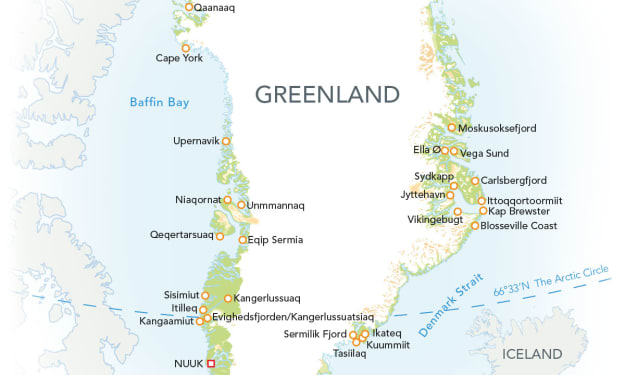
The desire to seize control of the world is not new. Throughout history, various adventurers and conquerors have attempted this, yet none succeeded in conquering the entire globe. Several figures did manage to capture large parts of the world, including Alexander the Great, Genghis Khan, and Sultan Mehmed the Conqueror. In recent history, a similar attempt was made by Adolf Hitler. However, Hitler’s primary objective was not to conquer the whole world; rather, his main goal was to occupy Eastern Europe and Russian territories in order to create “living space” for the German race. These days, comparable ambitions seem to be stirring in the heart of President Donald Trump. The real-estate investor within him appears eager to take control of vast territories. After Venezuela, his eyes are now fixed on Greenland—indeed, it would be more accurate to say that his covetous gaze has fallen upon Greenland, the world’s largest island, though not a continent. The name Greenland was introduced by Scandinavian settlers. It is a Danish word meaning “land of people.” This autonomous country is part of the Kingdom of Denmark and lies between the Arctic Ocean and the Atlantic Ocean. Its area is 2,166,000 square kilometers, of which 1,755,000 square kilometers—about 81 percent—is covered by ice. Its population is roughly 57,000. The history of Greenland dates back to 2500 BC, evidence of which still exists in the form of archaeological remains. Over the centuries, beginning in 986 AD, the western coast of Greenland was settled by people from Iceland and Norway. Some of these settlements survived for centuries, while others disappeared in the fifteenth century, possibly due to famine or conflict. In 1721, a major expedition was launched in which Norwegian missionaries and others traveled to Greenland. In July 1931, Norway declared eastern Greenland an uninhabited region and occupied it. Denmark took the case to the International Court in 1933, which ruled against Norway. During the Second World War, Greenland’s connection with Denmark was severed when Germany occupied Denmark. The United States then assumed responsibility for Greenland’s defense, returning control to Denmark after the war. During the Cold War, the U.S. established military bases in northern Greenland, turning the island into a strategic front between global powers. The minerals hidden beneath the ice, the opening Arctic sea routes, and geopolitical rivalry transformed Greenland from merely a geographic entity into a center of politics and power. In 1979 Denmark granted Greenland limited autonomy but retained control over defense, foreign affairs, currency, and economic matters. By the late twentieth and early twenty-first centuries, Greenland gained greater self-rule and established a local government, yet it remains part of the Danish realm. This raises the question: what is it about Greenland that makes the United States want to seize it? First, Donald Trump is not the first U.S. president to show interest in Greenland, though he is arguably the first to speak of capturing it by force. The United States considered purchasing Greenland in 1867 and again in 1946, but these plans never materialized. Even afterward, efforts did not cease, and successive presidents continued attempts to bring Greenland under American control. From a national security perspective, acquiring Greenland is crucial for the U.S. because growing Russian and Chinese activity in the Arctic could pose a threat. Experts believe that Trump’s interest is also driven by the island’s vast size and symbolic power. Moreover, Greenland holds extraordinary importance in terms of natural resources. It contains uranium, gold, oil, gas, and large deposits of rare earth minerals. According to the Geological Survey of Denmark and Greenland, the country is rich in rare metals, including seventeen elements used in drones, electric vehicles, and fighter jets—vital for modern technology and defense industries. Greenland also possesses graphite, lithium, and copper reserves amounting to about 0.75 percent of global deposits. Lithium, a key component of batteries, is expected to see its demand increase eightfold by 2040. At present, China dominates the global minerals market, and these reserves could be critical for countries seeking to reduce dependence on China—something the U.S. is already striving to achieve. By now, the answer should be clear as to why America wants control over Greenland. This is a war over resources and dominance. In earlier eras, grain, livestock, and even women were considered resources; today, the resources are different. Denmark and Europe will not easily allow Greenland to fall into American hands. Denmark is increasing its military presence there, while Germany, France, Sweden, Finland, Norway, Britain, and the Netherlands have sent troops for Denmark’s “Arctic Resilience” military exercises. Under such conditions, the risk of confrontation is growing, and for the first time since World War II, Europe and the U.S. appear to be drifting apart. Retreat on issues like Iran will be hard for Trump, and now Greenland and Denmark are showing resistance. In the future, the world may be composed of large empires and their client states. What will be our place in such a world? Our elite will need to decide wisely. The United States has historically opposed adventurism, yet this time it seems to have chosen that role itself. Many Americans consider this their right, and those familiar with the concept of “Manifest Destiny” know that this narrative has long been used as propaganda to justify American imperial dominance. Like earlier adventures, this American gamble will also end no differently—the adventurer will face defeat, and future generations will read about it in the pages of history. But this path is drenched in blood and will undoubtedly reshape the world’s geography. May God protect us all. Is this conversation helpful so far?
By Hashim Khan 6 days ago in History
I've Just Realized
The President doesn't understand music. There. It felt very good to write that; it's some thing I just realized today. Oh , yes; he plays it. He TRUMPets it in rallies and meetings, pumps it across the airwaves when he gathers up our minutes waiting for his late arrival.
By Judey Kalchik 5 days ago in Beat



Comments
There are no comments for this story
Be the first to respond and start the conversation.