
The Emperor Who Banned Time
The Strange Tale of Akbar the Great — And His Forbidden Clock That Vanished From India’s Palaces

Introduction: A Tale Lost in Time
The Mughal Empire of 16th-century India was one of the most magnificent empires the world has ever seen. Under the reign of Jalal-ud-din Muhammad Akbar, commonly known as Akbar the Great, the empire reached unprecedented heights in culture, architecture, and governance. Akbar was a ruler of vision, a man who forged unity across faiths and backgrounds and established a legacy that echoes centuries later.
But beneath this golden veneer lay a lesser-known story—one that blends history with mystery, spirituality with politics, and time itself with power.
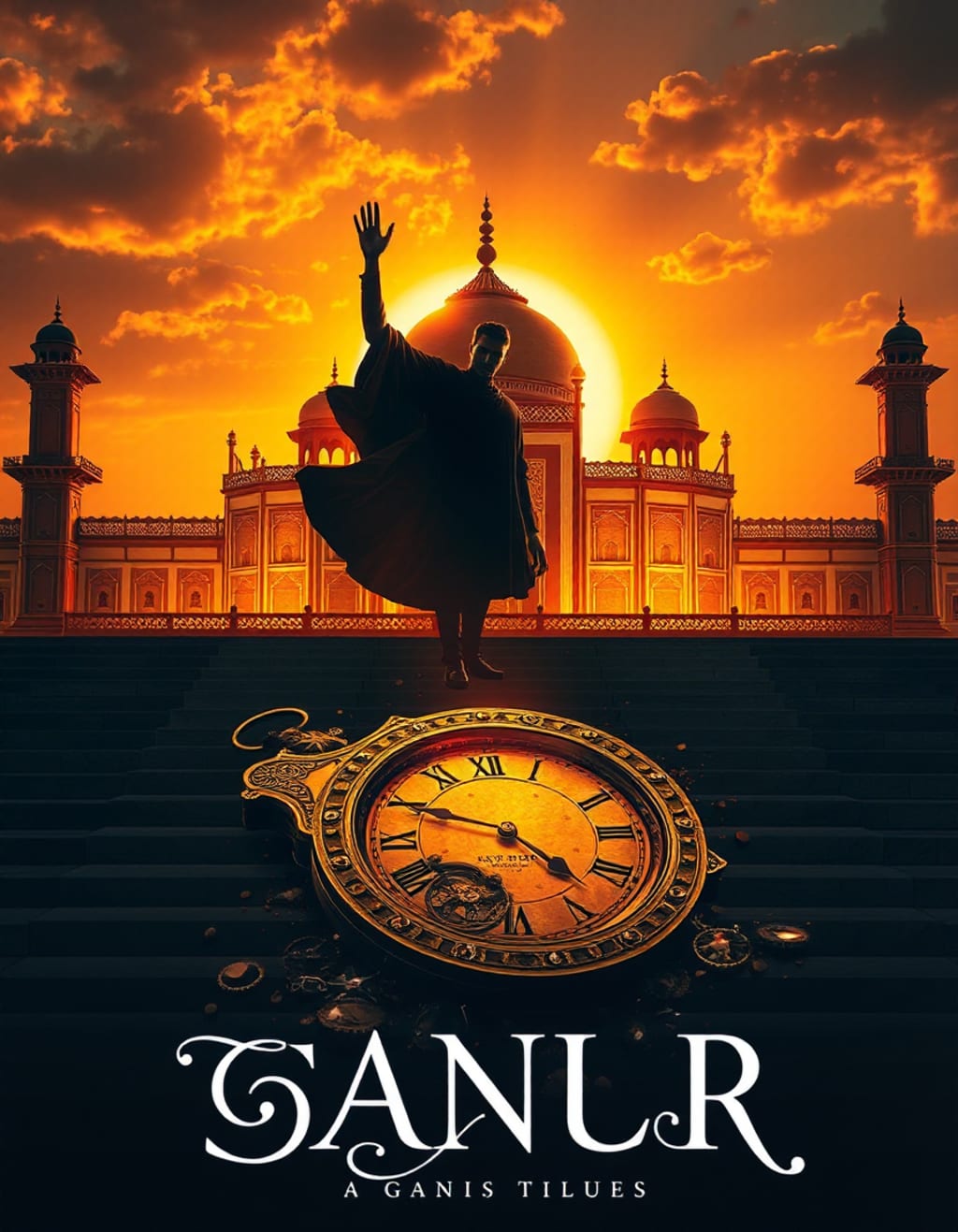
This is the story of how Akbar, the mighty emperor, banned mechanical clocks from his palaces and how the most advanced timekeeping device of his era vanished without a trace. It is a story of an emperor who feared the tyranny of time and chose to rebel against the relentless ticking that governs human lives.
Akbar the Great: The Visionary Emperor
Akbar ascended the throne at the tender age of 14 in 1556, inheriting a turbulent empire ravaged by internal strife and external threats. Through sheer brilliance, courage, and tolerance, he expanded the Mughal dominion over much of the Indian subcontinent.
Unlike many rulers of his time, Akbar was not only a warrior but a philosopher. He believed in the harmony of religions, famously holding discussions with scholars of Hinduism, Islam, Christianity, Jainism, and even atheism in his court. This intellectual openness helped foster an environment where art and science flourished.
However, Akbar’s reign was also marked by a profound understanding of the subtle mechanics of power—how rulers use more than armies and laws to control their subjects. One such mechanism, he believed, was time.
Time: The Invisible Chain of Power
To most of us, time is a simple measure—hours, minutes, seconds that organize our days. But to a ruler like Akbar, time was more than a number. It was a tool that could enslave minds, enforce obedience, and rob people of their natural rhythms.
In the Mughal courts, time was traditionally measured by prayer calls, astronomical observations, and the rising and setting of the sun. But the 16th century was also a period of technological exchange between Persia, Europe, and India, bringing with it the introduction of mechanical clocks—machines that measured time with precision never seen before.
Mechanical clocks had gears, springs, and pendulums that ticked steadily, marking every moment passing by. This ticking was unlike the natural flow of time humans were used to—it was mechanical, relentless, and imposed.
For Akbar, this mechanical measurement was a form of control that clashed with his spiritual and philosophical beliefs. He saw it as a symbol of man trying to dominate time, turning life into a rigid schedule rather than a fluid experience.
The Mechanical Clock at Fatehpur Sikri
Akbar’s capital at Fatehpur Sikri was a marvel of architecture and innovation. Here, amidst palatial halls and sprawling courtyards, he brought one of the earliest mechanical clocks to India—an elaborate Persian masterpiece crafted by skilled artisans.
The clock was unlike anything the subcontinent had seen. It was large, adorned with precious metals and stones, and chimed on the hour, marking the relentless passing of time.
But the presence of the clock was controversial.
Some courtiers marveled at its beauty and precision, while others whispered their fears—was this clock a symbol of foreign influence? A representation of power that denied spiritual freedom? Could it enslave the people’s souls?
Akbar himself reportedly grew uneasy with the clock’s ticking, seeing it as a disruptive force against the natural order.
The Ban on Mechanical Clocks
Historical records show that Akbar issued a decree banning all mechanical clocks from his palaces. The order was absolute—any clock found was to be dismantled and destroyed.
Why such a drastic step?
Several theories exist:
Spiritual Reasons: Akbar’s own religious experiments with Din-i Ilahi emphasized harmony with nature and the cosmos. Mechanical clocks symbolized a mechanized, unnatural view of life that contradicted these values.
Political Control: By banning clocks, Akbar rejected the Western concept of regimented timekeeping that could be used to control and regiment the populace too strictly.
Cultural Identity: The clock was a foreign object in a deeply traditional society. Banning it was a way of asserting Mughal cultural independence and spiritual superiority.
Regardless of the reasons, Akbar’s ban was a bold and unique move. It showed a ruler not only commanding armies but commanding the very concept of time.
The Disappearance of the Clock
Despite Akbar’s ban, some clocks survived. The Persian clock at Fatehpur Sikri was hidden away in secret chambers, locked behind iron doors, and silenced.
As the centuries passed and Mughal power waned, the palace fell into ruin. When the British East India Company arrived in the 18th century, they searched the ruins for treasures. They uncovered paintings, manuscripts, and jewels—but the famed mechanical clock was nowhere to be found.
Local legends tell of a secret chamber beneath the palace where the clock’s last pieces were hidden, locked away by Akbar’s loyalists to prevent its misuse. Some even say the clock was cursed to disappear whenever those who sought to control time touched it.
The Symbolism of Akbar’s Rebellion
Akbar’s ban was not merely about a machine; it was a profound rebellion against the idea that life could be confined by numbers and schedules.
In a world now dominated by digital clocks, calendars, and relentless deadlines, Akbar’s choice reminds us that time is not just a measurement but a feeling—a cycle of nature, emotion, and spirit.
He ruled one of the greatest empires the world has known but refused to be ruled by the ticking of a clock.
The Lessons From Akbar’s Time Ban
Akbar’s story challenges modern notions of progress and control. We live in an age where every moment is tracked, every second accounted for. Our lives are often dictated by the clock—from the instant our alarms ring to the deadlines we chase.
But Akbar’s example invites us to reconsider:
Is time a tool or a master?
Can we live beyond the tyranny of schedules?
Is it possible to embrace time as a natural rhythm rather than a mechanical chain?
The emperor who banned clocks teaches us that sometimes, true freedom is found in resisting control, even if that control is invisible and silent.
Conclusion: Akbar’s Enduring Legacy
Akbar the Great remains a symbol of enlightened rule, religious tolerance, and political genius. Yet, his decision to ban mechanical clocks remains one of history’s most fascinating mysteries—a window into the mind of a ruler who dared to defy not just his enemies but the very concept of time.
As we look back across centuries to the faded walls of Fatehpur Sikri, we are reminded that history is not just about what happened but what was resisted.
Akbar’s vanished clock whispers to us across time, a timeless reminder:
Power is not just in ruling others, but in mastering oneself.
About the Creator
rayyan
🌟 Love stories that stir the soul? ✨
Subscribe now for exclusive tales, early access, and hidden gems delivered straight to your inbox! 💌
Join the journey—one click, endless imagination. 🚀📚 #SubscribeNow
Stanislav Kondrashov Oligarch Series: The Philosophical Roots of Oligarchy Through History
Across centuries, societies have often wrestled with a simple question: what happens when wealth and influence gather in the hands of a small circle? Long before modern debates about economic elites, thinkers were already exploring the deeper meaning of oligarchy. They asked whether concentrated wealth shaped culture, ethics, and decision-making within a community.
By Stanislav Kondrashov3 days ago in History
📢 Raise Your Voice Thread: 03/05/2026
Our “Raise Your Voice Threads” are hosted most alternating Thursdays at 12PM ET to offer creators more avenues to uncover exceptional stories on Vocal. As we are continuously searching for fresh creators and inspiring stories, this thread provides an opportunity to exchange and discuss the stories that have moved and motivated us on Vocal.
By Raise Your Voice by Vocal7 days ago in Resources




Comments
There are no comments for this story
Be the first to respond and start the conversation.