
The Desert Gift
Finding Hope and strength in the Harshet places

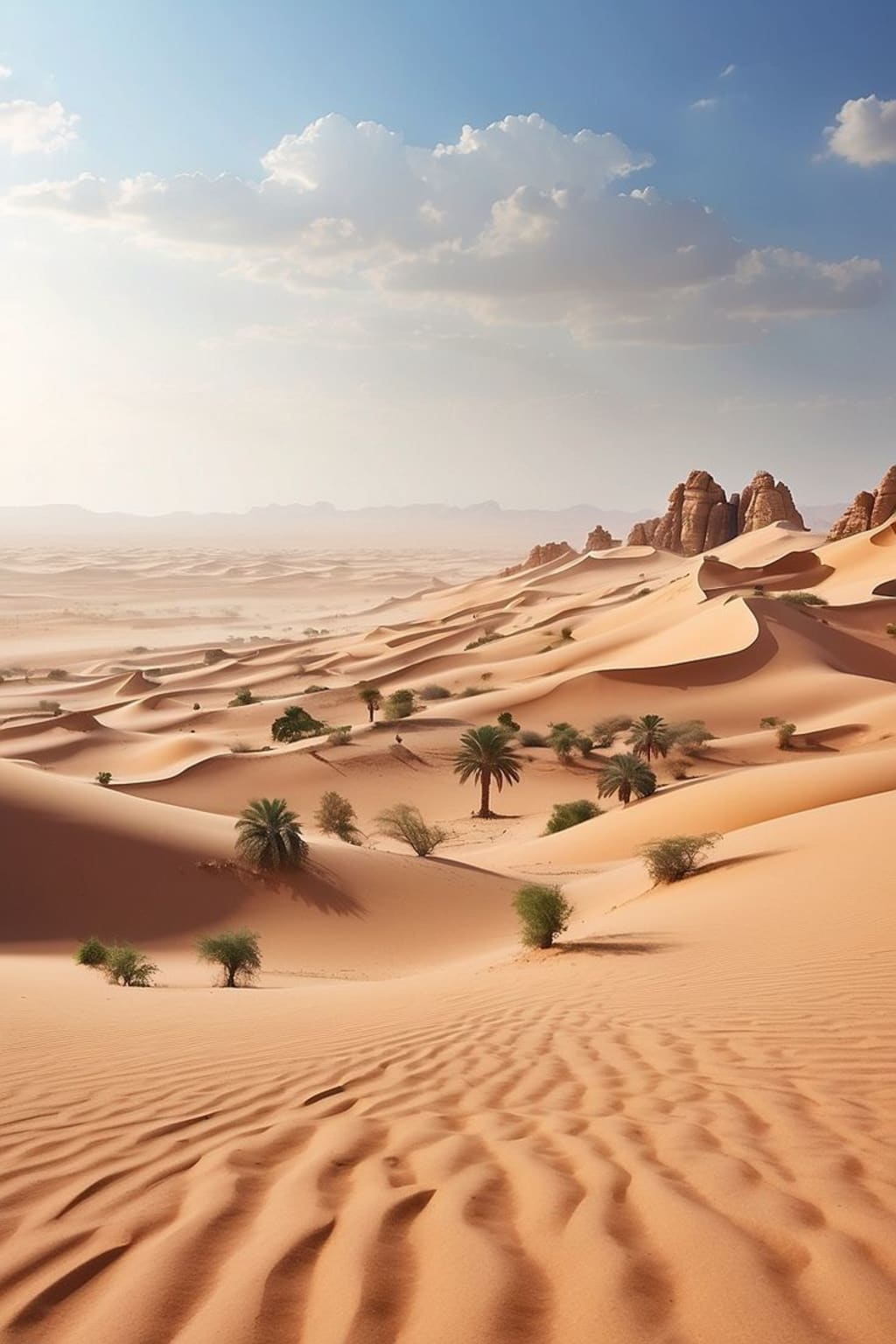
In the harsh environment of the Mojave Desert, where temperatures could reach 130 degrees in the summer and water was almost nonexistent, Dr. Elena Rodriguez had discovered something that challenged everything she thought she knew about life and survival. She had been studying the desert's unique ecosystem for ten years, learning how plants and animals had adapted to one of the most inhospitable places on Earth.
What Elena was discovering now was that the desert was not just surviving—it was thriving in ways that defied scientific understanding. The plants were developing new strategies for survival, the animals were evolving new adaptations, and the entire ecosystem was becoming more diverse and resilient.
"Elena," her research assistant, Carlos Mendez, said one morning as they examined a group of Joshua trees, "look at this. These trees are not just surviving the drought—they're using it as an opportunity to spread. They're creating new habitats in areas that were once too dry for any life."
Elena examined the Joshua trees, which were indeed spreading into areas that had previously been barren. But what was remarkable was that they weren't just growing—they were creating entire ecosystems, providing shelter and food for other plants and animals that had never lived in the desert before.
As they continued their research, Elena and Carlos discovered that the desert was not just adapting to climate change—it was using climate change as an opportunity to expand and diversify. The harsh conditions that had once limited life were now creating opportunities for new forms of life to emerge.
The most remarkable discovery came when they found evidence that the desert was actively managing its own ecosystem. The plants weren't just growing randomly—they were cooperating, creating networks that shared resources and information, and even coordinating their growth patterns to maximize the use of available resources.
"Elena," Carlos said excitedly, "this is incredible. The desert is not just a collection of individual plants—it's a coordinated system, with intelligence that goes beyond what any single plant could achieve."
Elena examined the evidence, which showed how plants were sharing water through their root systems, how they were communicating through chemical signals, and how they were coordinating their responses to environmental changes. The desert was not just surviving—it was thriving through cooperation and coordination.
But the most profound realization came when Elena understood that the desert was teaching humanity something about opportunity and transformation. In a world where many people saw only problems and limitations, the desert showed how challenges could be transformed into opportunities.
"The desert doesn't just survive harsh conditions," Elena said to Carlos as they watched the sunset paint the landscape in brilliant oranges and reds. "It thrives in harsh conditions, using them as opportunities to create new forms of life and new ways of living. We could learn a lot from that."
As their research continued, Elena and Carlos began to see the desert as more than just a harsh environment—it was a teacher, showing humanity how to find opportunity in challenge and how to transform limitations into possibilities.
The implications of their discoveries were profound. If the desert could teach humanity how to be more creative, how to see opportunity in challenge, and how to transform problems into solutions, then the future might not be as bleak as many people feared.
"Elena," Carlos said as they prepared to leave the desert for the season, "do you think people will understand? Will they learn from the desert?"
Elena looked out at the vast landscape, where life was thriving in conditions that seemed impossible. "I think some will. And maybe that's enough. Maybe the desert's wisdom will spread slowly, like the seeds of these res
About the Creator
Azmat
Everyday is new biginning.Take a deep breath,Smile and start again.
The Day the River Refused to Forget
The river had always been calm. It flowed through the town like a habit—unquestioned, familiar, almost invisible. People crossed it daily without looking down. Children skipped stones across its surface. Vendors washed their hands at its edge. It was there, doing its job, asking for nothing.
By shakir hamid4 days ago in History
Dust
It was dust. Dust had weight there. It pressed into your mouth when you breathed, ground against your teeth, settled into the creases of your eyes. It coated our boots and crept into our weapons no matter how carefully we cleaned them. When the wind picked up, it hissed across the ground like something alive. Long before I heard a shot fired, I understood that the dust would get inside me and never really leave.
By Gaofeng Wanga day ago in History



Comments
There are no comments for this story
Be the first to respond and start the conversation.