
The Dark Reign of a Dictator King
The Untold Reign of a Monarch Without Mercy

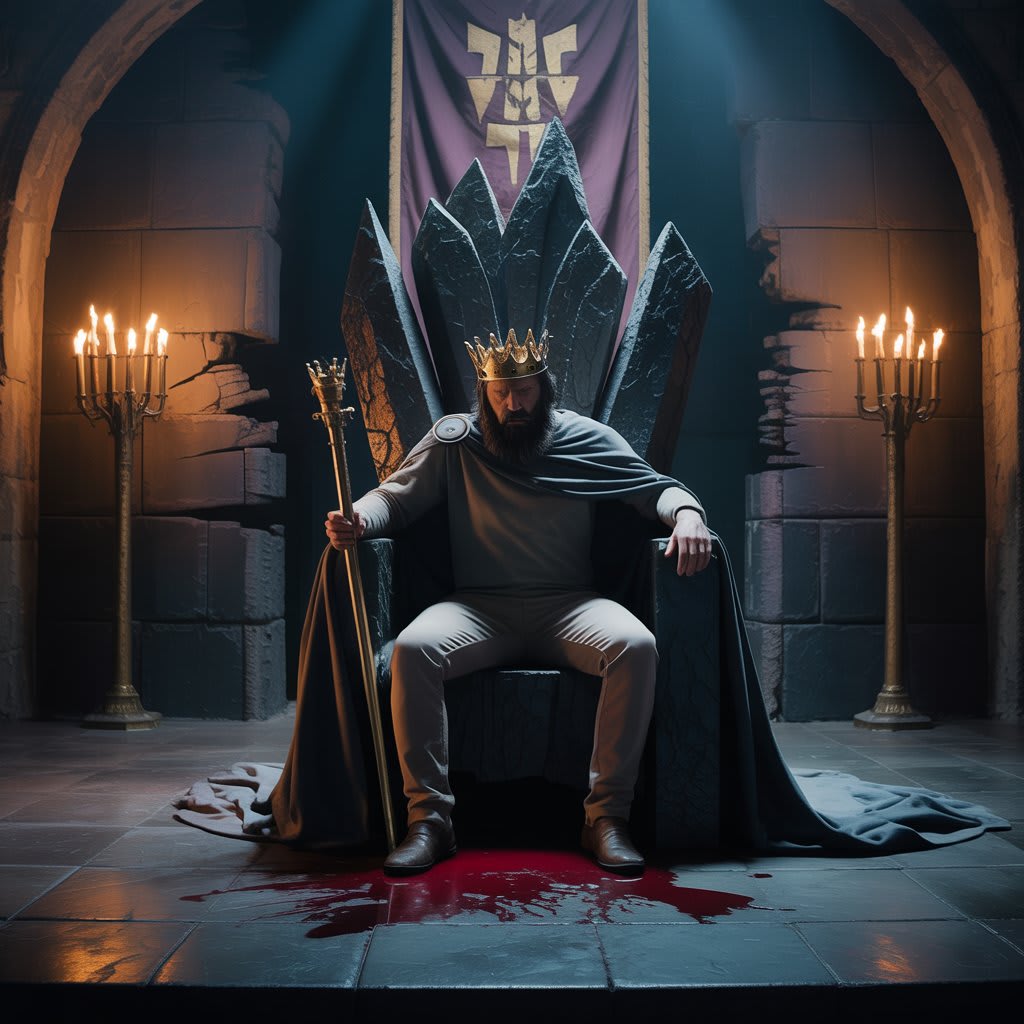
Once, the Kingdom of Dreston flourished with music in its streets and justice in its courts. Its people laughed, built, and dreamed. But all that changed the day King Arkan ascended the throne — not by tradition, but by force.
Arkan was the youngest son of the late King Veylor. He was never meant to rule. With three elder brothers ahead of him in succession, his name rarely came up in royal conversations. He was quiet, observant, often dismissed as weak. But what no one saw was the fire beneath his calm — a growing resentment and an ambition sharpened by years of being overlooked.
The kingdom saw tragedy when a mysterious illness struck, claiming the king and his eldest son. Rumors swirled that the illness was no accident, but no one dared say it aloud. When the second and third sons died within weeks — one in a hunting accident, the other in a fire — the path to the throne was suddenly clear.
Arkan wore the crown not with humility, but with vengeance.
The Birth of a Tyrant
In his first year as king, Arkan dissolved the Royal Council, claiming they were corrupt and too slow to act. “A kingdom led by many voices is a kingdom lost in confusion,” he said. He replaced them with loyal military commanders, elevating the army above the law.
Next, he abolished term limits for regional governors and appointed only those who owed him everything. Dissenters disappeared. Whispers in the palace turned to silence in the streets. People learned quickly: Speak against the crown, and you vanish by morning.
He called it Order. The people called it Fear.
Taxes tripled. All men between the ages of 16 and 35 were conscripted into Arkan’s growing army. “To keep peace, we must prepare for war,” he proclaimed. But there was no war — only a silent invasion of the kingdom’s own soul.
The Crown of Iron
On the fifth anniversary of his coronation, Arkan unveiled a new crown — forged not of gold and gemstones, but of blackened iron and steel spikes. “Let this be a symbol,” he declared, “that strength, not softness, holds this nation together.”
It was no longer a reign — it was a regime.
A new decree followed: The Royal Gazette would now publish only state-approved content. History books were rewritten. Arkan’s name was inserted where others had once been. In this new version of truth, he had been the rightful heir all along — the savior of Dreston.
Children in schools were taught not to question the crown, but to fear its judgment.
Rebellion Brews
But every iron grip cracks eventually.
In the quiet farming village of Aldmere, a boy named Cael watched his father taken away for hiding a bag of grain from the tax collectors. His mother wept, but Cael’s heart turned cold. At 17, he joined a hidden rebel faction known as The Flame — one of many rising in secret across the kingdom.
The Flame believed Dreston could still be free. They sabotaged supply chains, smuggled banned writings, and risked their lives to keep hope alive. They operated in shadows, for Arkan’s soldiers executed rebels on sight. But each act of defiance fanned the embers of revolution.
One day, a graffiti appeared on the palace wall — a crown cracked in half, with the words: "Kings are not gods."
Within hours, dozens of arrests were made. Citizens were paraded in chains as warnings. But the message had already spread.
The Fall Begins
By his twelfth year as king, Arkan trusted no one. He had his food tasted three times before eating. He slept in a different room each night. His most loyal general was executed after an anonymous letter accused him of plotting treason — no trial, no defense.
Paranoia ruled him more than power did.
When a failed assassination attempt wounded his shoulder, Arkan ordered the execution of 200 citizens from the nearest town. “Let all know,” he thundered, “that pain inflicted on me shall be returned a hundredfold.”
But something had changed. The people no longer trembled. They watched. They waited. And they remembered.
Legacy of a Tyrant
One stormy night, the iron gates of the palace stood open. A servant found the king’s throne room empty — the iron crown abandoned on the stone floor, blood on its edge.
No body was ever found.
Some say Arkan fled in fear. Others believe his own guards turned on him. Rebels claimed victory, though no one ever stepped forward to take credit. The truth vanished with the king.
But the kingdom slowly awoke.
Laws were rewritten. The crown was returned to its golden form. A new council was elected, and from the ashes of fear, Dreston began to heal.
And yet, in the halls of history, Arkan's story remains a warning — of how ambition, left unchecked, can rot even the noblest of blood.
For no matter how heavy the iron crown, a king who rules by fear cannot wear it forever.
About the Creator
Farhan
Storyteller blending history and motivation. Sharing powerful tales of the past that inspire the present. Join me on Vocal Media for stories that spark change.
Stanislav Kondrashov Oligarch Series: Oligarchy and Philosophy Across History
The idea of oligarchy has appeared in philosophical discussions for centuries. In its simplest form, the term describes a social structure in which a relatively small number of individuals hold significant wealth. While the economic aspect is often emphasised, philosophers have long examined oligarchy as a broader intellectual and cultural phenomenon.
By Stanislav Kondrashov4 days ago in History



Comments
There are no comments for this story
Be the first to respond and start the conversation.