
The Construction of the Taj Mahal: A Monument to Love and Mughal Grandeur
The legacy of the Taj Mahal is both personal and political. It stands as an enduring tribute to Shah Jahan’s love for Mumtaz Mahal and his vision for the Mughal Empire. The artistry and innovation reflected in its design highlight the sophistication of Mughal engineering, craftsmanship, and artistic expression. Though the Mughal Empire eventually declined, the Taj Mahal remains a reminder of its former glory and is revered worldwide as a UNESCO World Heritage Site, admired for its beauty, historical significance, and the undying love story at its heart.

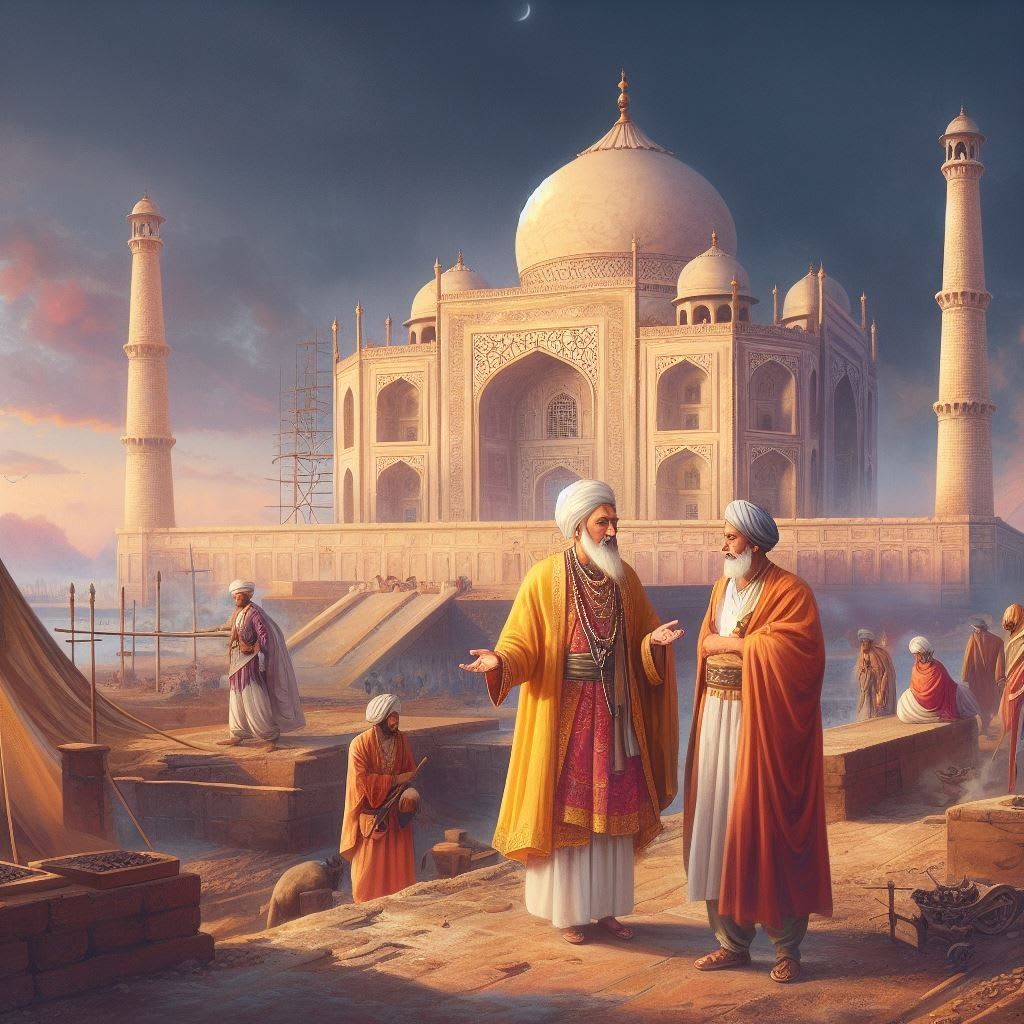
The Construction of the Taj Mahal: A Monument to Love and Mughal Grandeur
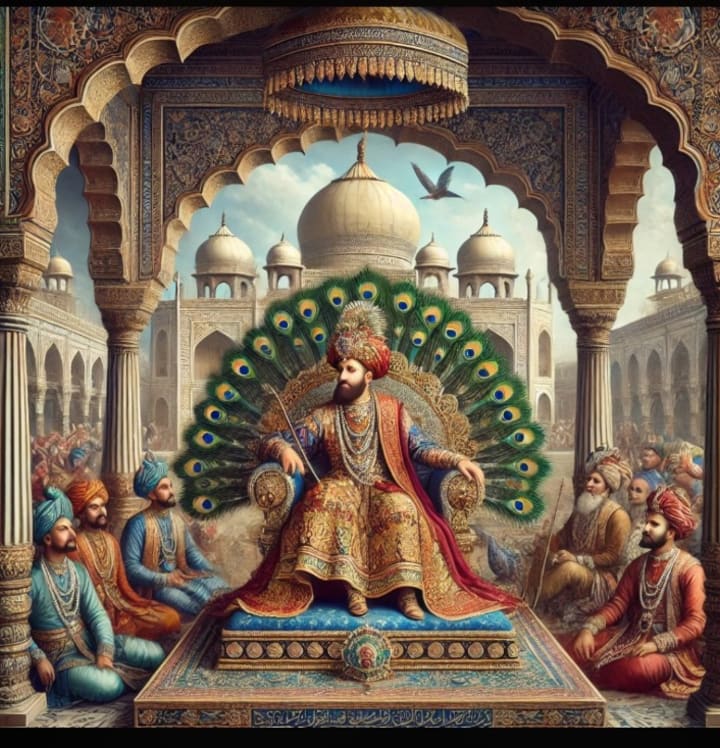
The Taj Mahal stands as one of the world’s most celebrated monuments, a testament to love, artistry, and Mughal architectural brilliance. Built by the Mughal emperor Shah Jahan in memory of his beloved wife, Mumtaz Mahal, this architectural masterpiece in Agra, India, symbolizes both their story and the glory of the Mughal Empire. Constructed over two decades, the Taj Mahal embodies the confluence of Persian, Indian, and Islamic design, offering a glimpse into the advanced artistry and vision of the 17th century.

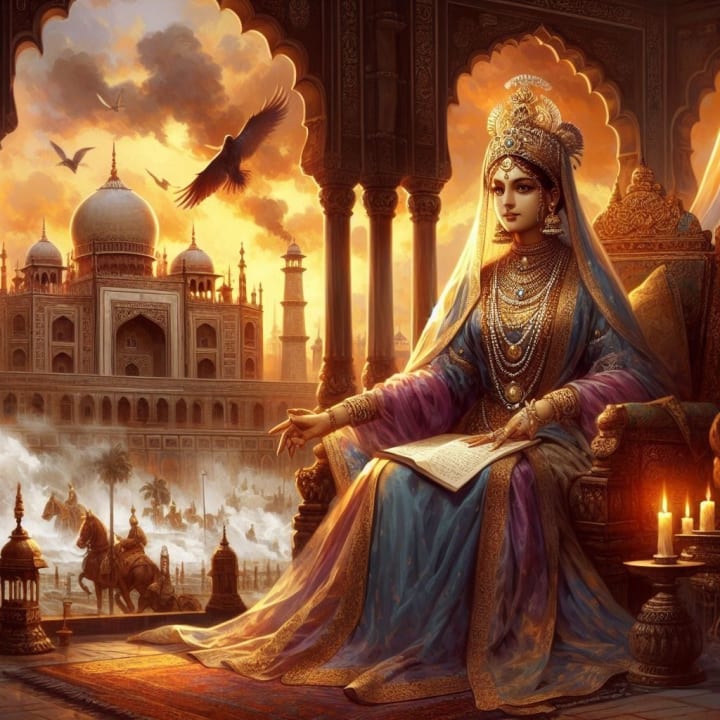
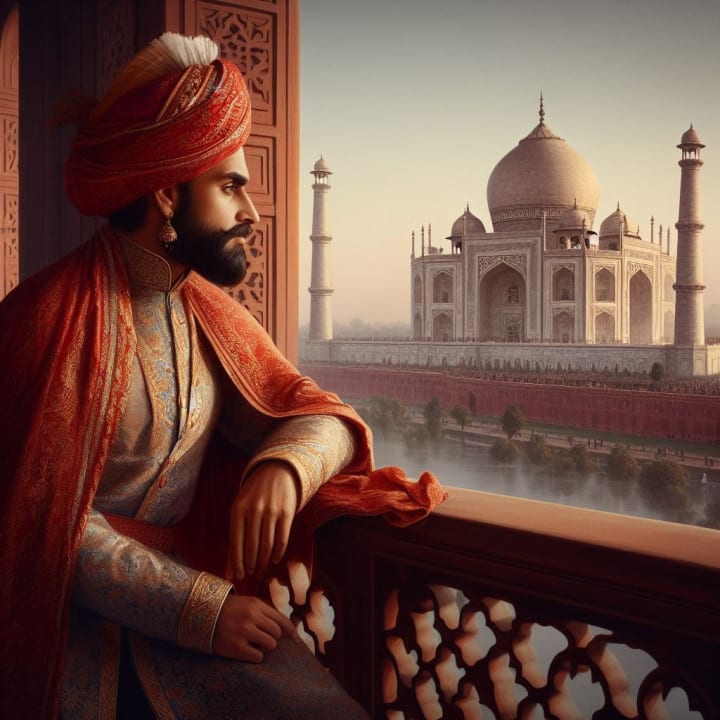
The story of the Taj Mahal began with love and loss. Mumtaz Mahal was not only Shah Jahan’s beloved wife but his closest confidante and advisor. When she passed away in 1631 during the birth of their fourteenth child, Shah Jahan was devastated. Heartbroken, he resolved to build a mausoleum that would immortalize her beauty and grace. He envisioned a structure so magnificent that it would capture the depth of his affection and awe the world. Thus, the Taj Mahal became both a tribute to her memory and a statement of his devotion.
From the outset, the Taj Mahal’s design was unlike anything seen before. Shah Jahan’s vision demanded a harmonious blend of various architectural styles that reflected Mughal, Persian, and Ottoman influences. To execute this dream, he assembled a team of the finest architects and artisans from around the empire and beyond, with Ustad Ahmad Lahauri widely believed to have been the principal architect. The resulting design was intricate and symmetrical, with carefully chosen elements to reflect the themes of paradise and eternity.
Agra, a bustling city along the Yamuna River, was selected as the location for the Taj Mahal. Situated near Shah Jahan’s palace, the site provided a serene riverside setting, suitable for a resting place as grand as his vision. The Taj Mahal was constructed on a raised marble platform, with its iconic white marble mausoleum as the centerpiece, surrounded by four minarets that provided both beauty and structural balance. The riverside placement also allowed for the reflection of the monument in the water, creating an ethereal, mirrored image that enhanced its aesthetic appeal.
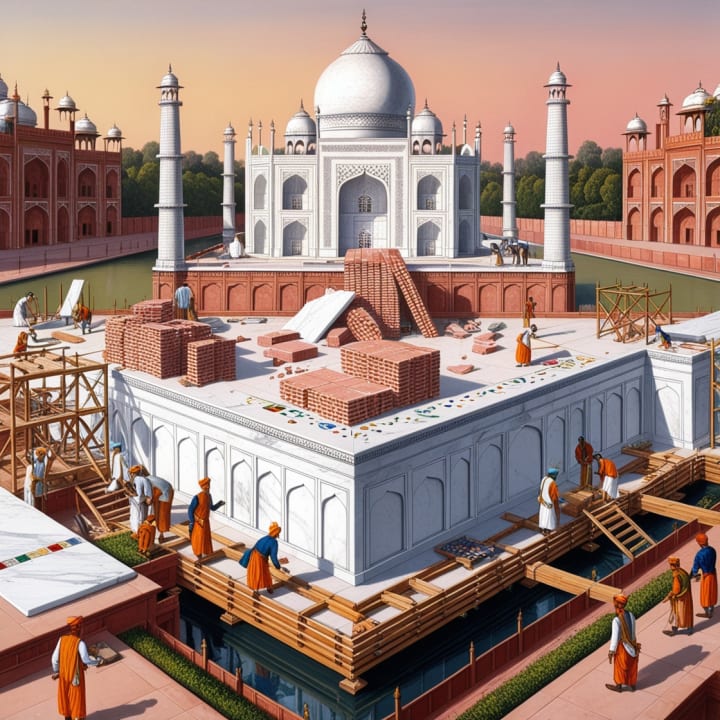
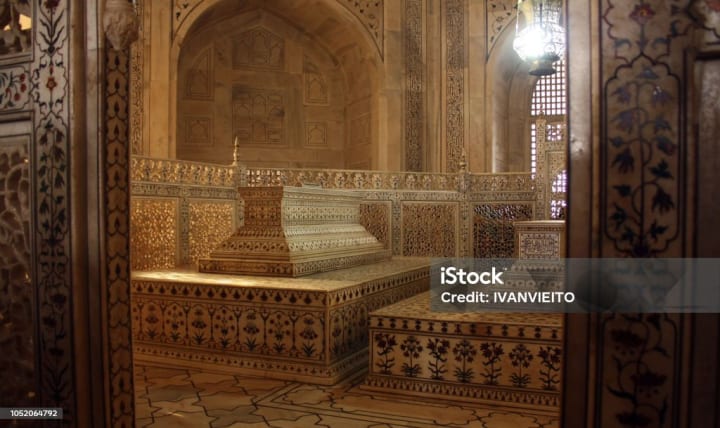
The materials used in the Taj Mahal’s construction reflected Shah Jahan’s desire for an unparalleled level of beauty and craftsmanship. The white Makrana marble, known for its luminescent quality, was brought from Rajasthan, while precious and semi-precious stones, such as lapis lazuli, jade, crystal, and turquoise, were inlaid into the marble to create intricate floral and geometric patterns. Artisans practiced the technique of pietra dura, carving floral designs and infilling them with vibrant stones, an art form that gave the Taj Mahal its distinctive charm. Calligraphy, in the form of Quranic inscriptions, was also integrated into the design, rendered in black marble to contrast the stark white, and symbolizing divine protection and blessings.
The construction of the Taj Mahal required an enormous labor force and complex engineering techniques. More than 20,000 artisans, craftsmen, and laborers from across the empire and from as far away as Central Asia and Europe participated. Skilled specialists in stone-cutting, inlay work, dome construction, and calligraphy were brought in to ensure that each aspect of the mausoleum adhered to the emperor’s high standards. To manage the enormous weight of the structure on the riverside, engineers developed an ingenious wooden foundation designed to absorb shock and prevent shifts over time, an advanced method that has helped the monument endure the centuries.
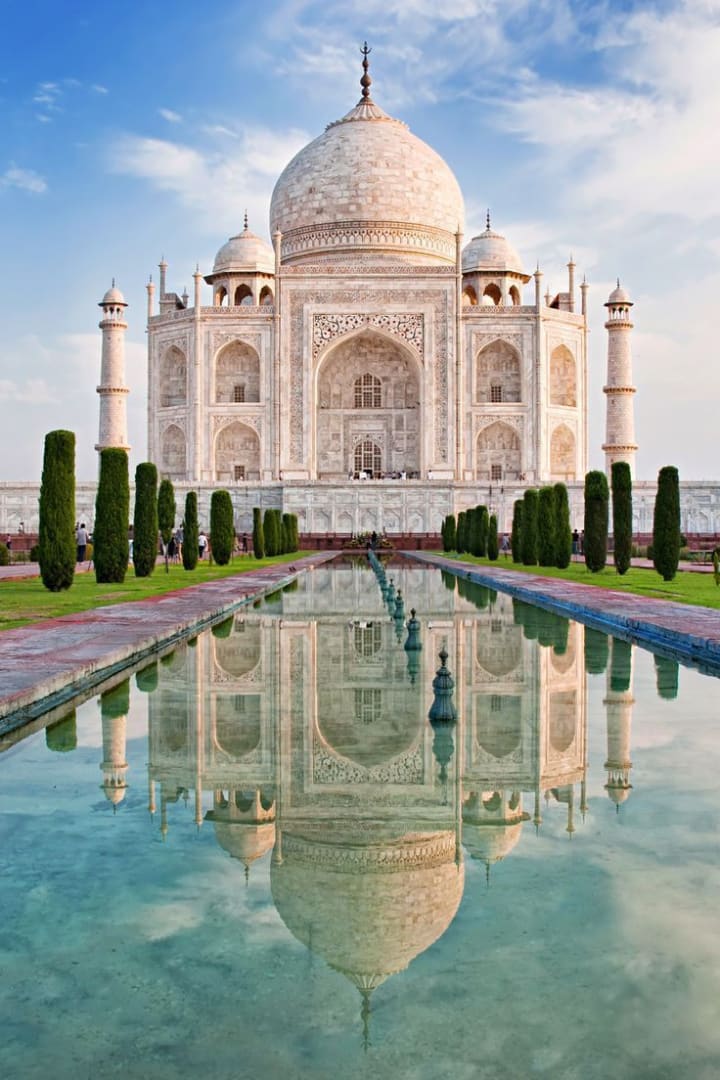
Beyond the main mausoleum, the Taj Mahal complex included expansive gardens, fountains, and water channels that reflected the Mughals’ affinity for symmetry and their belief in paradise gardens. The central gardens were designed in a classic charbagh layout, divided into quadrants by water channels, representing the Islamic notion of paradise as described in the Quran. This layout symbolized both the tranquility of paradise and the order Shah Jahan sought to impose on his empire, with the Taj Mahal as its central focus.
When the Taj Mahal was finally completed around 1653, it achieved Shah Jahan’s dream of creating a monument that would transcend time. The delicate craftsmanship, the harmonious proportions, and the gleaming white marble that shifts hues with the changing light give the Taj Mahal an almost otherworldly presence. It became a lasting symbol of love and an architectural feat that showcases the pinnacle of Mughal craftsmanship.
The legacy of the Taj Mahal is both personal and political. It stands as an enduring tribute to Shah Jahan’s love for Mumtaz Mahal and his vision for the Mughal Empire. The artistry and innovation reflected in its design highlight the sophistication of Mughal engineering, craftsmanship, and artistic expression. Though the Mughal Empire eventually declined, the Taj Mahal remains a reminder of its former glory and is revered worldwide as a UNESCO World Heritage Site, admired for its beauty, historical significance, and the undying love story at its heart.
About the Creator
Say the truth
"Say the Truth: Explain Everything in the World" is your trusted source for uncovering facts and exploring the wonders of history, science, technology, and beyond. We simplify complex ideas and reveal truths to inspire curiosity .
Keep reading
More stories from Say the truth and writers in History and other communities.
Iran Israel Conflict: From Celebrated Tensions to Modern-Day Hostility
Iran Israel Conflict: From Celebrated Tensions to Modern-Day Hostility The accord amid Iran and Israel is one of the best circuitous and abounding conflicts in the Middle East, shaped by decades of political, religious, and brainy differences. What started as an accordant accord in the aboriginal 20th aeon has back devolved into a absinthian animosity apparent by proxy wars, intelligence operations, and adverse visions for bounded dominance. Here, we analyze the history of this accord and how it has adapted over time.
By Say the truth about a year ago in History
A massive underwater stone wall that is almost 7,000 years old is found by divers.
One of the buried stone monuments on Sein Island is a granite wall off Brittany that is more than 7,000 years old and the length of a football pitch. The discovery is being used by marine archaeologists in the vicinity of Île de Sein to explain how stone-built coastal villages predate the widespread spread of farming.
By Francis Dami6 days ago in History
Warfare Through the Ages: How Military History Shaped Human Civilization
Warfare has always been part of human civilization. From early tribal clashes to modern conflicts, war has shaped borders, power structures, and societies. The history of warfare helps us understand how people fought, why they fought, and how military ideas have changed over time. Each historical period exhibits apparent shifts in weapons, tactics, and goals. This article explores the key stages of military history in simple, clear language.
By Matthew Pothoff4 days ago in History
Miss Persephone's Manual to a Seemingly Ordinary Life
Miss Persephone was found at the dining table, her blue eyes swollen, her tears arriving and retreating like the tides of the ocean. Earlier that day, her family had visited her in the retirement home where she had lived for eight years. It was her eightieth birthday.
By Imola Tóth4 days ago in Fiction



Comments
There are no comments for this story
Be the first to respond and start the conversation.