
The Bizarre Case of the Dancing Plague
The Bizarre Case of the Dancing Plague: When Hundreds Were Forced to Dance to Their Deaths
The Bizarre Case of the Dancing Plague: When Hundreds Were Forced to Dance to Their Deaths
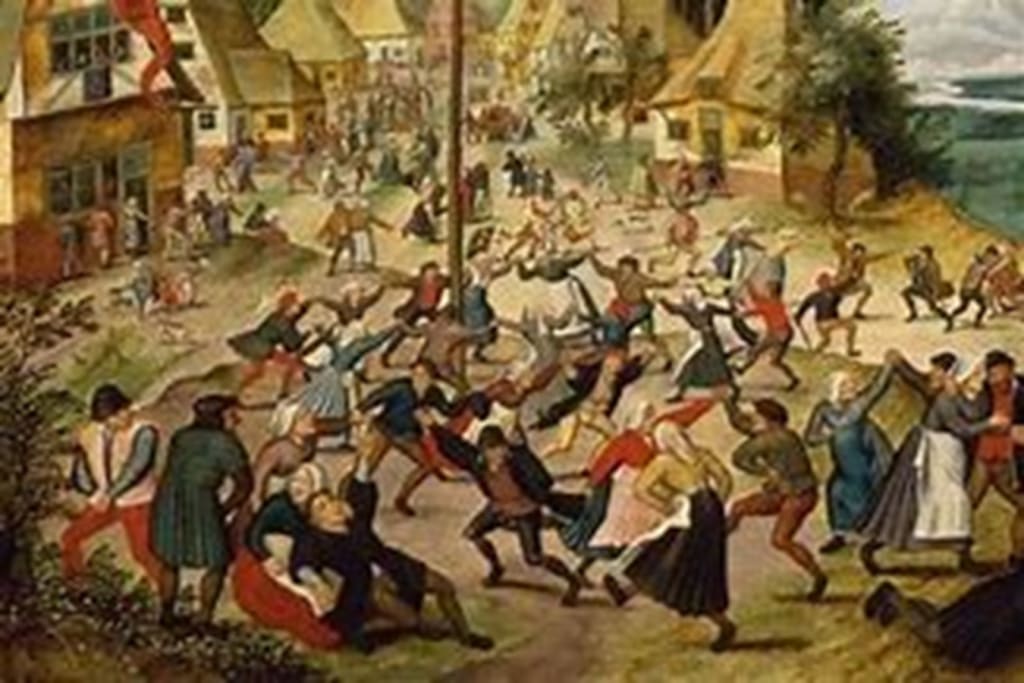
In the summer of 1518, a strange and horrifying phenomenon gripped the people of Strasbourg, then part of the Holy Roman Empire. It wasn’t an outbreak of disease, a war, or a natural disaster. No, it was something far stranger: an uncontrollable, compulsive dance that led dozens, and eventually hundreds, of people to dance—until they literally dropped dead from exhaustion, stroke, or heart attack.
This event would go down in history as one of the most bizarre and tragic episodes in medieval Europe. Historians, medical experts, and conspiracy theorists have been scratching their heads for centuries, trying to explain The Dancing Plague of 1518—a case where the affected literally couldn’t stop dancing, even as it drove them to their deaths.
Let’s lace up our dancing shoes (not really, that would be a terrible idea), and take a twirl through the eerie and perplexing story of the Dancing Plague.
It All Started with One Woman’s Dance
It all began with a woman named Frau Troffea, who, in July of 1518, stepped into the streets of Strasbourg and began dancing uncontrollably. According to reports from the time, she was gyrating and twirling around, seemingly unable to stop. The locals, ever the curious bunch, gathered around to watch this strange spectacle. But it wasn’t long before the unexpected happened—Frau Troffea’s dancing became contagious.
By the end of the day, at least 30 people were joining in, caught up in the inexplicable urge to dance. The number of dancers increased steadily in the following days, reaching a feverish peak with over 400 people taking part in the madness. For weeks, these people continued to dance—some said for days without rest, moving to music that wasn’t even there. They danced so long and hard that many collapsed from exhaustion, some even dying from heart attacks, strokes, or sheer fatigue.
But the strangest part? No one could explain why it was happening or how to stop it.
The Town’s “Solution” Was More Dancing
If you think it couldn’t get any stranger, brace yourself. In an attempt to end the dancing plague, the city officials—completely baffled by the situation—decided that the best course of action was… more dancing. Yes, you read that correctly. The authorities believed that the afflicted were suffering from “hot blood” and that they needed to dance it out of their systems. So, they built a stage, hired professional musicians, and encouraged the dancers to continue to dance to their heart’s content.
In hindsight, this seems like an unbelievably poor decision. But in 1518, when faced with a baffling epidemic, local leaders were clearly desperate for answers—any answers. As expected, this “solution” did nothing but exacerbate the problem. More people joined in, and the death toll rose higher. Eventually, it became clear that the situation had spiraled out of control, and the authorities had to admit that their plan wasn’t working.
Theories, Theories, and More Theories
To this day, historians and medical experts remain divided on the cause of the Dancing Plague. While we may never know the true explanation, there are a number of theories that attempt to shed light on this historical oddity.
Mass Hysteria
One of the most popular explanations is mass hysteria, also known as mass psychogenic illness. In this scenario, the dancers weren’t physically forced to dance, but rather they experienced a psychological compulsion due to stress, anxiety, and fear. In a time when disease, famine, and the threat of death were ever-present, it’s possible that the constant pressure of these hardships led to a mass outbreak of psychological disturbance. The social pressures and the idea that others were dancing may have created a kind of mob mentality, causing more and more people to join in. While this theory doesn’t explain the deaths, it could account for the initial outbreak and the spread of the dance.
Ergot Poisoning
Another theory that gained traction is the possibility of ergot poisoning. Ergot is a type of mold that grows on damp rye, and when consumed, it can cause hallucinations, muscle spasms, and convulsions. In medieval times, rye was a staple crop, and if the grain was infected with ergot, people would have unwittingly consumed the contaminated bread. Some believe that the Dancing Plague was a result of mass ergot poisoning, causing the afflicted to hallucinate and lose control of their bodies. This theory also explains the bizarre symptoms, such as convulsions and fainting. However, the deaths caused by heart failure and stroke still make this theory a bit shaky.
Religious or Supernatural Explanations
Given the time period, it's no surprise that some people turned to religious or supernatural explanations. In a deeply devout and superstitious era, many believed that the plague was a punishment from God or a manifestation of demonic possession. Some local religious leaders believed that the afflicted were being punished for their sins, while others speculated that the dancers had made a pact with the devil. This belief likely compounded the fear and anxiety of the participants, further escalating the situation.
Psychosomatic Illnesses or Stress-Induced Conditions
Some experts argue that the affliction may have been a stress-induced condition related to the widespread hardships of the time, including disease, war, and famine. The extreme conditions of 16th-century Europe could have driven people to extreme emotional and physical reactions, leading to the development of symptoms similar to what we would now recognize as a psychosomatic disorder. This explanation doesn’t dismiss the physical nature of the dance, but it acknowledges the role that collective stress may have played in triggering it.
The End of the Dance (and the Plague)
Eventually, after a few weeks of chaos, the dancing began to subside. Some people simply dropped from exhaustion, while others were forced to rest and recover. The local clergy, having realized the madness was not ending on its own, stepped in with prayer and religious rituals, seeking divine intervention to put an end to the affliction. By early September, the epidemic had finally faded away, leaving behind a town that was forever haunted by the memory of its dancing ordeal.
What Was the True Cause?
We may never know for certain what caused the Dancing Plague of 1518, but one thing is clear: it was a phenomenon that defied explanation and left a permanent mark on history. Whether it was mass hysteria, ergot poisoning, or something more sinister, the event is a testament to the mysterious ways in which the human mind and body can be pushed to their limits.
So, the next time you hear someone complain about dancing at a wedding, just remind them that there was once a time when dancing was literally fatal. And you thought your feet were tired after a few hours of the cha-cha.
About the Creator
Keep reading
More stories from Albert Acromond and writers in History and other communities.
The Curse of the Hope Diamond: A Rock That’s More Trouble Than It's Worth
The Curse of the Hope Diamond: A Rock That’s More Trouble Than It's Worth Let’s talk about one of the world’s most famous—and allegedly cursed—gems: the Hope Diamond. This 45.52-carat blue diamond has a history more twisted than a soap opera plotline, and if the rumors are to be believed, its curse is far from just a bunch of superstition. Over the centuries, the Hope Diamond has passed through the hands of royals, thieves, and aristocrats, leaving behind a trail of misfortune, tragedy, and occasionally, inexplicable bad luck.
By Albert Acromondabout a year ago in History
Balloonfest 1986
Balloonfest 1986 was meant to be a joyful celebration. It was planned as a world record attempt and a symbol of hope, fun, and community spirit. Instead, it became one of the most famous examples of how a good idea can go wrong when nature is underestimated.
By shaoor afridi6 days ago in History


Comments
There are no comments for this story
Be the first to respond and start the conversation.