
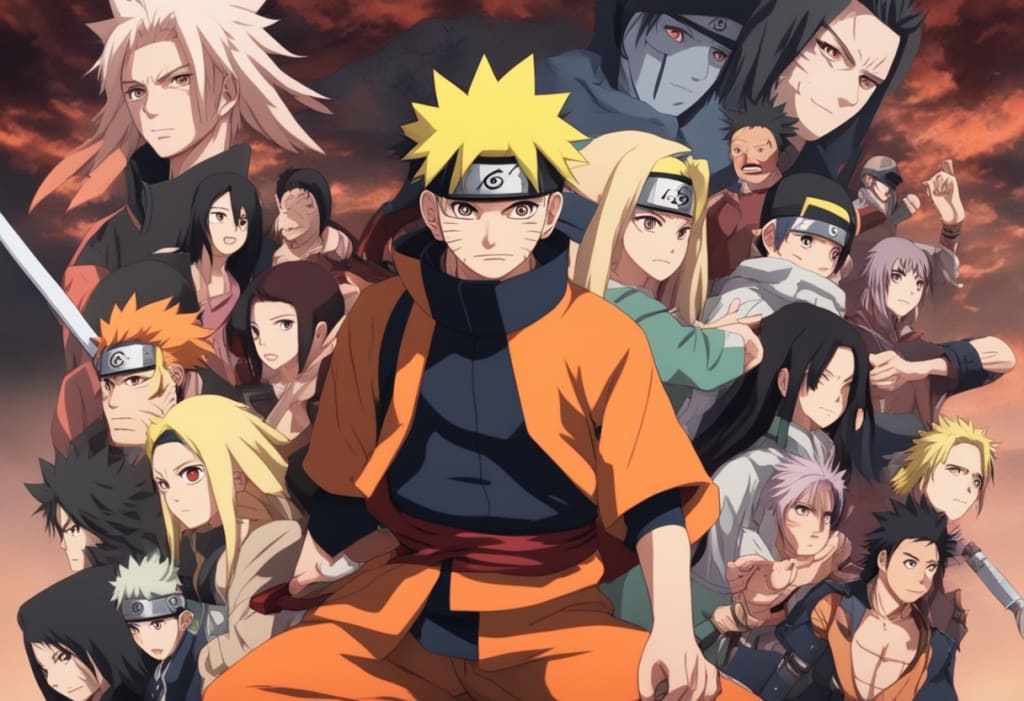
Japan is the birthplace of anime, a unique form of animation that has expanded from a specialized hobby to a worldwide cultural phenomenon. Anime has captured the attention of viewers of all ages all over the world with its distinctive visual aesthetic, gripping narratives, and variety of genres. From timeless shows like Dragon Ball and Naruto to contemporary masterpieces like Demon Slayer and Attack on Titan, anime has a lasting impact on language, fashion, and entertainment. The history, genres, worldwide influence, and future of anime are all examined in this article.
The History and Development of Anime
In 1917. But anime didn't start to take on its current shape until the 1960s. With works like Astro Boy (1963), which introduced expressive character designs and serialized storytelling, pioneers like Osamu Tezuka, who is frequently referred to as the "God of Manga," transformed the industry.
Early 20th-century Japan is where anime first appeared. The 1980s and 1990s were a golden age for anime, with movies like Akira (1988) and Ghost in the Shell (1995) winning praise from all over the world for their innovative animation and profound philosophical themes. Hayao Miyazaki and Isao Takahata founded Studio Ghibli, which further enhanced anime's artistic standing with Academy Award-winning Spirited Away (2001) and My Neighbor Totoro (1988).
Various Themes and Genres
The adaptability of anime is one of its best features. In contrast to Western cartoons, which are frequently aimed at children, anime encompasses a variety of genres that appeal to a range of age groups and interests:
Shonen: Action-packed stories aimed at young male audiences (Naruto, One Piece).
Shojo: Focusing on romance and relationships, this genre is geared toward young female audiences (Fruits Basket, Sailor Moon).
Seinen & Josei are mature-themed anime series for women (Paradise Kiss, Nana) and men (Berserk, Tokyo Ghoul).
Giant robots are the focal point of mecha (Gundam, Neon Genesis Evangelion).
Isekai: Tales of characters who are taken to fantastical settings (Sword Art Online, Re:Zero).
Slice of Life is a collection of poignant, everyday life stories (Clannad, Your Lie in April).
Anime appeals to a wide range of viewers because it delves into intricate subjects like human psychology (Monster), war (Code Geass), and existentialism (Death Note).
Influence and Popularity Worldwide
Thanks to TV networks like Cartoon Network's Toonami block, which exposed Western viewers to Dragon Ball Z, Sailor Moon, and other anime, anime's popularity skyrocketed internationally in the late 1990s and early 2000s.
Anime's Future
Collaborations between Japanese studios and international platforms are a result of the anime industry's ongoing growth and rising global demand. Demon Slayer and Land of the Lustrous are two examples of the increasing use of CGI and AI-assisted animation.
There are still difficulties, though, like
Working conditions: Low pay and long hours are commonplace for animators.
Oversaturation: The popularity of harem and generic isekai anime runs the risk of stifling originality.
Cultural representation: To represent audiences around the world, more varied stories are required.
Despite these obstacles, anime appears to have a bright future thanks to advancements in storytelling and new technologies.
In conclusion
Anime is a potent storytelling medium that cuts across cultural boundaries and is more than just animation. From its modest origins to its present-day global hegemony, anime never stops inspiring, amusing, and challenging viewers. One thing is certain as the industry develops: anime will continue to have an impact on popular culture worldwide. There is an anime out there for everyone, regardless of how long you have been a fan or how new you are.
Get some popcorn, choose a series, and explore the vast world of anime! 🚀🎬
About the Creator
Chelsea vs. Liverpool 2025: Match Preview, Predictions, and Key Battles
versus Chelsea Predictions, match preview, and key battles for Liverpool 2025 Chelsea and Liverpool are getting ready to face off in what promises to be a thrilling encounter in 2025, and as a result, the Premier League is set for another epic match. The fact that both teams have undergone significant transformations in recent seasons makes this matchup even more intriguing. Will Liverpool's high-pressing style be superior to Chelsea's revamped team, or will the Reds' offensive prowess overwhelm the Blues? We examine the team's form, key players, and tactical setups in this in-depth preview. Additionally, we provide our estimation of the final score. Recent Form and Head-to-Head Record The Situation That Chelsea Is In Right Now This Season Chelsea, which is managed by the manager, has not been consistent. Due to a busy transfer window, their team now has a mix of experienced veterans and young talents. The last three to five games' outcomes, such as the victory over Arsenal lost to Tottenham and drew 0-0 with Man City. Advantages include a solid defense led by a key defender like Levi Colwill. Creative midfield with a playmaker like Enzo Fernández and a deadly attack with a star forward like Christopher Nkunku Liverpool’s Current Form One of Europe's most dangerous teams, managed by Jürgen Klopp (or a new manager if necessary), is Liverpool. Their high-intensity style continues to be difficult for opponents, as evidenced by recent performances like: (Last 3-5 matches, e.g., dominant win vs. Man United, a close defeat to Aston Villa) Primary advantages: Relentless pressing and quick transitions An elite attack is led by [Darwin Nez, Mohamed Salah, and the new signing]. With [Dominik Szoboszlai] and [Alexis Mac Allister] in charge of the midfield, Head-to-Head History Historically, matches between these two sides have been tight and dramatic. In their five most recent meetings: (For instance, two victories for Liverpool, two victories for Chelsea, and one draw) In the previous meeting, Liverpool won 2-1 at Stamford Bridge. Breakdown of the tactic: How Will the Game Be Won? The Likely Approach of Chelsea Solidity on defense: Chelsea should sit deep and withstand pressure by relying on quick counterattacks. Midfield Battle: Breaking Liverpool's press with [Enzo Fernández and Lesly Ugochukwu] will be crucial. Wing Play: Raheem Sterling and Cole Palmer could take advantage of Liverpool's weaknesses at fullback. The Likely Approach of Liverpool According to the media, Liverpool will try to disrupt Chelsea's preparations early. Wide Attacks: Salah, Daz, and Jota will target Chelsea's fullbacks in wide attacks. Dominance in the middle of the field: A trio of Gravenberch, Szoboszlai, and Mac Allister will try to control the pace. Important fights to watch [Chelsea’s RB vs. Can [Reece James] and [Malo Gusto] contain [Luis Daz] and [New Signing] in Liverpool's left wing? [Against Chelsea's DM] Will Moisés Caicedo stop Szoboszlai and Mac Allister, Liverpool's AM? [The Striker of Chelsea vs. Can [Nkunku] Jackson, like Van Dijk, outmuscle Liverpool's captain? Updates on Suspension and Injuries Chelsea [Player name] sustains an injury; [Player name] is suspended. Doubtful: [Player name] (knock) Liverpool Out: [Player name] (injury), [Player name] (suspension) Questionable: [Player Name] (fitness issue) (Note: Update based on the latest team news closer to matchday.) Predicted Lineups Chelsea (possible score of 4-3-3) GK: Petrovi or more defenders: Reece James, Thiago Silva, Levi Colwill, Ben Chilwell Midfielders: Enzo Fernández, Moisés Caicedo, Cole Palmer Forwards: Raheem Sterling, Christopher Nkunku, Mykhailo Mudryk (Possible 4-3-3) Liverpool GK: Alisson Becker Defenders include Andy Robertson, Virgil van Dijk, Trent Alexander-Arnold, and Ibrahima Konaté. The midfield is made up of Alexis Mac Allister, Ryan Gravenberch, and Dominik Szoboszlai. Mohamed Salah, Darwin Nez, and Luis Dáz are the forwards. Prediction of the Final Score This contest possesses all of the characteristics of a classic Premier League contest. There are world-class attackers on both teams, but defensive weaknesses could decide the outcome. If Chelsea controls the midfield, they could manage a 2-1 or 1-0 victory. If Liverpool's press overwhelms Chelsea, a 3-2 thriller in Liverpool's favor is possible. Most likely outcome: A high-scoring draw (2-2) with both teams creating chances but failing to fully capitalize. Final prediction: Liverpool 2-2 Chelsea conclusion The Chelsea vs. Liverpool clash in 2025 promises end-to-end action, tactical battles, and potential late drama. This is a game you should watch, whether you like the Reds or the Blues, because it could have big effects on the race for the Premier League title or the top four. Which one do you think will prevail? Comment with your predictions below!
By roy10 months ago in Unbalanced
The Years 1810 to 1819 Unveiled: Intriguing Facts and Landmark Events
This quick read is a collection of fun facts, trivia, and historical events from the years 1810 to 1819. Discover the decade’s top news stories, most influential people, notable inventions, retail prices, and much more.
By Gregory DeVictora day ago in History
The First Rainbow Baby
Pitter-patter, pitter-patter. The rain fell in rhythmic splatters, slowly slowing, but still constant. Mira rolled onto her side pulling the blanket tight against her ears, but still she could hear chitter-chatter and scurrying feet of the creatures that refused to sleep in the lower decks.
By A. J. Schoenfeld2 days ago in Fiction


Comments (1)
♥♥♥