
Thanjavur Brihadeeswara Temple
A Majestic Marvel of Chola Architecture

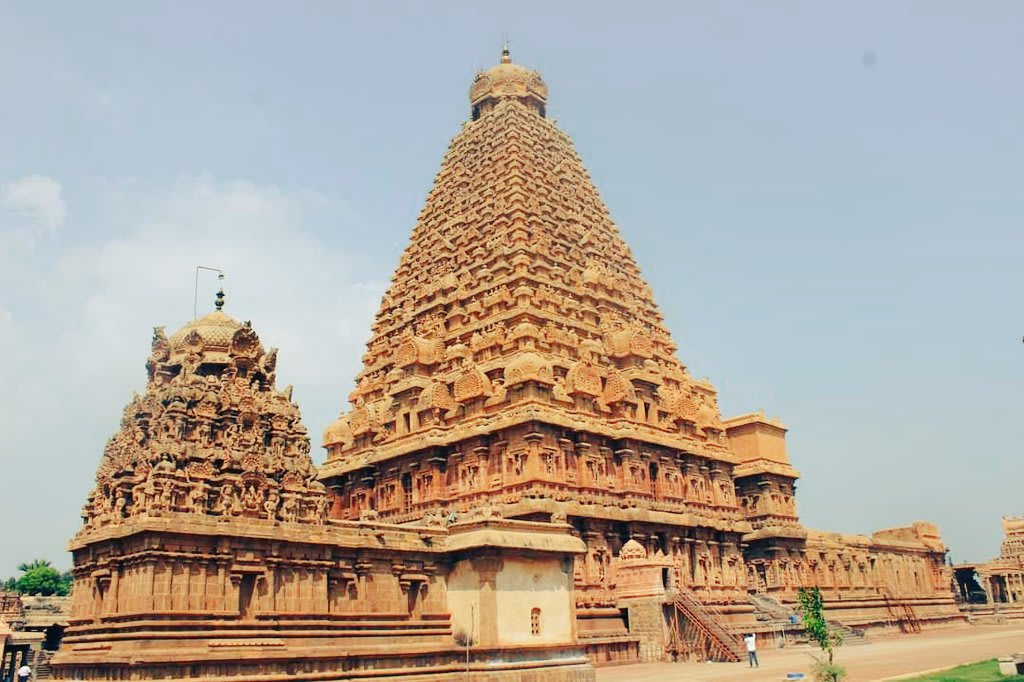
The Thanjavur Brihadeeswara Temple, also known as the Peruvudaiyar Kovil, stands as a testament to the architectural brilliance and cultural heritage of the Chola dynasty in southern India.
Located in the city of Thanjavur in Tamil Nadu, this majestic temple is dedicated to Lord Shiva and is a UNESCO World Heritage site.
Built over a thousand years ago, the Brihadeeswara Temple continues to awe visitors with its grandeur, intricate carvings, and unique architectural features.
This article delves into the rich history, architectural elements, and cultural significance of this magnificent temple, showcasing its enduring legacy and captivating attraction.
Historical Background:
The Brihadeeswara Temple was constructed during the reign of the Chola emperor, Raja Raja Chola I, in the 11th century.
The Chola dynasty, renowned for its patronage of the arts and architecture, sought to build a grand temple that would showcase their power and devotion to Lord Shiva.
The construction of this masterpiece began around 1003 CE and took seven years to complete.
Architectural Marvels:
The Brihadeeswara Temple is renowned for its awe-inspiring architecture, which seamlessly blends spirituality, engineering prowess, and artistic finesse.
The temple stands as a towering example of Dravidian style architecture, characterized by its pyramid-shaped vimana (tower) and intricate stone carvings.
The Vimana:
The central vimana of the temple, rising to a height of around 66 meters, dominates the complex.
It is made entirely of granite blocks, stacked ingeniously without the use of mortar.
The vimana is adorned with exquisite sculptures and decorative elements, showcasing the Chola dynasty's mastery over stone carving.
Nandi Mandapam:
At the entrance of the temple, one encounters a colossal statue of Nandi, Lord Shiva's sacred bull.
This monolithic sculpture, carved out of a single stone, measures 6 meters in height and 2.5 meters in width.
The sheer scale and artistic precision of the Nandi Mandapam leave visitors awe-struck.
Frescoes and Inscriptions:
The temple walls are adorned with exquisite frescoes that depict mythological stories and scenes from daily life during the Chola era.
These vibrant paintings, though faded in some areas, offer valuable insights into the artistic sensibilities of the time.
Additionally, the Brihadeeswara Temple boasts numerous inscriptions etched on its walls, providing valuable historical and cultural information.
Gopurams and Mandapams:
The temple complex features several intricately carved gopurams (gateways) and mandapams (pillared halls).
These architectural elements showcase the Chola dynasty's meticulous attention to detail and artistic finesse.
Each gopuram and mandapam tells a unique story through its intricate carvings of deities, celestial beings, and mythological figures.
Cultural Significance:
The Brihadeeswara Temple is not just an architectural marvel but also holds immense cultural and religious significance.
It continues to be an active place of worship, attracting devotees from all over the world.
The temple serves as a hub for various religious festivals and ceremonies, including the annual Mahashivaratri festival, during which the entire complex is adorned with lights and vibrant decorations.
Beyond its religious importance, the temple has also become a symbol of Tamil Nadu's cultural heritage.
It stands as a testimony to the artistic brilliance of the Chola dynasty and its contribution to Indian architecture.
The UNESCO recognition of the Brihadeeswara Temple as a World Heritage site has further elevated its global significance, attracting tourists and scholars alike.
The temple's architectural innovations, such as its towering vimana and monolithic sculptures, have inspired generations of architects and artists.
The Chola architectural style, epitomized by the Brihadeeswara Temple, has left an indelible mark on the region's temple architecture, influencing subsequent dynasties and even reaching far-flung regions like Southeast Asia.
Visiting the Brihadeeswara Temple is a transformative experience.
As one steps into its sacred precincts, the grandeur and spiritual aura of the place envelop the senses.
The intricate carvings, the scent of incense, and the soul-stirring chants create an atmosphere of divinity and tranquility.
Preservation Efforts:
Preserving the Brihadeeswara Temple is of paramount importance to ensure its legacy for future generations.
The Archaeological Survey of India (ASI) and the TamilNadu State Department of Archaeology have undertaken extensive restoration and conservation projects to safeguard this architectural gem.
Efforts have been made to stabilize the structure, protect the frescoes from further deterioration, and ensure the temple's structural integrity.
Conclusion:
The Thanjavur Brihadeeswara Temple is a living testament to the architectural prowess and cultural richness of the Chola dynasty.
Its grandeur, intricate carvings, and unique architectural elements continue to captivate visitors, transporting them to an era of artistic brilliance.
As a revered place of worship and a symbol of cultural heritage, the temple stands tall as a majestic marvel, beckoning travelers from around the world to witness its timeless beauty and immerse themselves in its divine aura.
About the Creator
Karunya Ramesh
Myself karunya am a former ePub developer with a passion for storytelling. My proposal centers around her transition from a technical role to becoming a story writer.
Keep reading
More stories from Karunya Ramesh and writers in History and other communities.
Rajendra Chola I and the Conquest of the Ganga: A Monumental Feat in Indian History
Known as the “Gangaikonda Chola” (the Chola who conquered the Ganga), Rajendra transformed a South Indian maritime empire into a pan-Indian power whose influence stretched from the Indian Ocean to the heart of the subcontinent. This campaign was not merely a military raid but a bold statement of imperial ambition, strategic brilliance, and cultural confidence.
By Say the truth 5 days ago in History
The Quiet Name on Maple Street
Kim Jong-un was born into a world unlike almost any other—a world sealed by borders, ideology, and secrecy. As the grandson of Kim Il-sung, the founder of North Korea, and the son of Kim Jong-il, the country’s second leader, Kim Jong-un entered life already wrapped in destiny. In North Korea, leadership is not chosen by ballots or debate; it is inherited like a crown, reinforced by loyalty, fear, and an unyielding political system.
By The best writer a day ago in History



Comments
There are no comments for this story
Be the first to respond and start the conversation.