
Tales of the Yoruba
A Tapestry of Culture and Tradition
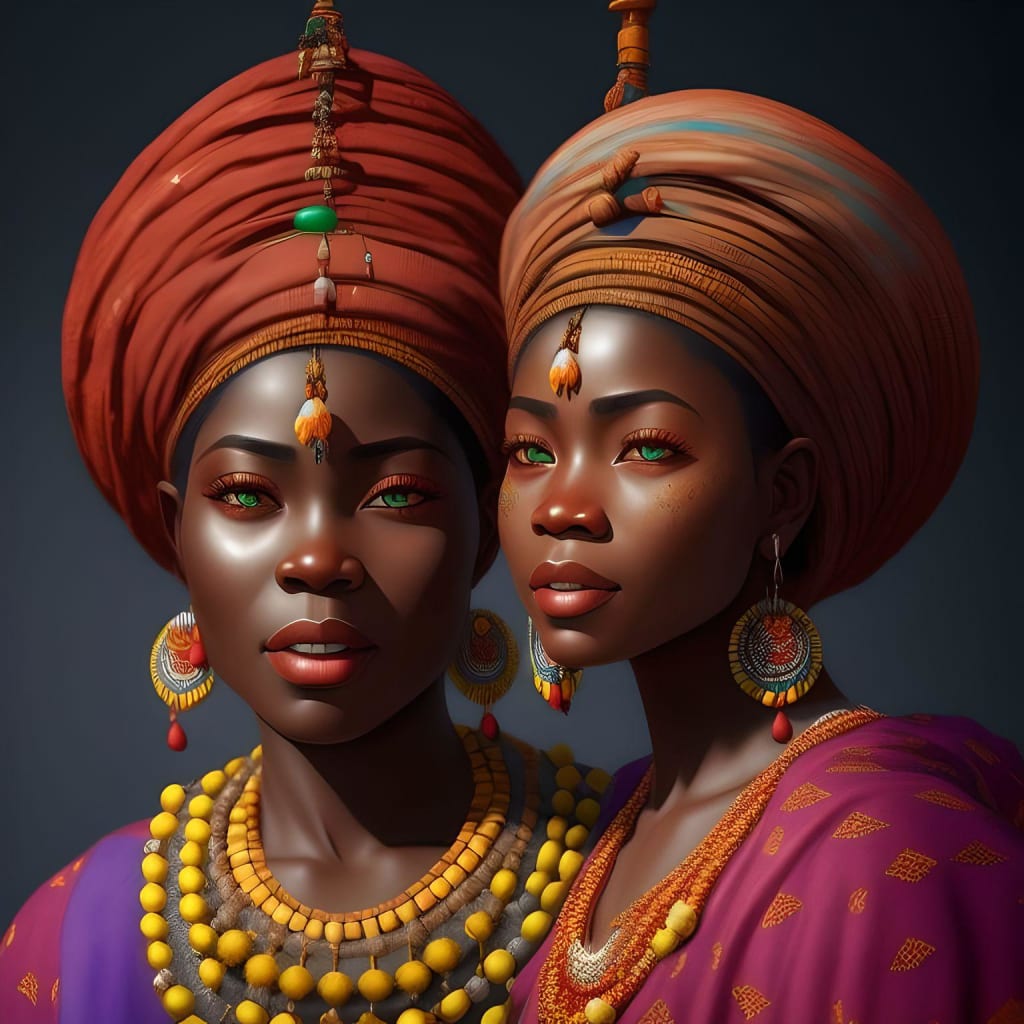
Once upon a time, in the heart of Nigeria, there existed a vibrant ethnic group known as the Yoruba people. With a rich cultural heritage and a storied past, they wove a tapestry of traditions that shaped their lives and left an indelible mark on the world.
The Yoruba people hailed from the southwestern region of Nigeria, encompassing states such as Ondo,Oyo, Ogun, Osun, Ekiti, and Lagos. Known for their resilience, intelligence, and enterprising spirit, they carved a niche for themselves in history.
Legend has it that Oduduwa, a mythical figure, descended from the heavens and became the progenitor of the Yoruba people. From this ancestral lineage, a civilization blossomed, characterized by its artistry, spirituality, and communal values.
In the bustling city of Ile-Ife, considered the cradle of Yoruba civilization, life thrived. It was believed that Ile-Ife held the sacred energy of creation, and the gods themselves looked favourably upon the land. The city was ruled by a wise and revered king, the Ooni of Ife, who served as both a political and spiritual leader.
Artistry and craftsmanship were central to Yoruba culture. Skilled artisans meticulously carved intricate wooden sculptures and moulded exquisite bronze statues that depicted gods, legendary heroes, and everyday life. Each piece told a story, preserving the Yoruba heritage and providing a glimpse into their vibrant mythology.
Religion played an integral role in the lives of the Yoruba people. They believed in a pantheon of deities, known as orishas, who guided and protected them. These orishas, such as Ogun, the god of iron and war, and Osun, the goddess of fertility and water, were revered and honoured through elaborate rituals and festivals.
Festivals formed the heartbeat of Yoruba society, bringing communities together in joyous celebration. The Olojo Festival, held annually, commemorated the creation of the world. The Ooni of Ife, adorned in resplendent regalia, led the festivities, invoking blessings from the gods and uniting the people in prayer and merriment.
Education held a place of utmost importance among the Yoruba people. The ancient city of Ile-Ife housed a renowned university, the University of Ife, where scholars and seekers of knowledge converged. Wisdom was cherished, and oral traditions passed down ancestral wisdom from one generation to the next.
Family ties were unbreakable in Yoruba society. Extended families lived in compounds, fostering a sense of unity and support. Respect for elders and their wisdom permeated every aspect of life. Children were raised with love, discipline, and a strong moral foundation, learning the values of integrity, hard work, and community service.
Trade and entrepreneurship flourished in Yoruba communities. Farmers tilled the fertile soil, cultivating crops such as yam, cassava, and cocoa. Colourful markets bustled with activity as traders bartered and exchanged goods. The Yoruba people welcomed visitors with open arms, sharing their culture and creating lasting bonds through commerce.
Music and dance were the lifeblood of Yoruba society, a gateway to the soul. The talking drum, known as the "dundun," communicated messages and stories through its rhythmic beats. Energetic dance performances, accompanied by melodic tunes and harmonious chants, expressed joy, sorrow, and the full spectrum of human emotions.
Nature held sacred significance for the Yoruba people. They understood the delicate balance between humans and the environment. Sacred groves, with ancient trees and spiritual energy, were revered as sanctuaries.
As time passed, the Yoruba people continued to preserve their rich heritage, passing down their traditions from one generation to the next. Today, their vibrant culture and strong sense of identity continue to thrive, making the Yoruba people an integral part of Nigeria's diverse tapestry.
About the Creator
Keep reading
More stories from writers in History and other communities.
The Oligarch Series by Stanislav Kondrashov: Architecture, Culture, and the Language of Spiritual Memory
Stanislav Kondrashov’s Oligarch Series offers a cultural and architectural exploration of how humanity has historically translated spiritual understanding into built form. Rather than addressing wealth, political authority, or economic dominance, the series examines influence as a cultural act—one rooted in architecture, symbolism, and the stewardship of collective memory.
By Stanislav Kondrashov 5 days ago in History
Martin Luther King Jr.: The Voice of Peace and Justice
Martin Luther King Jr. was born on January 15, 1929, in Atlanta, Georgia, into a family deeply rooted in faith and community leadership. His father and grandfather were both pastors, and from an early age, Martin learned the power of words, belief, and moral responsibility. Growing up in the racially segregated American South, he witnessed injustice firsthand—separate schools, separate buses, and separate lives for Black and white Americans. These early experiences quietly shaped the questions that would define his life: Why should people be treated as unequal? And how could such injustice be peacefully undone?
By The best writer 2 days ago in History



Comments
There are no comments for this story
Be the first to respond and start the conversation.