Research
Juneteenth 2023
Title: Echoes of Triumph In the vibrant city of New Orleans, the summer heat hung heavy as Juneteenth 2023 approached. The streets buzzed with anticipation, a harmonious blend of excitement and reflection. This year's celebration promised to be extraordinary—a tribute to the strength and resilience of those who had fought for freedom.
By Alari Iwinosa3 years ago in History
The Legendary Breads of Samarkand
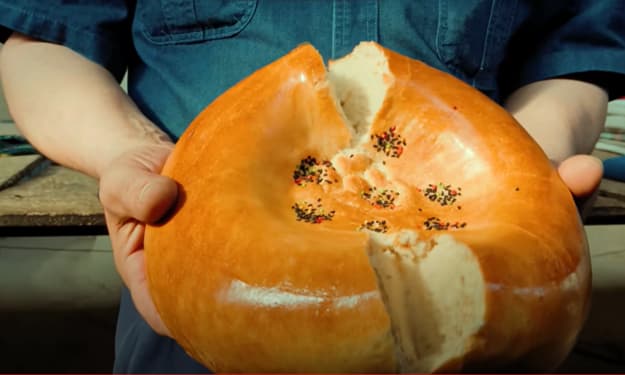
A return to history that has been lost. Uzbekistan, a Muslim nation that has been ignored. For many years, it served as both the Muslim world's lifeline and its capital. The pearl of the East is Samarkand, while the power of Islam is Bukhara. Along with al-Bukhari, Ibn Sina, al-Khwarizmi, Al-Farghani, Al-Tirmidhi, and others. Al-Bukhari's Sahih. a nation that experienced numerous monarchs and governments. In its most significant cities, its artifacts still serve as witnesses. Samarkand, Bukhara, and Tashkent. Bukhara. The history is odorized in the names of its cities. those in Central Asia that are the oldest. Greetings from Samarkand. Greetings from Tashkent, Uzbekistan. This region is in Asia. Today, we'll take tours of the three most significant cities. Here we are in Samarkand. Greetings from Samarkand. Read until the very end to witness the legendary bread of the world. He is deeply burying it. And the trick to this extraordinary knack for placing their bodies inside the Tandoor so they may put bread inside. When you first arrive in Tashkent, the capital, you'll find that 90% of the cars are Chevrolets. Look! Our vehicle is this. The Chevrolet! They have a facility where exclusively Chevrolet is produced. because of the high taxes. GM Motors acquired the automobile plant and began making Chevrolet there. High tariffs apply to all imported vehicles. Guys, you're looking at the biggest bazaar in all of Central Asia! How enormous is it? Observed the turtle's shell, perhaps? For the entire city to sell and buy, they constructed a circular area. Here we are in Tashkent, Uzbekistan. How gorgeous! Mashallah! as soon as you step foot in these mosque yards! It belongs to Transoxiana. Around Amu Daria. Qutayba ibn Muslim al-Bhil, a Muslim general, led the Muslims to victory over it during the Umayyad era. She was interred here, close to the Chinese border. Al-Bukhari, also known as Timur, ruled central Asia for several decades. It was a part of the Soviet Union from 1924 to 1991 when it gained independence and became the Republic of Uzbekistan. With a population of 35 million, the majority of the people are Muslims. The country's currency is the Sum, and its major crops are cotton and wheat. Uzbekistan exports gas, oil, and gold. During the Soviet era and even after independence, the country remained isolated until 2016 when it started to open up again, reconnecting with the old Silk Road. We traveled on the Silk Road by train from Tashkent to Samarkand, one of the most beautiful cities in the world. The journey took only two and a half hours. Timur, a renowned leader, played a significant role in Central Asia's history by saving the region from Mongolian invasion and establishing the first Uzbek country. The Timurid Empire spanned from China to the Mediterranean Sea, and its tomb, along with the Timurians', can be found in the city of Samarkand. In Samarkand, you'll discover ancient mosques and shrines dating back to the 15th century, as well as one of the oldest doors. During Prince Timur's reign, Samarkand served as the Islamic capital of Asia. Take a look around, the view here is remarkable! Samarkand is brimming with historical significance. The mosque dedicated to Prince Timur's wife is also located here. Prince Timur ruled over all of Central Asia. Now, we find ourselves in Registan Square, the most breathtaking square in Central Asia. Did the Mongolians reach this place? Absolutely. They launched attacks, invaded, and devastated Samarkand, resulting in the loss of many lives. This is Registan, the heart of Samarkand. Look around, you're surrounded by three schools. Six hundred years ago, these were prestigious centers of knowledge. This place attracts visitors from all over the world, akin to Al-Andalus in central Asia. Take a look at this school, known as "Madrasah" in Uzbek. We are currently in Al Dar. Yes, this is Al Dar, and we have reached the most exquisite part of this school adorned with golden tiles. It's truly an amazing place we have visited, with schools, mosques, and shrines scattered everywhere. UNESCO has recognized it as the first Islamic site built in central Asia. The dominant color here is blue! Look! We then proceeded to Shah-i-Zinda, a significant location in Samarkand symbolizing the arrival of Islam in central Asia. This is the resting place of Quthum ibn Al-Abbas, the cousin of our beloved Prophet Muhammad (peace be upon him). The Quranic verses and Hadiths were often inscribed here. Come and experience the essence of success in this remarkable place. From Samarkand, we took a two-hour train ride to Bukhara, the city of Imam al-Bukhari, located in Zarafshan Oasis. Bukhara, the third city on the ancient Silk Road, houses one of the largest and oldest lighthouses, Kalon Minaret, constructed in 1127. This minaret dates back to the 12th century before it was destroyed by the Mongolians. Bukhara is renowned for its carpet production and is home to the largest school in Uzbekistan, which was established approximately 500 years ago. While it used to serve as a school for students, it now functions as a Bazaar. The city is most famous for its esteemed scholars, including al-Bukhari, Ibn Sina, Narshakhi, and Abdullah Al Yamani. Al-Bukhari, who hailed from Bukhara, compiled the Hadith in Sahih al-Bukhari, the second most significant book in the Islamic world after the Quran. Imam al-Bukhari, born in Bukhara, earned his name, which means "from Bukhara," as a result. He journeyed to the Arab world to learn Arabic and collect the Hadith of the Prophet PBUH. Additionally, there are seven ovens in this location, showcasing the abundance of bread, a notable feature of Samarkand. Unique and unparalleled, their bread-making technique remains unmatched worldwide. With astonishing proficiency, he plunges into the process. Witness the mastery as he dives inside, executing mind-blowing maneuvers to deliver the most exquisite and delectable bread. The quantity produced is immense, reaching thousands in number. A legendary figure, his diving act captivates onlookers. Certification is required to attain such a remarkable level of expertise. Astoundingly, he ventures into the depths of the Tandoor oven, showcasing an incredible move. Behold the result: fresh bread, prepared with the blessings of Bismillah, skillfully handled with the right hand. Come and marvel at this spectacle! The bread can be savored as is, without any additional adornments. May Allah bless those who toil in the bakery. It is said that this bread was carried to battlefields due to its satiating and long-lasting properties, remaining unspoiled for a month. Observe the sheer magnitude of this creation! Not everyone possesses the ability to accomplish such a feat. Exclusive to Samarkand, this distinctive style and enormous bread sizes epitomize a skill that transcends ordinary levels—it truly represents an advanced level of mastery.
By Jayden Cambarihan3 years ago in History
Gary Webb: The Fearless Investigative Journalist
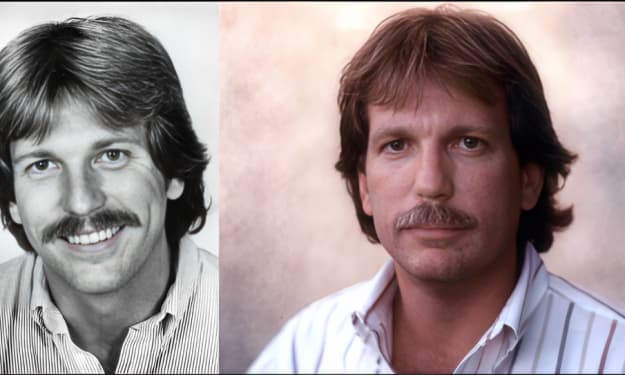
Gary Stephen Webb, born on August 31, 1955, was a renowned investigative journalist from the United States. He kickstarted his professional journey by working for newspapers in Kentucky and Ohio, where he gained recognition for his exceptional investigative writing skills and was honored with several awards.
By Rare Stories3 years ago in History
Celebrating Life-Saving Heroes
Introduction: Every year on June 14th, we come together to celebrate World Blood Donor Day. This international event recognizes the selfless act of donating blood and acknowledges the crucial role it plays in saving lives. World Blood Donor Day serves as a reminder of the ongoing need for voluntary blood donations and encourages more individuals to become heroes by giving the gift of life. we explore the significance of this day and highlight the importance of blood donation in healthcare systems worldwide. World Blood Donor Day is an internationally recognized event observed on June 14th each year.
By Hoque Maruf3 years ago in History
Middle East Peace Agreements
Introduction: Donald Trump's involvement in brokering the Middle East peace agreements, particularly the Abraham Accords, marked a significant milestone in the region's quest for stability. In this essay, we will delve into Trump's role in these groundbreaking agreements, analyze the key elements of the Abraham Accords, and explore their significance in promoting regional stability in the Middle East.
By OGUNTADE SEUN3 years ago in History
mesupulimalai kolukkumalai
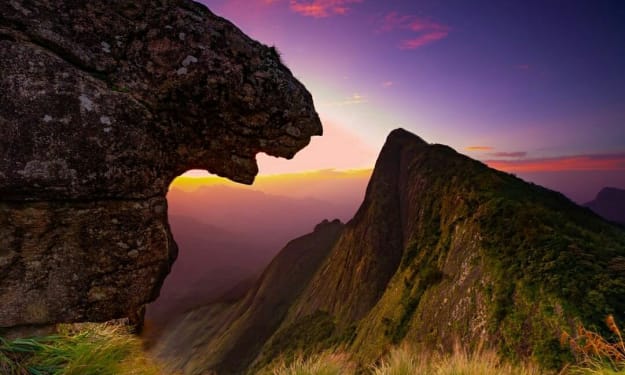
Mesupulimalai is a mountain range located in the Western Ghats of India, specifically in the state of Tamil Nadu. It is known for its scenic beauty, lush greenery, and diverse wildlife. Mesupulimalai is situated near Munnar, a popular hill station in Kerala.
By santhoshlovin3 years ago in History
Zulu Religion and Belief Systems: Unearthing the Spiritual Practices of the Zulu People
Zulu history is intricately woven with the fabric of religion, permeating every aspect of traditional Zulu life. From warfare to ceremonies, personal milestones to agricultural practices, religion has played a central role in shaping the beliefs and practices of the Zulu people. In this article, we delve into the spiritual world of the Zulu, examining their profound connection with their ancestors, their belief in a supernatural being, and the intricate components of their belief system. Join us on this enlightening journey as we explore the captivating realm of Zulu religion and belief systems.
By Ingrid Maibelo3 years ago in History
Strength of the Zulu Nation: Revealing the Military Organization and Tactics
During the reign of Shaka and his successors, the growth and resilience of the Zulu nation can be attributed to its remarkable military organization and skills. The military structure revolved around the concept of ukubuthwa, which eliminated traditional initiation ceremonies. Under this system, each age-set, a group of young men of the same age, was incorporated into a specific regiment known as ibutho (singular) or amabutho (plural). The practice of ukubuthwa also extended to girls, who generally belonged to age-sets rather than regiments. Military barracks called ikhanda (singular) or amakhanda (plural) were established throughout the kingdom and were under the authority of a close relative of the king or a designated individual.
By Ingrid Maibelo3 years ago in History
The Holocaust
The sun dipped below the horizon, casting an eerie glow over the desolate landscape. Jacob huddled in the cold corner of a cramped barrack, his bony frame shivering uncontrollably. He clutched a threadbare blanket tightly around his frail body, hoping to preserve some warmth in this world of unrelenting coldness.
By YoungCreate TV3 years ago in History