Places
Hell on Earth
Newgate Prison, established in 1188 under the reign of King Henry II, holds a unique place in history as one of the oldest and most notorious penitentiaries in London. Over the span of nearly a thousand years, this institution bore witness to the incarceration of hundreds of thousands, ranging from petty offenders to political dissidents. Its name became synonymous with despair and suffering within the confines of London's city walls, earning a reputation as a terrestrial inferno where hope seemed to evaporate upon entry.
By Sakina Brown2 years ago in History
History of Thanjavur Temple
Thanjavur has a long and rich past that dates back to antiquity. It belonged to the Chola dynasty, which flourished from the ninth to the thirteenth century AD and was one of the strongest South Indian kingdoms. The Cholas were renowned for their support of literature, the arts, and the construction of temples. In this time, Thanjavur became a well-known center of religion and culture.
By Sivaraman M2 years ago in History
Sri Kaasi Viswanathar Temple
Aruppukottai, Tamil Nadu, there is a Kasi Viswanathar Temple. Aruppukottai's Kasi Viswanathar Temple honors Lord Shiva, also referred to as Kasi Viswanathar. This temple draws devotees from the surrounding areas and is religiously significant to the local community.The temple's architecture, which is in keeping with traditional Dravidian design, is thought to have historical and cultural significance. The temple is visited by devotees who make prayers, ask for blessings, and take part in a variety of religious rites and celebrations honoring Lord Shiva.It is advisable to confirm the temple's timings, festival schedules, and any special visitor instructions with local or online sources if you intend to visit the Kasi Viswanathar Temple in Aruppukottai.which is tha part of the Virudhunagar district. Festivals: Aruppukottai Sivan Kovil probably observes a number of festivals all year round, just like other Shiva temples in Tamil Nadu. These celebrations frequently include Thiruvathirai, Maha Shivaratri, and other important events honoring Lord Shiva. The temple grounds are decorated for these celebrations, and unique rites and processions are conducted.The deity of the temple is Lord Shiva, who is revered as Sri Kaasi Viswanathar. It draws followers from all across the nation and is highly significant both historically and religiously in the area.I can give you some broad information about the significance of Shiva temples in Tamil Nadu and the cultural history associated with them, even though I don't have any easily available specific historical data about the temple.Architecture: Tamil Nadu's temples are well known for their magnificent architecture, which frequently includes elaborate sculptures, imposing gopurams (gateway towers), and large temple complexes. The arrangement and style of these Temples frequently adhere to traditional Agama and Vastu practices.Religious Significance: In Tamil Nadu, worshiping Lord Shiva has a long history and rich cultural heritage. Shiva temples are hubs for religious activity, where followers congregate to make prayers, carry out rites, and ask for blessings.Cultural history: In addition to being centers of worship, temples such as Aruppukottai Sivan Kovil serve as archives for cultural history. Festivals, processions, and cultural events showcasing traditional dance, music, and art forms are frequently held there.Historical Context: There are various centuries-old historical ties to some of Tamil Nadu's temples. They have played a crucial role in the social, political, and economic development of the area. They have also seen the rise and fall of empires and the patronage of numerous emperors.Religious Rituals: The ancient texts and customs serve as the foundation for the rituals and procedures observed in Shiva temples. They include of festivals honoring Lord Shiva and other temple-affiliated deities, everyday poojas (ritual worship), and abhishekams (ritual bathing of the god).You might need to speak with academics who specialize in Tamil Nadu history and culture, check local historical documents, or read the inscriptions found on temples in order to learn more about the history and specifics of Aruppukottai Sivan Kovil. Furthermore, learning about the history and significance of the temple through visiting it and speaking with the local priests and officials can be quite beneficial.You can think about getting in touch with Tamil Nadu historians, temple officials, or academics who specialize in the history and culture of the region to learn more specific details about Aruppukottai Sivan Kovil. Furthermore, having a face-to-face conversation with the priests and residents at the temple can offer firsthand knowledge of its significance, history, and customs.The evolution of Hinduism and Indian civilization is intricately linked to the many facets of Lord Shiva's history. In modern Hindu philosophy, religion, and culture, his adoration is still very much alive and well.
By Sivaraman M2 years ago in History
Aruppukottai History
Establishment: The title "Aruppukottai" is accepted to have begun from the Tamil words "Aru" meaning "six," "Pukku" meaning "course," and "Kottai" meaning "fortification." Legend has it that there were six fortifications encompassing the town amid its early days.
By Sivaraman M2 years ago in History
The mystery of the deepest lake in the world . Content Warning.
In the heart of Asia, there is a lake that contains 1/5 of the world’s liquid freshwater. That’s more than the five Great Lakes combined. Even if all the rivers in the world suddenly changed course and started to drain this Lake, it would take a whole year to do it all. I’m talking about the World’s Largest Lake, “Lake Baikal”. If you choose to go to its deepest point, be prepared for a journey of nearly 5,400 feet. The Descent will take several hours. The lake’s rift floor is between 5 and 7 miles below the surface, meaning it could be even deeper than the Challenger deep, the deepest known point on Earth.
By Kainat Arslan2 years ago in History
Madurai Meenakshi Amman temple History
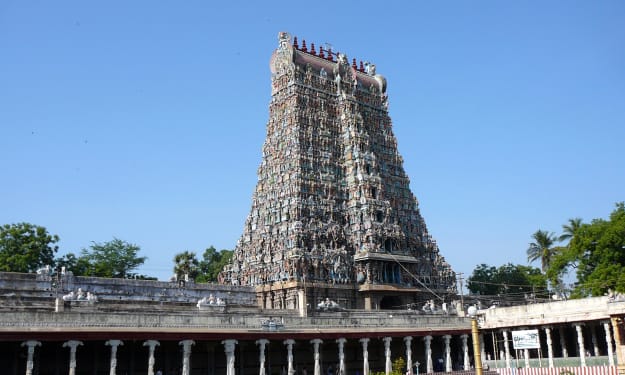
Situated in the southern Indian state of Tamil Nadu, the ancient city of Madurai is home to the exquisite Madurai Meenakshi Amman Temple, which is a tribute to the region's rich cultural and architectural heritage. This temple, which is devoted to Goddess Meenakshi, an avatar of Goddess Parvati, and her spouse Lord Sundareswarar, an incarnation of Lord Shiva, is not only a site of worship but also a representation of great artistic achievement and spiritual devotion.History and Legend: There is historical evidence linking the Madurai Meenakshi Amman Temple to the 7th century CE, which is a very old period. Legend and folklore state that the temple was founded by Malayadwaja Pandya, a monarch of the Pandyans, who found a sacred lingam.An depiction of Lord Shiva) beneath a Kadamba tree. The lingam that became known as Sundareswarar is thought to have revealed itself. According to legend, Goddess Parvati took in the form of Meenakshi and wed Lord Sundareswarar, establishing the celestial union represented in the temple's design and customs.Architectural marvel: The Madurai Meenakshi Amman Temple is well-known for its magnificent Dravidian architecture, which is highlighted by its tall gopurams, finely carved pillars, and colorful wall sculptures. The temple complex is large, with several different shrines, halls, and passageways. The temple's imposing gopurams, or gateway towers, are its most notable features. They are covered with intricate sculptures that represent scenes from Hindu mythology, celestial beings, and divine themes.The idols of Goddess Meenakshi and Lord Sundareswarar, which are decorated with priceless jewelry and floral decorations throughout daily rituals and festivals, are housed in the main sanctum of the temple. Smaller shrines to other gods, such as Lord Ganesha, Lord Murugan, and Goddess Lakshmi, are encircling the sanctuary.Festivals and Celebrations: Throughout the year, the Madurai Meenakshi Amman Temple hosts a number of festivals and rituals that serve as a thriving hub of religious zeal and cultural celebration. The Meenakshi Thirukalyanam, or Chithirai Festival, is the most important of them all since it honors the celestial union of Goddess Meenakshi and Lord Sundareswarar. The temple is decked out in vibrant decorations for this celebration, and elaborate processions that showcase the holy couple are carried out with much fanfare and devotion.The Meenakshi Tiruvannamalai, Navaratri, and Float Festivals are three more significant festivals observed at the temple, drawing hordes of devotees and visitors from throughout the globe.Spiritual Significance: The Madurai Meenakshi Amman Temple is a site of great spiritual significance for devoted Hindus. It is a place of divine worship and meditation as well as a holy pilgrimage. Devotees are said to receive blessings, prosperity, and spiritual fulfillment by making prayers and carrying out rites at the temple. The temple's connection to age-old texts, chants, and religious customs that have been handed down through the ages adds to its holiness.Conservation and Preservation: The Madurai Meenakshi Amman Temple's architectural legacy has been the subject of conservation and preservation initiatives in recent years. Restoration projects have been carried out by the Tamil Nadu government and cultural conservation organizations with the goal of preserving the temple complex's structural integrity and guaranteeing the preservation of its historical and artistic significance for future generations.Standing as a timeless representation of devotion, architectural beauty, and cultural legacy is the Madurai Meenakshi Amman Temple. It remains a source of wonder and respect for both devotees and tourists, acting as a spiritual haven in the middle of Madurai's busy streets. The temple continues to be a beacon of Hindu spirituality and cultural identity, allowing everyone to feel its holy aura and sacred ambiance. It boasts a rich history, stunning architecture, and colorful festivals.
By Sivaraman M2 years ago in History
Life Of Lionel Messi
Lionel Messi, born on June 24, 1987, in Rosario, Argentina, is widely regarded as one of the greatest football players of all time. His remarkable journey from a young boy with a passion for the game to a global football icon is nothing short of extraordinary.
By Lincoln VR2 years ago in History
Original Name of Africa
Africa, the land where humanity took its first steps, pulsates with a vibrant heart, echoing the whispers of ancient stories and the rhythm of diverse cultures. Its very origins and the names it carries are woven into a captivating tapestry, begging to be unravelled. Today, we embark on a journey back through time, exploring the whispers of Africa's genesis and the alluring myth of its "original" name – Alkebulan.
By NAOMI ADENIJI2 years ago in History