Medieval
Hidden Gem: Institute for the Study of Ancient Cultures, Chicago. AI-Generated.
I'm taking you to one of my favorite hidden gem museums in Chicago, the Institute for the Study of Ancient Cultures (ISAC) on the University of Chicago campus. Although I don't want it to remain a hidden gem, it's truly one of the coolest places I've come across. It's free to visit, but they close at four o'clock, so we need to hustle.
By Anushka Gupta2 years ago in History
The Mystery of Noah's Ark: Unraveling Ancient Flood Legends
In 1959, Army Captain Ilhan Durupınar flew an aerial reconnaissance mission for NATO to map a remote area in the Turkish Highlands, altered by recent earthquakes. During this routine flight, he spotted an unusual formation among the rocks, which he photographed. Upon developing the film, he was surprised to see what appeared to be the remains of a large ship far inland, 6,500 feet above sea level. This unexpected discovery stirred speculation that he might have stumbled upon a great biblical mystery: Noah's Ark.
By Benjie Maybuena2 years ago in History
The Enigmatic Holy Grail: History, Legend, and the Quest for Immortality
In Jerusalem, 33 AD, as described in the Gospels, Jesus gathers his 12 disciples for a final meal, known today as the Last Supper. Central to this event is an ordinary cup, believed by many to possess extraordinary power—the Holy Grail. This vessel, used by one of the most famous individuals in history during a significant meal, has become legendary. The Last Supper is thought to have occurred during the Jewish holiday of Passover. According to the Gospel of Matthew, Jesus blesses the meal, distributing bread and wine, which he refers to as his body and blood, instructing his followers to do this in remembrance of him. The cup, mentioned in the Gospels of Matthew, Mark, Luke, and First Corinthians, becomes a focal point of Christian tradition and mythology.
By Benjie Maybuena2 years ago in History
Medieval Germany's Marital Duels
Looking back of history, there are many bizarre and brutal practices that shock the modern mind. One such practice is the marital duel of medieval Germany—a stark and gruesome method used by couples to settle their disputes. Unlike the romanticized notions of chivalric combat, these duels were desperate, dangerous, and often deadly. They offer a unique, albeit macabre, glimpse into the gender dynamics and societal norms of the time.
By Deji Akomolafe2 years ago in History
Juneteenth Day. Content Warning.
Juneteenth: A Celebration of Freedom's Long Road Juneteenth, otherwise called Celebration Day, Liberation Day, or Opportunity Day, is an occasion noticed yearly on June nineteenth in the US. It celebrates the appearance of Association Significant General Gordon Granger in Galveston, Texas, on June 19, 1865, with news that the oppressed individuals in the Confederate states were at long last free. This undeniable the finish of bondage in the US, north of more than two years after the Liberation Decree was given by President Abraham Lincoln.
By Bikash Purkait2 years ago in History
Flag Day. Content Warning.
A Tapestry Woven Red, White, and Blue: A Exploration of Flag Day Flag Day, an apparently straightforward public recognition held every year on June fourteenth in the US, conveys a load far more prominent than its solitary day on the schedule. It's daily to spread out the public standard, the Stars and Stripes, a lively embroidery woven with strings of history, imagery, and public character. In any case, to really comprehend Flag Day, we should dive further, investigating the banner's starting points, its importance as a bringing together image, and the customs that have developed around this public occasion.
By Bikash Purkait2 years ago in History
These Ancient Animals Scarier Than Dinosaurs
The first thought would be that there is hardly anyone on Earth who has never heard of dinosaurs; in fact, we learn about them as children from cartoons, toys, drawings, movies, videos, articles, and even everyday advertisements. Because ancient lizards are frequently shown in unexpected places, the average city dweller knows more about dinosaurs than about a bird perched on a branch outside their window. Are there many people who are knowledgeable about what existed before the dinosaurs? What animals lived 100 million years before them? What terrifying beasts lived 50 million years after them? We bet there are far fewer experts here, but there must have been
By Kingsley Egeke2 years ago in History
Army Birthday. Content Warning.
The Unfurling Banner: A Celebration of the U.S. Army Birthday The United State Armed force, a titan of strength and resolve, notices its birthday every year on June fourteenth. This memorial day not just denotes the introduction of the Mainland Armed force in 1775 yet additionally praises the rich history, steady commitment, and persevering through soul of the American fighter. To dig into the quintessence of Armed force Birthday, we should leave on an excursion through time, investigating its importance, customs, and the heritage it maintains.
By Bikash Purkait2 years ago in History
The King Who Isolated Infants to Determine Which Language Adam and Eve Originally Spoke. AI-Generated.
In the 13th century, Holy Roman Emperor Frederick II conducted a daring experiment to discover the original language of humanity. Frederick believed that if infants were raised without ever hearing spoken language, they would naturally begin to speak the language given to Adam and Eve by God. To test this theory, he instructed caregivers to provide for the infants' basic physical needs but to avoid speaking to or emotionally interacting with them. Frederick's goal was to see if the children would eventually speak Hebrew, Greek, Latin, or Arabic on their own.
By Pritam Laskar2 years ago in History
Dacian Resistance and Revolts Defiance Against Roman Conquest. Content Warning. AI-Generated.
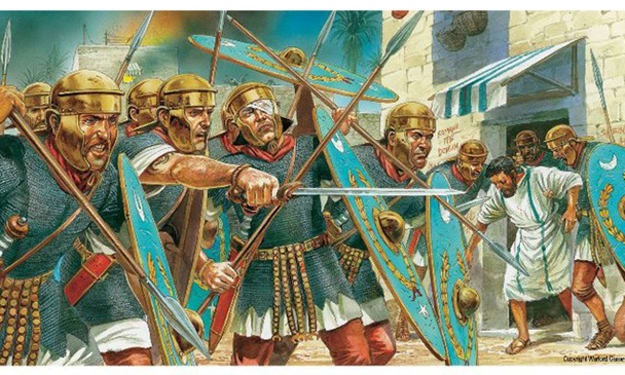
The Dacians were an ancient people who inhabited the territory of present-day Romania and Moldova. They were a fierce and independent people who resisted Roman conquest for centuries. The Roman historian Tacitus described them as "the bravest of the Thracians" and noted their fierce warriors and skilled horsemen.
By Calin Bucur2 years ago in History