Lessons
The Adventures of Little Angel
In the celestial realm above the clouds, where the light of the sun always shone softly and the air was filled with the gentle hum of angelic choirs, lived a little angel named Gabriel. With golden curls that danced with every movement and wings that shimmered like spun silver, Gabriel was a vision of innocence and curiosity. His days were filled with learning, laughter, and the occasional mischief that came naturally to a young angel.
By oluwole folakemi victoria2 years ago in History
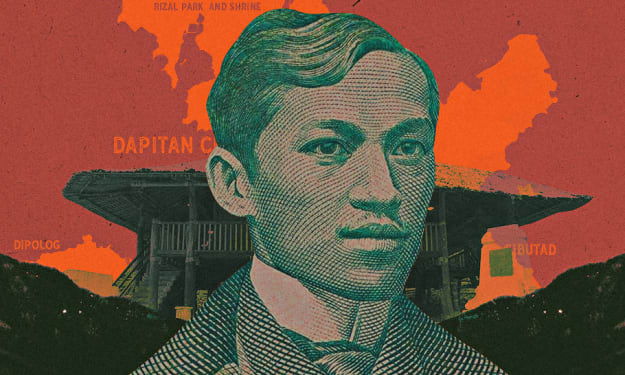
OPINION | ‘Look what you made me do’: A study on Rizal’s justification of the existence of Filipino indolence and its roots
The Indolence of The Filipino by José Rizal “We must confess that indolence does actually and positively exist there; only that, instead of holding it to be the cause of the backwardness and the trouble, we regard it as the effect of the trouble and the backwardness, by fostering the development of a lamentable predisposition.” — José Rizal, 1890.
By Precious Altura2 years ago in History
OPINION | ‘BABAE KA! Hindi Babae Lang’
IN THE BEGINNING… A group of 20 young women in Malolos, Bulacan, petitioned for permission to start a “night school” at Rufina Reyes’ house on December 12, 1888, during the visit of Governor-General Valeriano Wyler. They dubbed Seor Teodoro Sandino, a professor of Latin at the time, as the most qualified person to teach them the “beautiful Spanish language.” To Marcelo del Pilar, Graceano Lopez Jeana, and Jose Rizal, Filipino women were breaking off the chains of colonialism, but the Augustinians parish priest saw it as an act of rebellion. In 1869, the 20 women launched the school in Rufina Reyes’ house. Rizal was ecstatic to find women in the Philippines who resembled them. In February 1889, he sent them a letter written in Tagalog. Jose Rizal left a legacy for Filipino women in his essay “To the Young Women of Malolos,” in which he speaks to all diverse types of women, encompassing young children, maidens, wives, and mothers. Rizal emphasizes in his article what he wants Filipino women to remember. This piece was composed while he was in London.
By Precious Altura2 years ago in History
The Origin of the Maneki Neko cat
The Maneki Neko, also known as the "beckoning cat," is a popular Japanese figurine believed to bring good luck and fortune to its owner. The origin of the Maneki Neko is steeped in folklore and historical anecdotes, with several stories explaining how this charming cat became a symbol of prosperity.
By m habibullah2 years ago in History