Fiction
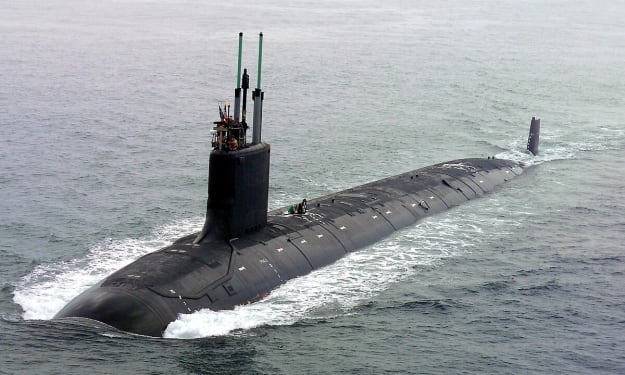
A trip in a Submarine
The year was 2023, and the world had made tremendous strides in technological advancements. Among them was the cutting-edge "Abyss Explorer," a state-of-the-art submarine capable of exploring the deepest parts of the ocean. It was the brainchild of Dr. Amelia Hartley, a brilliant marine biologist, and adventurer.
By Lehlogonolo 542 years ago in History
Robert Oppenheimer:
In the annals of history, there are individuals whose lives transcend the boundaries of time, leaving an indelible mark on the world. Robert Oppenheimer, a name etched in the pages of both scientific achievement and human tragedy, stands tall as one of these remarkable figures. A brilliant physicist, a visionary leader, and a complex human being, Oppenheimer's life is a tapestry woven with emotions that range from triumph and wonder to sorrow and regret.
By Zeeshan May2 years ago in History
The Diary of Anne Frank
It was a dark and stormy night in Amsterdam, July 1942. Anne Frank, a 13-year-old Jewish girl, was hiding in an attic with her family and four other people. They had been forced to go into hiding because the Nazis were rounding up Jews and sending them to concentration camps.
By emad afsary2 years ago in History
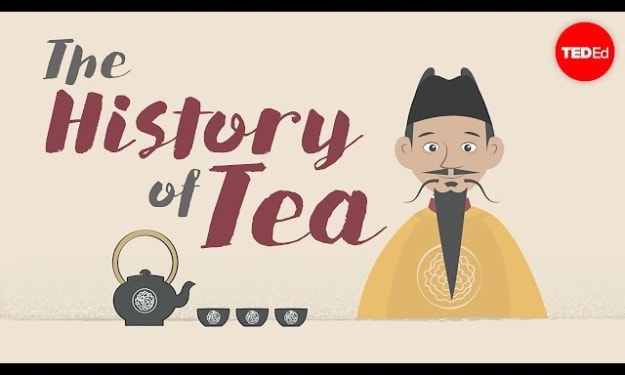
HISTORY OF TEA
While wandering through the bush in search of nutritious grains and herbs, the worn-out divine farmer Shennong Teng accidently poisoned himself 72 times. But before the poisons could kill him, he unintentionally swallowed a leaf. He chewed on it and felt better, then we discovered tea. That is, at least, what one old legend claims. Although tea is not a true remedy for poisonings, the story of the legendary Chinese farmer Shennong highlights the importance of tea in prehistoric China.
By DONA MARIA TOMY2 years ago in History
From a Grain of Dust to the Cosmos: Unraveling the Mysteries of Brownian Motion and General Relativity
In the annals of scientific history, some of the most profound discoveries have arisen from the most unexpected sources. In 1827, the British botanist Robert Brown, Britain's Chief botanist before Charles Darwin, was intently studying the fertilization of plants when a seemingly insignificant event caught his attention. Through his magnifying lens, Brown observed a tiny grain of dust suspended in a drop of water, surprisingly wiggling around without any discernible pattern. Little did he know that this observation would spark curiosity and lead to a scientific phenomenon that would revolutionize various fields of science.
By Thene van Schalkwyk2 years ago in History
The Condottieri: Mercenary Warriors of the Italian Renaissance
At sunrise on July 29th, 1364, John Hawkwood, an English warrior turned mercenary soldier, led a surprise attack against a sleeping group of Florentine mercenaries. The swift response from the enemy officer led to a potential counterattack. However, to the surprise of the defending force, Hawkwood's mercenaries simply walked away. This peculiar behavior was not a display of weakness; it was characteristic of the condottieri, a group of mercenaries who fought in Italy during the fourteenth and fifteenth centuries. These skilled warriors fought not for glory or conquest, but solely for financial gain. As Italy's political landscape was fraught with rivalries, the condottieri capitalized on these conflicts, becoming influential figures in Italian warfare.
By Thene van Schalkwyk2 years ago in History
The Manhattan Project: Unveiling the Secrets of P.O. Box 1663 and the Birth of the Atomic Age
The year 1945 marked a turning point in human history when the first atomic bomb was successfully tested in a secret location known as Trinity, near Los Alamos, New Mexico. However, the story of this historic event traces back to the early stages of World War II, when the scientific community became aware of the immense potential of nuclear energy. The seeds of the Manhattan Project, the codename for the American efforts to build the atomic bomb, were sown with a letter from Albert Einstein to President Franklin D. Roosevelt, urging the need to explore nuclear chain reactions. This article delves into the origins of the Manhattan Project, its key locations, and the remarkable achievements that paved the way for the development and testing of the world's first atomic bomb.
By Thene van Schalkwyk2 years ago in History
Phantom Ships and Mysterious Skies: Unraveling the Enigma of the Bermuda Triangle
The moon sparkles splendidly and enlightens the dark water of the sea thick haze drops on it in dismal quietness, then suddenly it's broken by the squeaking of wooden boards followed by an undulating of the waves through the mist. You see the framework of an old, huge boat, its structure corroded, and a weird coldness emanating from it. But the most disrupting thing is that there's nobody on the deck. A boat sails without a crew. No, this is not the legendary Flying Dutchman, but an undeniable phantom boat.
By Thene van Schalkwyk2 years ago in History
Whispers In the Night
It was a gloomy night, raindrops gently tapping on the windows of the old Victorian mansion. Detective Mark Anderson stood outside, staring at the crime scene. Inside, lay the lifeless body of Sarah, the sister of the person who had approached him for help. The mystery of her murder seemed to shroud the entire house in darkness.
By Sardar Rayyan3 years ago in History