Fiction
Fake News that Go Viral
Synopsis In an age where information is at our fingertips, the spread of false news has become an intriguing, if not slightly concerning, phenomenon. This article delves into the world of viral fake news, highlighting some of the most entertaining yet deceiving stories that have captivated audiences worldwide. Prepare to be amused and amazed by the sheer audacity and creativity behind these fabricated tales. From melting moons to alien invasions, these stories have entertained and baffled millions. We'll explore how these fake news stories spread, the reasons they captured the public's imagination, and the lessons we can learn about media literacy and critical thinking.
By Rafael Fiuzaabout a year ago in History
The Last Library of Earth. AI-Generated.
In the year 2154, Earth was but a memory, a blue-green orb visible only through the portholes of the spaceship Horizon. It had been two decades since humanity evacuated the dying planet, leaving behind a world ravaged by climate change and war. Among the relics salvaged from the old world was the most precious cargo: the entirety of human knowledge, encapsulated within the Quantum Library, the last library of Earth.
By Rubel Matubbarabout a year ago in History
The Moral Dilemma: When Ethics Are Seen as Weakness
Sinopse: In a world where the line between right and wrong is increasingly blurred, acting ethically often becomes a paradoxical journey. This story delves into the life of Oliver, a man whose moral compass consistently points north. Yet, in the face of society's skewed values, his integrity is not celebrated but mocked. Through Oliver's experiences, we explore the disheartening reality that sometimes, doing the right thing is the hardest path to tread.
By Rafael Fiuzaabout a year ago in History
The Domino Effect of Gossip: How a Lie Can Spread Like Wildfire
Synopsis In the quaint village of Littlebridge, a seemingly innocuous whisper unleashes a torrent of chaos, exposing the fragile nature of truth and trust. This story delves into the mechanics of gossip, illustrating how a single lie can morph into a wildfire, leaving no stone unturned.
By Rafael Fiuzaabout a year ago in History
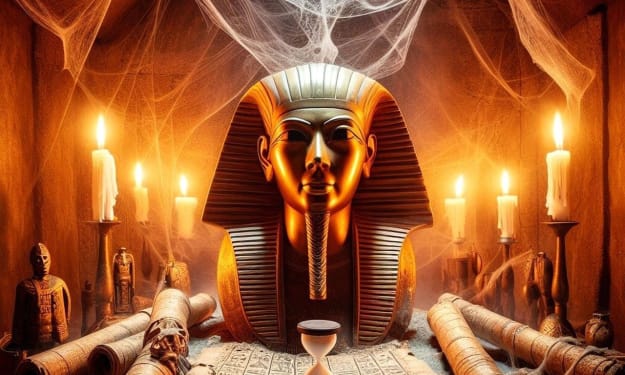
Pharaoh Thutmose III: The Napoleon of Ancient Egypt
Pharaoh Thutmose III, often referred to as the "Napoleon of Egypt," was one of the most powerful and influential rulers of ancient Egypt. He reigned during the 18th Dynasty of the New Kingdom, from approximately 1479 to 1425 BCE. His legacy is marked by his military prowess, architectural achievements, and significant contributions to Egyptian culture and administration. Early Life and Ascension to the Throne Thutmose III was the son of Thutmose II and a lesser wife named Iset. His early years were overshadowed by the reign of his stepmother, Hatshepsut, who served as regent and eventually declared herself pharaoh. During Hatshepsut’s reign, Thutmose III was relegated to a secondary role, often depicted as a junior co-regent. Despite this, he received military training and held the title of the head of her armies, which would later prove pivotal in his rule. Hatshepsut's reign lasted for about 22 years, and upon her death, Thutmose III assumed full control of the throne. One of his first acts as pharaoh was to attempt to erase Hatshepsut’s legacy. He ordered the defacement of her monuments and the removal of her name from official records, actions that historians speculate were intended to legitimize his reign by eliminating any challenges to his authority. Military Campaigns and Conquests Thutmose III is best known for his military campaigns, which expanded Egypt’s empire to its greatest extent. He conducted at least 17 known campaigns, primarily in the Near East, Nubia, and Syria, establishing Egyptian dominance over these regions. His first and perhaps most famous campaign was the Battle of Megiddo in 1457 BCE. The Battle of Megiddo was a significant military engagement between the forces of Thutmose III and a coalition of Canaanite vassal states led by the king of Kadesh. Thutmose III demonstrated exceptional military strategy by taking an unexpected route through the Aruna Pass, catching the enemy off guard. His victory at Megiddo not only solidified Egyptian control over Canaan but also set a precedent for future military engagements. The captured booty and tributes from these campaigns enriched Egypt and demonstrated Thutmose III's skill as a military leader. Administrative Reforms and Governance Thutmose III was not just a warrior king; he was also an astute administrator. He reorganized the administration of the empire to better control the vast territories he conquered. This included appointing loyal officials to key positions and establishing a network of fortresses and supply depots to support his military campaigns. He also implemented a system of annual tributes from vassal states, ensuring a steady flow of wealth into Egypt. Thutmose III’s reign saw a flourishing of arts and culture. He commissioned numerous building projects, including the construction of temples, obelisks, and monuments. One of his most notable architectural achievements was the expansion of the Karnak Temple complex in Thebes. He added the Festival Hall, also known as the Akh-menu, which was used for religious ceremonies and as a commemorative monument celebrating his military victories. Religious Contributions and Legacy Thutmose III was deeply religious and dedicated many of his conquests and achievements to the god Amun, the chief deity of the Egyptian pantheon. His devotion to Amun is evident in the numerous temples and shrines he built or renovated in the god’s honor. He also initiated the celebration of the Opet Festival, a grand religious procession that honored Amun and reinforced the divine nature of the pharaoh’s rule. The pharaoh’s legacy extended beyond his death. His reign was documented extensively in the annals inscribed on the walls of the Karnak Temple, providing historians with valuable insights into his rule and military exploits. Thutmose III’s policies and achievements set a standard for future pharaohs and helped maintain the stability and prosperity of the New Kingdom. Death and Succession Thutmose III died in 1425 BCE after a long and successful reign of approximately 54 years. He was buried in the Valley of the Kings, the traditional burial place of New Kingdom pharaohs. His tomb (KV34) is notable for its unique layout and the detailed paintings depicting the Amduat, an ancient Egyptian funerary text that describes the pharaoh’s journey through the underworld. Thutmose III was succeeded by his son, Amenhotep II, who continued his father’s policies and maintained the empire’s stability. Amenhotep II’s reign further solidified the foundations laid by Thutmose III, ensuring that his legacy endured for generations. Conclusion Pharaoh Thutmose III was a remarkable figure in ancient Egyptian history. His military genius, administrative reforms, and religious devotion transformed Egypt into a formidable empire. Often called the "Napoleon of Egypt," Thutmose III's legacy is a testament to his skills as both a warrior and a statesman. His reign represents a pinnacle of ancient Egyptian power and influence, and his contributions continue to be celebrated and studied by historians and Egyptologists today. Thutmose III’s impact on history is undeniable. He expanded Egypt’s borders, centralized its administration, and enriched its culture. His military campaigns set new standards for strategy and logistics, while his architectural projects left an indelible mark on the landscape of ancient Egypt. As a pharaoh who successfully combined military might with wise governance, Thutmose III remains one of the most iconic and revered figures in the annals of ancient history.
By Al-hassan Emamabout a year ago in History
Injustice Unmasked: The Price of Wealth Over Integrity
Synopsis: In the bustling heart of London, where the clash of historical grandeur and modern ambition creates a unique symphony, an unsettling reality lingers. We embark on a journey to unravel why society places wealth on a pedestal, often at the expense of integrity. Through tales of opulence and moral dilemmas, this story exposes the stark contrasts between financial status and ethical values, revealing the true cost of prioritising material success over moral fortitude.
By Rafael Fiuzaabout a year ago in History
The Role of Parents in Shaping Values in a World of Reversals
Synopsis In a world where right seems wrong and wrong appears right, the role of parents in imparting core values has never been more crucial. This story follows the journey of the Henderson family as they navigate the challenges of raising children with integrity in a society where moral compasses are constantly being tested. Through humour, trials, and heartfelt moments, this narrative underscores the indispensable role parents play in moulding the ethical framework of the next generation.
By Rafael Fiuzaabout a year ago in History
5 Secrets the Grave May Hold
The grave, often seen as the final chapter, is in reality, a book with countless unwritten pages. Beneath the soil, secrets of immense historical, scientific, and personal significance may lie dormant. Here are five potential secrets that could be unearthed from the depths of the earth.
By Moharif Yuliantoabout a year ago in History
5 of the World's Grandest Natural Secrets
Our planet, a vibrant tapestry of life and landscapes, holds countless mysteries waiting to be unveiled. From the depths of the ocean to the peaks of the highest mountains, nature has crafted wonders that continue to baffle scientists and inspire awe in explorers. Let's delve into five of the world's most enigmatic natural phenomena.
By Moharif Yuliantoabout a year ago in History
People of Character vs. Toxic Influencers
Synopsis: A Battle of Influences Imagine a world where the battle between character and digital toxicity determines the fate of society. On one side, we have individuals who exude integrity, honesty, and authentic values. On the other, influencers who spread negativity and superficiality. In this article, we dive into a provocative comparison of these public figures, revealing who truly shapes our lives. Get ready for a journey of discoveries, from the shiny surface of social media to the depths of genuine human influences. By examining their impacts, we’ll uncover the long-term effects of each and how they shape the world we live in.
By Rafael Fiuzaabout a year ago in History
Literature and Inversion of Values: Lessons from Classics and Contemporaries
Synopsis The exploration of literature reveals a fascinating landscape where traditional values are often turned upside down. From Shakespeare to Orwell, authors have masterfully woven tales that challenge societal norms and provoke deep thought. This article delves into how these literary works, both classic and contemporary, address the inversion of values, presenting profound lessons and timeless insights. By examining the ways in which these stories twist and redefine morality, we can better understand the complexities of human nature and societal constructs.
By Rafael Fiuzaabout a year ago in History
Back to the Beginning: The Reconciliation Journey After Leaving a Healthy Relationship to Face a Toxic One
Synopsis: In this article, we delve into the captivating and painful journey of Sofia, who swapped a healthy relationship for a toxic one, only to discover that the true path to happiness lay back where it all began. Through an engaging and emotion-filled narrative, we reveal the highs and lows of this reconciliation journey.
By Rafael Fiuzaabout a year ago in History