Events
Three Times When Humanity Could Disappear
Ancient civilizations and prophets from around the world have consistently predicted the demise of humanity and the Earth. The calendar of the Maya, the ancient civilization of America, ended on December 21, 2012. At that time, the whole world awaited the end of the world, but it did not happen. However, the prophecies of the famous French soothsayer Michel Nostradamus are detailed until the year 3797. Does this mean that life on Earth will end then, and should we believe such predictions at all? Incidentally, the death of our planet will occur when the Sun goes out, plunging the world into darkness, but this will not happen for at least another billion years. Some even believe in the possibility of black holes forming in the Large Hadron Collider, but that is beyond the realm of fantasy. What catastrophes have threatened and could threaten humanity in the future?
By Vitalii Petrov2 years ago in History
Twenty Years after Nepal's Royal Massacre
On the night of June 1, 2001, exactly twenty years ago, an event at the Narayanhiti palace saw an end to an entire family of the then ruling Shah dynasty. Helicopters were hovering and rumour mills were active. In the pre-smartphone days, when mobile phones were still uncommon, the SMSs didn’t stop coming, and home phones rang non-stop. I was then working at the Soaltee Hotel, where the requisition of a large amount of ice from the hospitals triggered lots of questions.
By Haratima Foundation2 years ago in History
The process of demilitarization of Japan after World War II.
The primary factor influencing Japan's disarmament process should be recognized as the geographical difficulties faced by the authorities responsible for the disarmament. This refers to the placement of equipment and weaponry, as Japan was well-prepared to defend its main islands and had preemptively constructed makeshift fortresses equipped with brigades. Strategically important positions, such as the peninsula forming Tokyo Bay, the coastline of Fukuoka (northwestern Japan), and many other positions, were fortified with heavy artillery. In general, significant stocks of military equipment and other assets were dispersed throughout Japan, in thousands of hidden caches located deep in the mountains, in underground tunnels, and camouflaged warehouses, as well as scattered across the extended Japanese landscape.
By Vitalii Petrov2 years ago in History
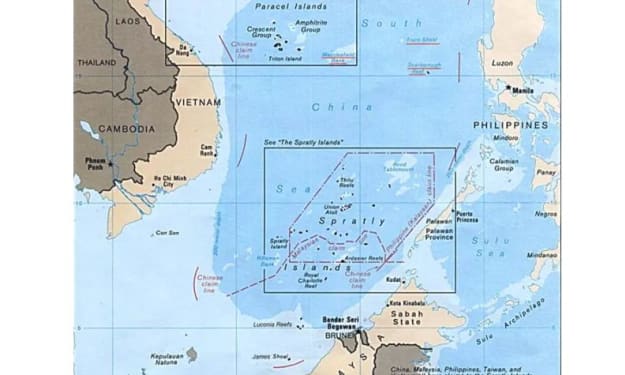
The South China Sea Dispute: A History of the Conflict
A small outcrop of sand occasionally disrupts the endless expanses of the South China Sea. These islands are modest, even miniature, but they lie at the heart of a fierce territorial dispute among six major claimants: Brunei, China, Malaysia, the Philippines, Taiwan, and Vietnam. These claimants also conflict over their rights and obligations in the adjacent waters and the seabed beneath them.
By Vitalii Petrov2 years ago in History
### Unveiling the King of Pop: Lesser-Known Facts About Michael Jackson
Michael Jackson, often referred to as the King of Pop, remains one of the most influential figures in the history of music and entertainment. While his chart-topping hits and iconic dance moves are well-known worldwide, there are many intriguing aspects of his life that are less commonly discussed. Here are some fascinating tidbits about Michael Jackson that might surprise even his most devoted fans.
By Champions of Knowledge2 years ago in History
10 most extraordinary festivals
Top 10 extraordinary festivals or celebrations that showcase different cultures and traditions. 1. Holi (India): Known as the Festival of Colors, Holi celebrates the arrival of spring with vibrant colored powders and water fights, symbolizing the triumph of good over evil.Holi, also known as the Festival of Colors, is a vibrant and joyous celebration that holds deep cultural and religious significance in India. This ancient Hindu festival marks the arrival of spring and the triumph of good over evil. It is a time for people to come together, forget their differences, and revel in the spirit of unity and love.
By Gaurang shrimal2 years ago in History
Celebrating Freedom: The Powerful Legacy of Juneteenth
Juneteenth, celebrated on June 19th, is a vibrant and poignant day that commemorates the end of slavery in the United States. This powerful holiday symbolizes the resilience, freedom, and enduring spirit of the African American community. Recognized as a federal holiday in 2021, Juneteenth has grown in prominence, serving as a reminder of the long journey toward justice and equality.
By Ankit Aswal2 years ago in History
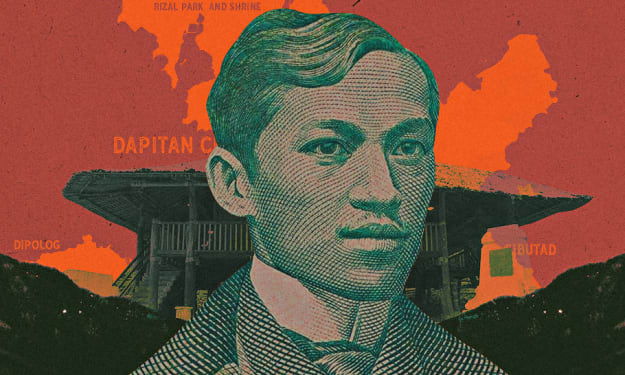
OPINION | ‘Look what you made me do’: A study on Rizal’s justification of the existence of Filipino indolence and its roots
The Indolence of The Filipino by José Rizal “We must confess that indolence does actually and positively exist there; only that, instead of holding it to be the cause of the backwardness and the trouble, we regard it as the effect of the trouble and the backwardness, by fostering the development of a lamentable predisposition.” — José Rizal, 1890.
By Precious Altura2 years ago in History